
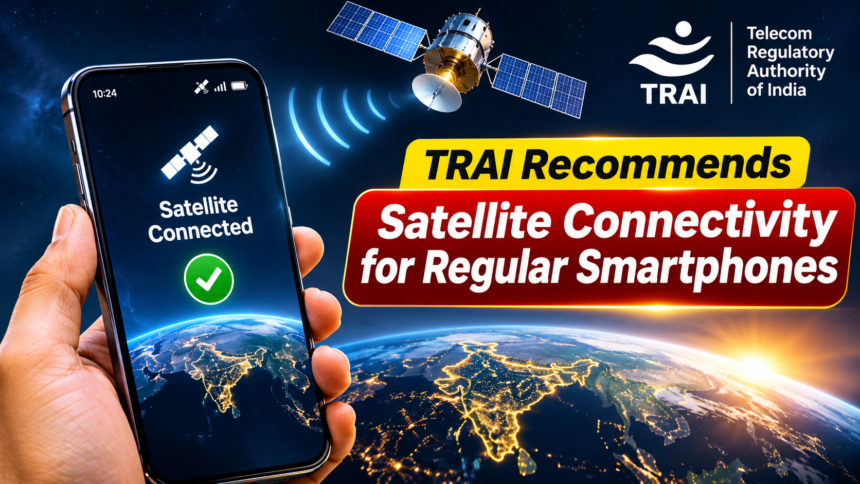
Mobile connectivity in India could see a major development as the country moves towards satellite-based communication for regular smartphones. The Telecom Regulatory Authority of India (TRAI) has proposed a new regulatory framework for satellite communication services, including spectrum allocation and direct-to-device (D2D) connectivity.
In its recommendations released on November 5, TRAI suggested allowing satellite networks to provide connectivity through dedicated satellite frequencies as well as certain frequencies already allocated to mobile network operators.
The proposed changes could open new opportunities for companies such as Starlink, Eutelsat OneWeb and Reliance Jio’s satellite business, subject to the necessary authorisations and partnerships.
What Has TRAI Proposed for Satellite Communication Companies?
TRAI has recommended introducing a new category called Satellite Communication Network Provider Authorisation under the Telecommunications Act, 2023.
Under this framework, authorised companies would be able to establish satellite communication networks and provide network access to licensed telecom operators. However, they would not be permitted to offer telecom services directly to individual consumers under this authorisation.
The proposed authorisation would have a validity period of up to 20 years, with an option to renew it for another 20 years.
TRAI has also suggested an authorisation fee equivalent to 8% of adjusted gross revenue (AGR), along with an entry fee of ₹37.5 lakh.
Regular Smartphones Could Get Direct Satellite Connectivity
One of the key recommendations focuses on direct-to-device technology, which could allow compatible smartphones to communicate directly with satellites without depending entirely on traditional mobile towers.
TRAI has proposed permitting satellite communication through dedicated mobile satellite spectrum and selected frequencies currently used by terrestrial mobile networks.
If implemented, this technology could help smartphone users access connectivity in locations where conventional mobile network coverage is unavailable.
The regulator has also recommended that smartphone manufacturers incorporate the required satellite communication hardware into future devices sold in India.
TRAI’s Recommendations on Satellite Spectrum Allocation
Regarding spectrum distribution, TRAI has proposed administrative allocation of eligible satellite spectrum for an initial period of up to five years. This period could be extended by an additional two years.
For satellite services operating through existing mobile network frequencies, telecom operators would need to work with authorised satellite communication network providers.
TRAI has further recommended permitting such services before the 2027 World Radiocommunication Conference, provided that necessary conditions are followed to prevent interference with existing communication networks.
How Will Satellite Connectivity Benefit Mobile Users in India?
If the proposed framework receives government approval and is implemented, satellite connectivity could improve communication facilities in remote villages, mountainous regions and other locations where installing mobile towers is challenging.
The technology could also provide additional support for emergency communications and help expand mobile coverage in areas with limited network access.
However, this does not mean that all smartphones will immediately start connecting to satellites. TRAI has only submitted its recommendations, and the Department of Telecommunications (DoT) must decide which proposals will be approved.
Telecom companies will also need to obtain the required permissions and establish compatible technology before introducing commercial satellite connectivity services in India.
Disclaimer: This article is intended for general informational purposes only. The details are based on TRAI’s proposed recommendations and should not be considered as final government policy. The implementation of satellite connectivity services will depend on regulatory approval, spectrum allocation and applicable government guidelines. Readers should refer to official TRAI and Department of Telecommunications announcements for the latest updates.