
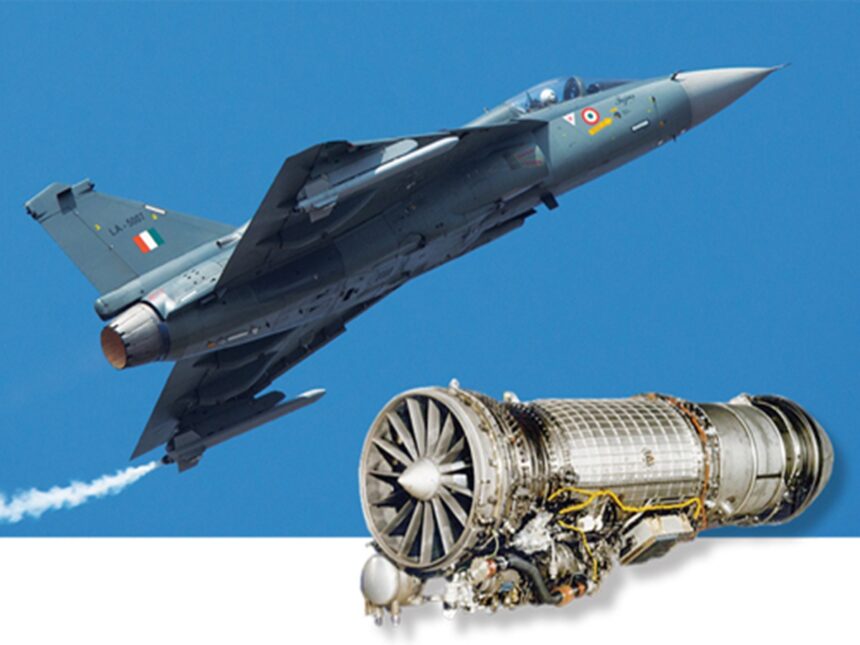
India’s indigenous Kaveri fighter engine is entering a major new phase, with the Defence Research and Development Organisation (DRDO) working on a redesigned version that could eventually power Indian fighter aircraft.
The new Kaveri 2.0 is being developed around a 90-kilonewton (kN) thrust class and is being positioned as a potential replacement for imported engines used by the Indian Air Force. The development gains added importance as global supply-chain disruptions have repeatedly affected the availability and delivery of foreign aircraft powerplants.
The Gas Turbine Research Establishment (GTRE), which is leading the engine programme, has reportedly separated the revived Kaveri effort from the requirements of India’s heavier next-generation stealth fighters. Instead, the focus is now on developing a medium-thrust engine that could serve existing combat aircraft during future mid-life upgrades.
Kaveri 2.0 Takes A Different Development Path
The original Kaveri engine programme dates back more than four decades. However, the engine was eventually separated from the Light Combat Aircraft (LCA) programme in 2008 after it failed to meet the required performance levels.
The earlier Kaveri Derivative Engine (KDE) produced approximately 49kN to 52kN of thrust, which was insufficient for modern fighter operations.
Kaveri 2.0 represents a much more extensive redesign rather than a simple upgrade of the earlier engine.
GTRE is targeting approximately 55kN to 60kN of dry thrust and up to 90kN to 100kN of afterburning, or wet, thrust. This would place the engine in the same broad thrust category as the GE F404 engines currently used on the Tejas Mk1A.
Separate Engine Strategy For AMCA And Tejas
India is pursuing two different indigenous engine tracks for its future fighter fleet.
For the fifth-generation Advanced Medium Combat Aircraft (AMCA), India is working with French aerospace company Safran on a much more powerful engine under the Advanced High Thrust Class Engine (AHTCE) programme. That powerplant is expected to fall within the 120kN to 140kN thrust range.
Kaveri 2.0, meanwhile, is being developed as a medium-thrust engine with a different objective: providing a domestically controlled powerplant for existing and upgraded fighter aircraft.
This separation allows the two programmes to pursue different technological and operational requirements instead of forcing one engine design to cover multiple aircraft classes.
New High-Pressure Compressor At The Heart Of Kaveri 2.0
One of the biggest changes in the redesigned Kaveri engine is the new core architecture.
GTRE is placing particular emphasis on a redesigned High-Pressure Compressor (HPC). Improving compressor pressure ratios and fuel efficiency will be critical to achieving the higher thrust targets.
The new design is also expected to use single-piece blisks, or bladed disks, manufactured from advanced titanium alloys. Combining the blades and disk into a single component can reduce potential air leakage, lower weight and improve the engine’s thrust-to-weight performance.
Another important technology is the use of single-crystal turbine blades. These components are designed to withstand extremely high temperatures inside the turbine, potentially improving thermal efficiency and overall engine performance.
Why An Indigenous 90kN Engine Matters For The IAF
The potential strategic value of Kaveri 2.0 extends beyond simply replacing a foreign engine.
The GE F404 engines powering Tejas Mk1A aircraft are expected to reach their mid-life replacement period during the 2030s. If Kaveri 2.0 completes development, qualification and flight testing successfully, it could offer India a domestic alternative for future engine replacement requirements.
An indigenous engine could reduce dependence on foreign suppliers and give the Indian Air Force greater control over maintenance, upgrades, spares and long-term availability.
It could also provide an additional layer of protection against international supply-chain disruptions, export restrictions or geopolitical uncertainties affecting aircraft engine deliveries.
Kaveri Technology Already Powers Ghatak
Although the original Kaveri fighter-engine programme struggled to meet its intended targets, elements of the technology have continued to evolve.
A dry, non-afterburning derivative of the Kaveri engine has already been developed for use on the DRDO Ghatak, India’s planned stealth unmanned combat aerial vehicle (UCAV).
This provides an important technological foundation for further development as India works toward a more capable and reliable indigenous fighter engine.
Kaveri 2.0 Could Strengthen India’s Fighter Engine Capability
The development of Kaveri 2.0 represents a significant shift in India’s approach to indigenous aircraft propulsion.
Rather than attempting to immediately develop one extremely powerful engine for every future aircraft, GTRE is pursuing a dedicated medium-thrust design while a separate high-thrust programme advances for the AMCA.
If the 90kN-class Kaveri 2.0 achieves its performance and reliability targets, it could eventually give India an indigenous option for replacing imported engines in selected fighter aircraft.
For the Indian aerospace sector, that would represent more than another engine programme—it would mark an important step toward reducing dependence on foreign propulsion technology and building a self-reliant fighter aircraft ecosystem.