
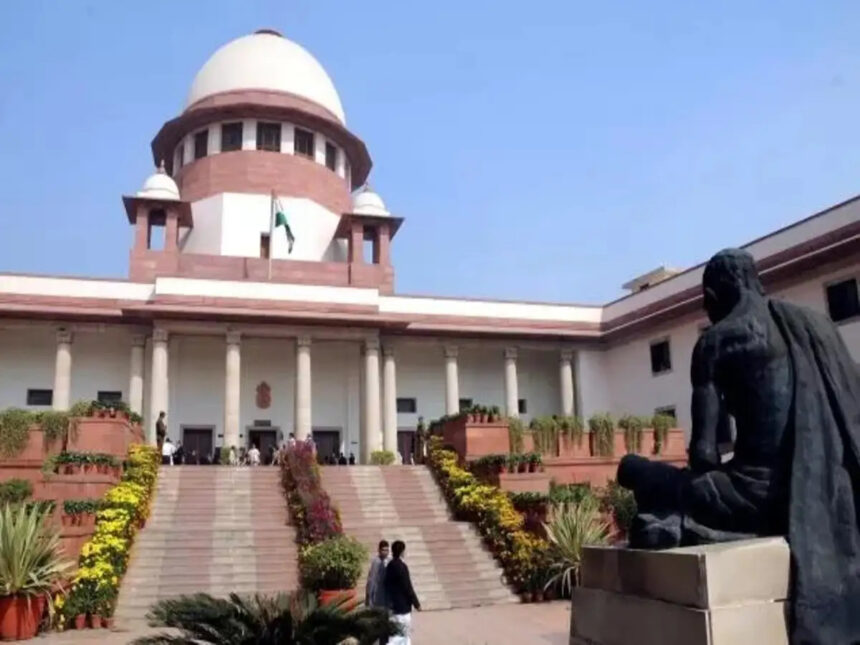
India’s judicial system continues to grapple with a massive backlog of cases, with thousands of matters remaining unresolved for decades. The Supreme Court alone has more than 96,000 pending cases, including over 10,000 that have been awaiting judgment for more than 10 years, the government informed the Rajya Sabha.
The data also reveals that 80,660 cases pending in various high courts have remained unresolved for over 30 years, highlighting the scale of delays across the country’s justice delivery system.
Supreme Court Pendency: Thousands of Cases Await Resolution
In a written reply to the Rajya Sabha, Union Law Minister Arjun Ram Meghwal shared updated figures on pending cases in the judiciary.
According to the minister, the Supreme Court currently has over 96,000 pending matters. Among these:
- More than 10,000 cases have been pending for over a decade
- 558 cases have remained unresolved for more than 20 years
- 26 cases have been pending for over 30 years
The figures underline the growing pressure on the country’s highest court despite continuous efforts to improve judicial efficiency.
More Than 5.64 Crore Cases Pending Across Indian Courts
The minister informed Parliament that, based on data available on the National Judicial Data Grid (NJDG), approximately 5.64 crore cases are currently pending across all levels of India’s judiciary.
This includes matters before the Supreme Court, 25 High Courts, as well as district and subordinate courts, reflecting the enormous workload faced by the judicial system nationwide.
High Courts Continue to Struggle With Long-Pending Cases
The backlog is particularly significant in the country’s high courts.
Government data shows that 80,660 cases have remained pending for more than 30 years, indicating that thousands of litigants have been waiting decades for final judgments.
The prolonged pendency has raised concerns about timely access to justice and the efficiency of the judicial process.
Why Are Court Cases Taking So Long?
Responding to questions on judicial delays, Meghwal clarified that the disposal of cases falls exclusively within the jurisdiction of the judiciary, and the executive does not prescribe deadlines for courts to deliver judgments.
He explained that delays occur due to several interconnected factors, including:
- Complexity of legal and factual issues
- Nature and volume of evidence
- Availability and cooperation of lawyers
- Delays involving investigating agencies
- Witness attendance
- Participation of litigants
- Procedural requirements during trials
These factors collectively contribute to prolonged litigation across different courts.
Judicial Vacancies Continue to Add Pressure
The government also highlighted that the timely disposal of cases depends heavily on the availability of judges, judicial officers, court staff, and adequate infrastructure.
According to information cited in the reply:
- The 25 High Courts currently have 341 vacancies against a sanctioned strength of 1,122 judges.
- District and subordinate courts are facing 7,311 vacancies against an approved strength of 30,868 judicial officers.
While the Supreme Court has generally moved quickly to fill vacancies, shortages continue to affect the functioning of high courts and lower courts, contributing to mounting case backlogs.
Judicial Backlog Remains a Multi-Dimensional Challenge
The Law Minister emphasized that reducing pendency requires more than simply increasing the number of judges. Efficient case disposal also depends on strong court infrastructure, adequate administrative support, proper implementation of procedural rules, and effective coordination among judges, lawyers, investigating agencies, witnesses, and litigants.
With over 5.64 crore pending cases across India’s judicial system, addressing long-standing delays remains one of the country’s biggest legal and governance challenges.