
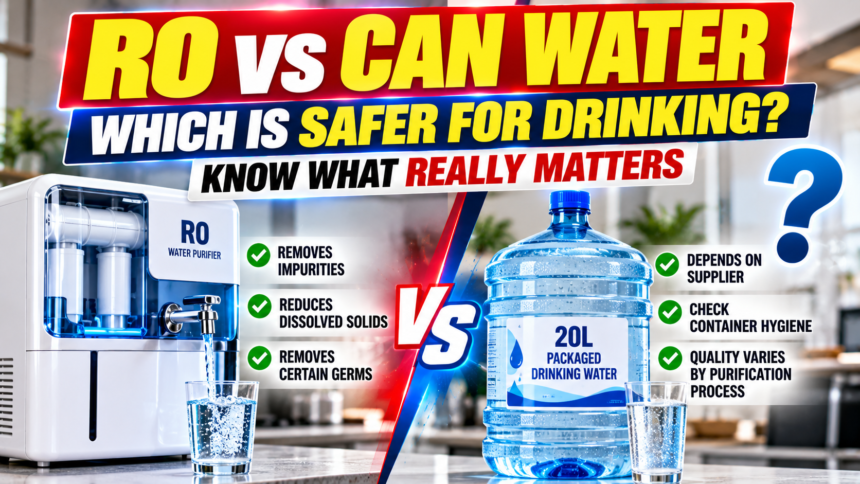
When it comes to drinking water, there is no simple answer that RO water is always better than can water, or that packaged water is automatically safer. The quality of drinking water depends on several factors, including its original source, the purification process, maintenance and the way it is stored.
For households using an RO purifier, understanding the quality of the source water is important before selecting a suitable purification system. Similarly, the safety of can water depends largely on how the supplier treats, stores and delivers it.
The World Health Organization (WHO) also recommends considering the quality of source water before selecting a household water treatment system. This means water safety needs to be assessed from its source all the way to the glass from which it is consumed.
What Does RO Purification Remove?
Reverse Osmosis (RO) technology is designed to reduce dissolved solids and certain contaminants present in water. Depending on the system and its certification, RO can remove specific bacteria, viruses and parasites, as well as certain chemicals, including lead, copper, chromium and sodium.
However, all RO machines do not perform in exactly the same way. Their effectiveness depends on the type of filters used and the certification of the particular system.
One of the main benefits of having an RO purifier at home is that consumers have greater control over the purification process. However, this also means the system needs proper maintenance. Filters must be replaced according to the manufacturer’s recommendations.
The Centers for Disease Control and Prevention (CDC) also emphasises that regular maintenance is necessary for water purification devices.
Is Can Water Always Safe?
When buying 20-litre can water, consumers generally see only the finished container and may not know how the water was purified, transported or stored before reaching them.
Packaged drinking water therefore should not be considered safe simply because it comes in a sealed can. India’s FSSAI requirements state that drinking water must be packed in clean, hygienic, food-grade and tamper-proof containers. The condition and hygiene of the container are therefore important along with the quality of the water itself.
The current FSSAI packaged drinking water testing scheme also includes requirements for checking the quality of containers, including plastic jars.
RO vs Can Water: What Should You Choose?
A common concern about RO water is that the purification process can reduce certain minerals. Calcium, magnesium and potassium may also be reduced during RO treatment. However, the presence or absence of minerals alone does not determine whether the water is safe to drink.
Water safety also depends on the presence of germs and potentially harmful chemicals. WHO drinking water guidelines emphasise managing water safety throughout the process, from the source to the consumer.
For households using an RO system, the setup can provide greater control when the source water is understood, the appropriate purifier is selected and the machine is maintained properly.
For those who purchase can water, choosing a reliable and compliant supplier is important. The supplier should use clean cans, appropriate storage practices and hygienic dispensing methods.
Simple Checks to Follow for Safe Drinking Water
Regardless of whether you use an RO purifier or buy can water, a few basic checks can help.
First, understand where your household water comes from, whether it is tap water, borewell water or another source. If you use an RO purifier, replace its filters on schedule and do not rely on a machine that has not been properly maintained.
If you purchase can water, research the supplier rather than choosing only on the basis of price or taste. Check the container to make sure it is clean, undamaged and properly sealed. The water dispenser at home should also be cleaned regularly.
It is also important to remember that water cannot be judged as safe simply by its taste, smell or appearance. The CDC notes that these characteristics alone cannot determine water safety.
Ultimately, the RO versus can water debate does not have one permanent winner. The more important questions are where the water comes from, how it is purified, how the purification system or container is maintained, and how the water is stored. Understanding these four factors can help consumers make a more informed choice about their daily drinking water.
Disclaimer: This article is intended for general informational purposes only. Water quality can vary depending on the source, purification system, maintenance and storage conditions. Readers should follow relevant safety guidelines and seek appropriate professional advice when assessing the quality of their drinking water.