
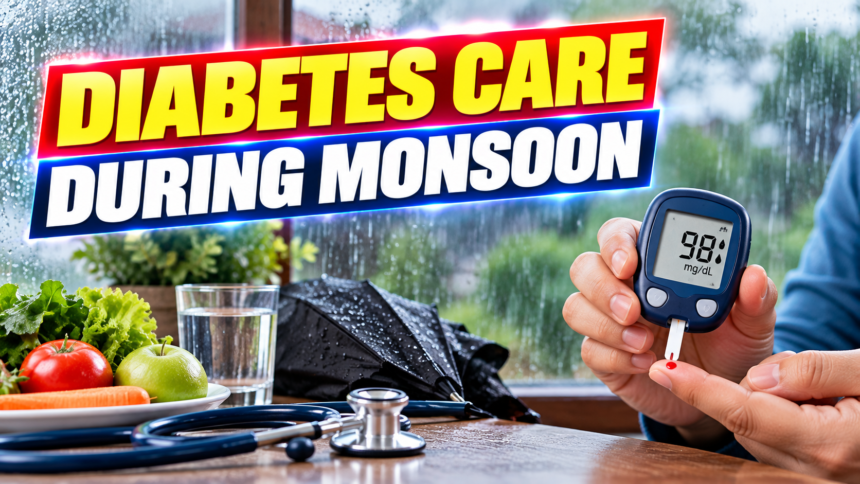
The monsoon season may bring relief from summer heat, but for people living with diabetes, the change in weather can create additional challenges. Shifts in climate, increased humidity, vulnerability to infections and disruptions to everyday routines can all affect diabetes management.
Dr Shalini Jaggi, Consultant Diabetologist and Director at Lifecare Diabetes Centre, New Delhi, said diabetes care is increasingly moving from a reactive approach towards more proactive management. With more than 77 million adults in India living with diabetes, understanding how seasonal changes can influence glucose levels is becoming increasingly important for long-term health and preventing complications.
How the Rainy Season Can Affect Diabetes Routines
Maintaining a regular routine can become difficult during periods of heavy rain. Outdoor exercise may be reduced, travel can interfere with meal schedules, while changes in food habits and seasonal illnesses may also affect glucose levels.
However, these changes may not always be visible through a single glucose reading. A one-time measurement provides information about the glucose level at that particular moment, but it may not show how the level changes throughout the day or how it responds to meals, physical activity, stress or illness.
Continuous glucose monitoring (CGM) offers a wider picture by tracking glucose levels throughout the day. Sensor-based systems can provide minute-by-minute information on a compatible smartphone, allowing users to see both their current glucose level and its direction of movement. Optional alerts can also indicate when glucose levels become too high or too low.
Dr Shalini Jaggi on Understanding Glucose Trends
According to Dr Shalini Jaggi, diabetes management is gradually shifting towards a more proactive approach, with greater attention being given to glucose patterns rather than individual readings.
For people with diabetes, a single reading shows what is happening at a particular moment, while continuous monitoring can help reveal changes throughout the day. Information on how glucose responds to food, activity, stress and illness can provide additional context, especially when normal routines are disrupted during the rainy season.
Real-time trends and optional high- and low-glucose alerts can further help people understand these changes and have more informed discussions with their healthcare professionals.
How Digital Tools Can Support Diabetes Care
Diabetes management is increasingly focusing on patterns and trends rather than relying only on individual glucose measurements. Minute-by-minute readings can help users understand how factors such as diet, exercise, stress and illness affect their glucose levels.
Trend information provides another important layer by showing whether glucose is rising, falling or remaining relatively stable.
The growing availability of connected digital health tools is also creating opportunities for more personalised and data-informed diabetes care. Secure sharing of glucose information with healthcare professionals, and in some situations with relatives or caregivers, can support more meaningful discussions and provide greater visibility into glucose patterns between appointments.
Long-wearing sensors, real-time monitoring and optional alerts for high or low glucose levels are making these insights more accessible for everyday diabetes management.
Managing Diabetes Through the Monsoon
The rainy season can make regular routines more difficult, but increased awareness of glucose patterns can help people better understand how seasonal changes and daily habits affect their diabetes management.
Using available glucose-monitoring information and maintaining communication with healthcare professionals can provide additional support as people adjust to changes in activity, meals and routine during the monsoon.
Disclaimer: This article is intended for general informational purposes and should not be treated as medical advice. Diabetes management should be personalised according to an individual’s health needs. Consult a qualified healthcare professional before making changes to medication, diet, exercise or any other aspect of diabetes care.