
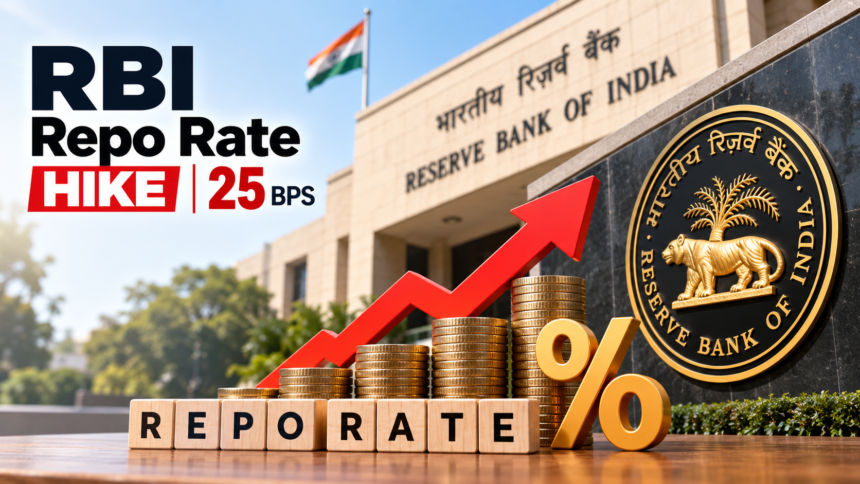
The Reserve Bank of India (RBI) may consider further increases in interest rates as inflationary pressures linked to crude oil and food prices continue to pose challenges. According to forecasts cited in the supplied report, another rate hike could come in December 2026, with some experts anticipating a cumulative increase of 75 to 100 basis points.
The report states that the RBI’s Monetary Policy Committee (MPC) has raised the repo rate by 25 basis points and shifted its policy stance from neutral to “calibrated tightening.” These developments indicate a stronger focus on containing inflation, although future decisions will depend on economic data and changing market conditions.
If borrowing costs rise further, customers with floating-rate home loans, car loans and other credit facilities could face higher monthly payments or longer repayment periods. At the same time, bank depositors may benefit if lenders increase interest rates on savings products and fixed deposits.
How Much Could the RBI Increase the Repo Rate?
The extent of any further increase will depend on inflation trends and the broader economic outlook. The possibility of another hike in December 2026 remains part of the forecasts discussed in the report, but the RBI’s decision will depend on the available economic data, including inflation figures for September and October.
SBI Research has reportedly recommended an additional 25-basis-point increase in December. Meanwhile, BofA Securities has projected a cumulative rise of 100 basis points, including the 25-basis-point increase mentioned in the report.
The shift towards a “calibrated tightening” stance has also drawn attention to the possibility of further monetary policy action to control inflation. However, these projections represent expectations rather than confirmed future decisions by the central bank.
Why Rising Inflation Could Lead to Higher Interest Rates
Crude oil prices, global tensions and food inflation are among the factors that could influence the RBI’s next move.
If crude oil prices remain close to $100 per barrel for an extended period, transportation and manufacturing expenses could increase. The report also notes that Indian importers were purchasing crude oil at higher prices in October than in September, potentially adding to costs across the economy.
Higher input and transport expenses can eventually affect the prices consumers pay for goods and services. In response to persistent inflation, the RBI could raise interest rates to moderate borrowing and spending, helping ease demand-side price pressures.
Retail inflation is projected to reach its highest level in the third quarter of the 2026-27 financial year, followed by some moderation. The actual inflation trajectory will be an important factor in determining future monetary policy decisions.
What Could Higher Repo Rates Mean for Home Loan EMIs?
A repo rate increase can raise banks’ funding costs and influence lending rates. Borrowers with floating-rate home loans and car loans may be particularly affected if their lenders pass on the increase.
Depending on the loan agreement and the bank’s rate-reset policy, borrowers could experience higher EMIs or an extension of their repayment tenure. The effect will not be identical for everyone, as it depends on the outstanding loan amount, interest rate, remaining tenure and applicable lending terms.
People planning to take out new loans could also face higher borrowing costs if banks increase their lending rates.
However, the impact on existing customers will depend on how individual lenders adjust their rates and when those changes take effect.
Impact on Banks, Depositors and the Bond Market
Higher interest rates can have different effects across the financial system. Banks may benefit from improved lending margins in the short term, depending on how quickly their lending rates and deposit costs adjust.
On the other hand, more expensive loans could reduce borrowing demand among households and businesses. If credit demand slows, it could affect consumption, investment and economic activity, with possible implications for GDP growth and employment.
Depositors may receive better returns if banks increase interest rates on fixed deposits and other eligible deposit products. However, the extent of any benefit will depend on individual banks’ decisions and the deposit products they offer.
The bond market could also face pressure. Elevated inflation and uncertainty in global markets may push government bond yields higher, affecting bond prices and investor returns.
The RBI’s future decisions will ultimately depend on the balance between controlling inflation and supporting economic growth. Crude oil prices, food inflation, domestic economic indicators and global developments will remain important factors in determining the direction of interest rates.
Disclaimer
This article is intended for general informational purposes and summarises the forecasts and economic assessments presented in the supplied material. Predictions about future repo rate changes are not confirmed RBI decisions. Actual monetary policy actions, loan interest rates, EMIs and deposit returns may vary according to economic conditions and the policies of individual financial institutions. Readers should refer to official RBI announcements and consult their banks for information relevant to their loans or deposits.