
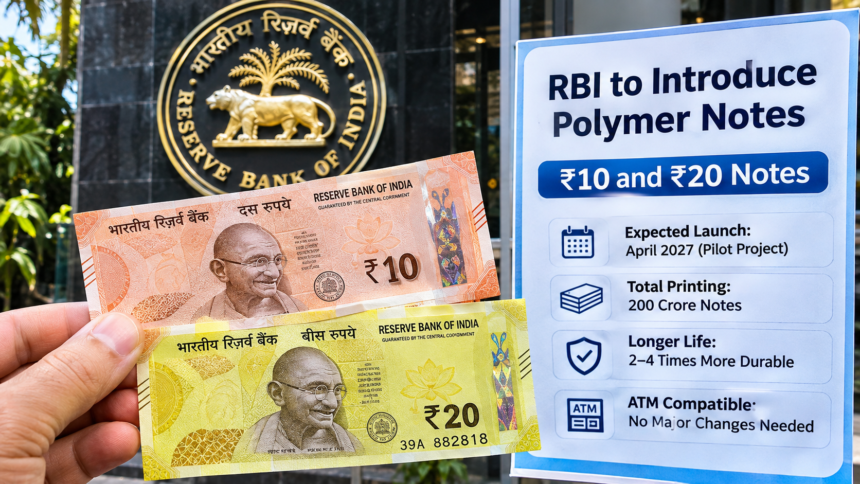
The Reserve Bank of India (RBI) is reportedly preparing to introduce polymer-based currency notes of ₹10 and ₹20 to improve their durability and reduce the frequent replacement of damaged notes. Unlike conventional paper currency, these plastic-based notes are expected to last two to four times longer.
According to reports, the RBI is considering April 2027 as the tentative starting point for the initiative, which will initially be introduced as a pilot project. The move is expected to reduce currency replacement costs for banks and make smaller denomination notes more durable for everyday use.
The proposed change also takes into account existing ATM infrastructure, so banks may not need to spend heavily on modifying their machines.
New Polymer Notes: What Will Change for ATM Machines?
Introducing a new currency design often requires banks to update their ATM systems. Changes to note-recognition sensors, cash cassettes and other components can involve considerable expenditure.
However, the proposed ₹10 and ₹20 polymer notes will retain the dimensions of the existing paper notes. This means they are expected to work with ATM machines already configured to dispense the current denominations, potentially avoiding major technical modifications.
Previously, around 2.4 lakh ATMs required updates when new ₹100 and ₹200 notes were introduced. The exercise reportedly cost approximately ₹100 crore.
According to an official from a public sector bank, a bank operating around 8,500 ATMs could save nearly ₹21.25 crore through the proposed approach.
RBI Plans to Print 200 Crore Polymer Notes
For the initial pilot project, the RBI has proposed printing a total of 2 billion polymer currency notes.
The proposed printing quantity includes:
- 100 crore polymer notes in the ₹10 denomination.
- 100 crore polymer notes in the ₹20 denomination.
Bharatiya Reserve Bank Note Mudran Private Limited (BRBNMPL), a subsidiary of the RBI, has reportedly received bids from six companies for the project.
Polymer science company Uflex has also submitted a bid in partnership with US-based Spectra Systems.
The pilot initiative will help assess the suitability of polymer currency before any wider rollout is considered.
Will Existing ₹10 and ₹20 Paper Notes Remain Valid?
The introduction of polymer currency does not mean that existing ₹10 and ₹20 paper notes will immediately become invalid.
The RBI is not planning to withdraw the current paper notes as soon as the new currency is introduced. Both versions are expected to remain in circulation together.
This means people will not need to exchange their existing ₹10 and ₹20 notes simply because polymer versions become available.
Initially, the new currency is expected to reach the public through bank branches and ATMs.
How Long Will RBI Polymer Notes Last?
Longer durability is one of the main reasons behind the proposed introduction of polymer currency.
Traditional paper notes can become damaged through regular handling, folding and exposure to moisture. Polymer notes, which are made using a plastic-based material, are designed to withstand everyday use for a longer period.
In August, RBI Governor Sanjay Malhotra said polymer notes could last two to four times longer than conventional paper currency. Similar notes have also been used in some countries for more than 30 years.
However, their actual performance under Indian weather conditions and daily usage patterns will need to be evaluated through testing.
April 2027 is currently being considered a tentative timeline rather than a confirmed launch date. The results of the pilot project will help determine whether polymer ₹10 and ₹20 notes should be introduced on a larger scale across the country.
Disclaimer: This article is intended for general informational purposes and is based on the reports and details provided about the proposed RBI polymer currency initiative. The printing schedule, quantities and launch timeline may change following official decisions and pilot project results. Readers should refer to RBI announcements for confirmed information regarding the introduction and circulation of the new notes.