
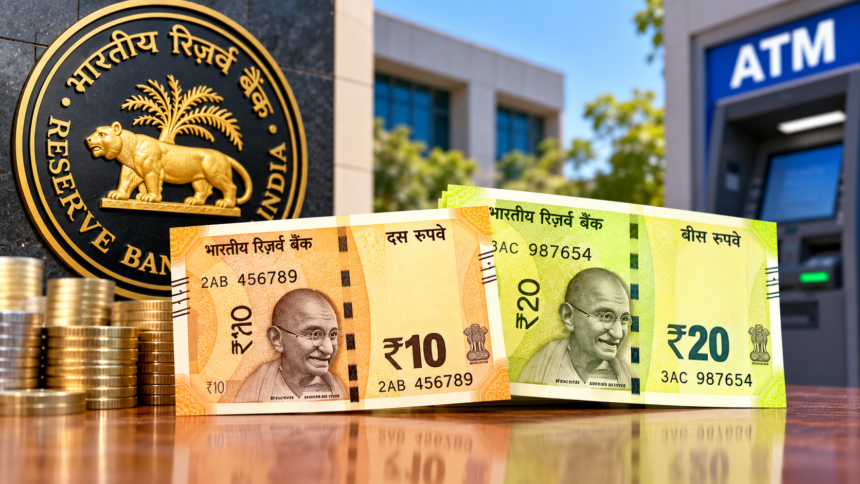
The Reserve Bank of India (RBI) is preparing to test polymer currency notes in denominations of ₹10 and ₹20. According to a report by Moneycontrol, the proposed pilot project could begin as early as April 1, 2027.
One important feature of the proposed notes is that their size will remain the same as existing currency notes. This would help banks avoid expensive modifications to ATMs and allow existing machines to handle the new notes without major changes.
The RBI is currently preparing for the project, which will examine the durability and suitability of polymer currency under Indian conditions.
New Polymer Notes May Not Require ATM Modifications
The proposed ₹10 and ₹20 polymer notes will have the same dimensions as the existing paper notes. This decision could help banks avoid the additional costs involved in modifying ATM machines.
Whenever currency notes are introduced in different sizes, ATMs may require adjustments to their cash cassettes, note-detection sensors and internal settings. Engineers may also need to recalibrate the machines before they can dispense the new currency.
According to a senior public sector bank official quoted in the report, retaining the existing note dimensions could help banks avoid these initial modification expenses.
Earlier ATM Changes Cost Around ₹100 Crore
The financial impact of ATM modifications was significant when the new ₹100 and ₹200 currency notes were introduced.
According to the report, approximately 2.4 lakh ATMs across the country required modifications, costing the ATM industry around ₹100 crore.
For example, a bank operating 8,500 ATMs could spend approximately ₹2.5 lakh on modifying each machine. This would bring the total expenditure to nearly ₹21.25 crore.
Keeping the proposed polymer notes the same size as existing currency could help prevent similar expenses in the future.
Six Companies Submit Bids for Polymer Currency Project
The production-related work for the proposed polymer notes is being handled through Bharatiya Reserve Bank Note Mudran Private Limited (BRBNMPL), a wholly owned subsidiary of the RBI.
According to the report, six companies have submitted bids for the project. One of the participants is Indian polymer science company Uflex, which has partnered with US-based Spectra Systems.
The tender specifies a requirement of 68,000 reams of BOPP (biaxially oriented polypropylene) material. This includes 34,000 reams for ₹10 notes and another 34,000 reams for ₹20 notes.
The material must have a special coating to support high-quality printing and proper ink adhesion. An anti-static coating is also required.
Polymer Notes Must Meet Special Safety Requirements
The tender also includes a specific condition regarding the composition of the material. The polymer used for manufacturing the currency must not contain animal tallow or DNA derived from animal tallow.
Participating companies will have to meet this requirement while supplying the material for the project.
Polymer Notes Could Last Longer Than Paper Currency
RBI Governor Sanjay Malhotra stated in August that polymer currency notes could last two to four times longer than conventional paper notes.
However, their durability must be evaluated under different weather conditions and during everyday use before they can be introduced on a large scale across India.
The government has approved field trials involving 1 billion polymer notes in denominations of ₹10 and ₹20. These trials will help assess how the new currency performs under Indian climatic conditions and regular handling.
The results of these tests will be important in determining the suitability of polymer notes for wider circulation in the country.
Disclaimer: This article is intended for general informational purposes only and is based on reported developments concerning the proposed RBI polymer currency project. The pilot launch timeline, manufacturing arrangements and currency specifications are subject to official RBI decisions and notifications. The proposed trial should not be considered a confirmed nationwide currency launch. Readers should refer to official RBI announcements for verified updates.