
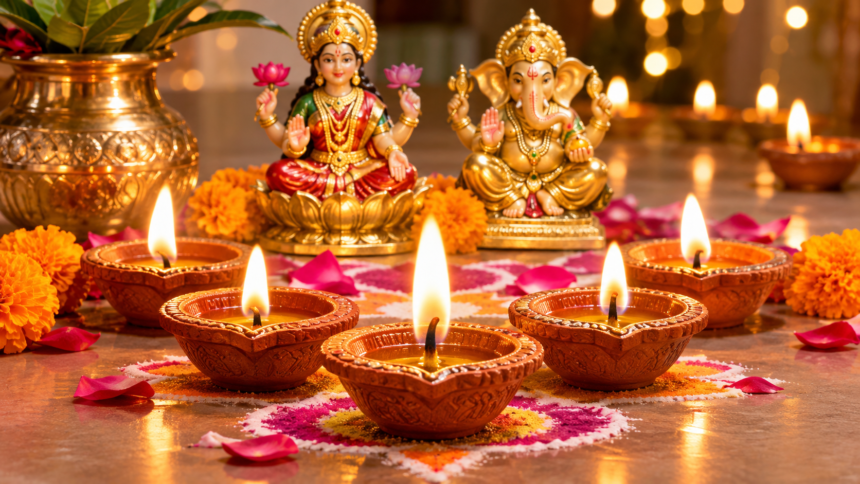
Lighting diyas is one of the most cherished traditions of Diwali. Beyond decorating homes, these small earthen lamps represent the victory of light over darkness and are associated with peace, prosperity and happiness. In Hindu households, lighting diyas is also considered a way of welcoming Goddess Lakshmi and seeking her blessings.
Traditionally, many families light at least five diyas during Diwali. Others prefer 11, 21, 51 or even 108 lamps as part of their religious rituals and home decorations. Each number carries a different spiritual association in Hindu traditions.
In 2026, Diwali will be celebrated on Sunday, November 8. Before arranging your lamps and preparing for Lakshmi Puja, take a look at the significance of lighting different numbers of diyas and the traditional places where they can be placed.
Diwali 2026: Religious Significance of Lighting 5, 11, 21, 51 and 108 Diyas
There is no fixed rule that requires every household to light a particular number of diyas on Diwali. The number generally depends on family customs, religious beliefs and personal preferences.
However, five, 11, 21, 51 and 108 are commonly considered auspicious numbers in different Hindu devotional practices. Here is what these numbers represent.
5 Diyas: Connection With the Five Elements
Lighting five diyas is a traditional practice associated with the Pancha Mahabhuta, which represents the five basic elements of nature: earth, water, fire, air and space.
These elements are considered essential to life and the natural world. Lighting five lamps is therefore associated with a prayer for harmony, balance and well-being.
Some families place these five diyas in different parts of their homes, such as the puja room, main entrance, kitchen, near the Tulsi plant and close to a water source.
11 Diyas: An Auspicious Number in Hindu Traditions
The number 11 has religious importance in several Hindu traditions and is associated with the eleven Rudras, forms of Lord Shiva.
On Diwali, some devotees light 11 diyas near the entrance or around their worship area as part of their prayers for prosperity and happiness. This practice is also followed by families as part of their traditional household customs.
21 Diyas: A Symbol of Auspiciousness and Prosperity
Lighting 21 diyas is another popular choice during Diwali celebrations. Many households arrange these lamps around their entrances, windows, balconies, courtyards and puja rooms.
The number 21 is considered auspicious in several Hindu religious offerings and ceremonies. Although its specific significance differs across rituals and communities, lighting 21 lamps is often associated with prayers for abundance, happiness and positive beginnings.
51 Diyas: Association With Goddess Shakti
In certain Hindu traditions, the number 51 is connected with the Shakti Peethas, which are sacred places associated with Goddess Shakti.
Because of this religious association, some devotees choose to light 51 diyas during Diwali. These lamps are often arranged in rows around the house or courtyard to create a traditional festive atmosphere.
However, lighting 51 diyas is not compulsory for Lakshmi Puja. It is simply one of the devotional practices followed by some families.
108 Diyas: Special Importance in Hindu Spiritual Practices
The number 108 holds a special place in Hindu religious traditions. It is widely associated with mantra chanting and the 108-bead japa mala used during prayers.
Some devotees choose to light 108 diyas on Diwali as an expression of deep faith and devotion. Arranging this many lamps can also create a beautiful atmosphere during religious celebrations.
However, lighting 108 diyas is not a mandatory requirement for worshipping Goddess Lakshmi. Even a few lamps can carry spiritual meaning when offered with sincerity.
Why Are 13 Diyas Lit on Dhanteras and 14 on Choti Diwali?
Apart from the main Diwali celebration, lighting diyas is also an important part of Dhanteras and Choti Diwali traditions. Some families follow specific numbers of lamps on these occasions.
13 Diyas on Dhanteras: Some households light 13 diyas on Dhanteras because the festival is observed on the Trayodashi, or thirteenth lunar day. The tradition of Yama Deepam, in which a lamp is lit as a prayer for protection and longevity, is also associated with this occasion.
14 Diyas on Choti Diwali: In certain communities, 14 diyas are lit on Choti Diwali in connection with Chaturdashi, the fourteenth lunar day.
These practices are based on regional and family traditions rather than universal religious rules.
In 2026, Dhanteras falls on November 6. According to the New Delhi Panchang, Kali Chaudas falls on November 7, while Narak Chaturdashi is observed on November 8. Since lunar dates can overlap, families should follow their local Panchang and established traditions when deciding the appropriate time for these rituals.
Where Should You Place Diyas During Diwali?
The location of diyas is also considered important in many Hindu households. Traditionally, lamps are placed in different areas to illuminate the home and create an auspicious atmosphere.
- Puja room: Place the main worship lamp near Goddess Lakshmi and Lord Ganesha during prayers.
- Main entrance: Lighting diyas near the doorway is considered a traditional way of welcoming prosperity and positive energy.
- Tulsi plant: Families that worship Tulsi often place a diya nearby as part of their religious customs.
- Kitchen and courtyard: These areas are also commonly illuminated with earthen lamps during Diwali.
- Windows and balconies: Placing diyas in these spaces helps spread the festive glow throughout the home.
While decorating your home, make sure every diya is placed on a stable, heat-resistant surface. Keep burning lamps away from curtains, paper decorations and other flammable materials. Never leave an oil lamp unattended.
Is Lighting 108 Diyas Necessary to Please Goddess Lakshmi?
No, lighting 108 diyas is not compulsory for Lakshmi Puja. It is an optional religious practice followed by some devotees because of the spiritual importance associated with the number 108.
The number of lamps you choose can depend on your family traditions, available space and ability to arrange them safely. Lighting five, 11 or 21 diyas can also be a meaningful part of your Diwali celebrations.
The true spirit of Diwali lies in devotion, gratitude, wisdom and the hope of bringing happiness and prosperity into life. Whether you decorate your home with a few earthen lamps or arrange 108 diyas, the importance of the festival remains in the faith and sincerity behind the celebration.
Disclaimer: This article is intended for general informational purposes and explains religious beliefs and traditional practices associated with Diwali. Customs and interpretations may differ across regions, communities and families. Festival dates and religious timings should be checked with the local Panchang before performing rituals.