
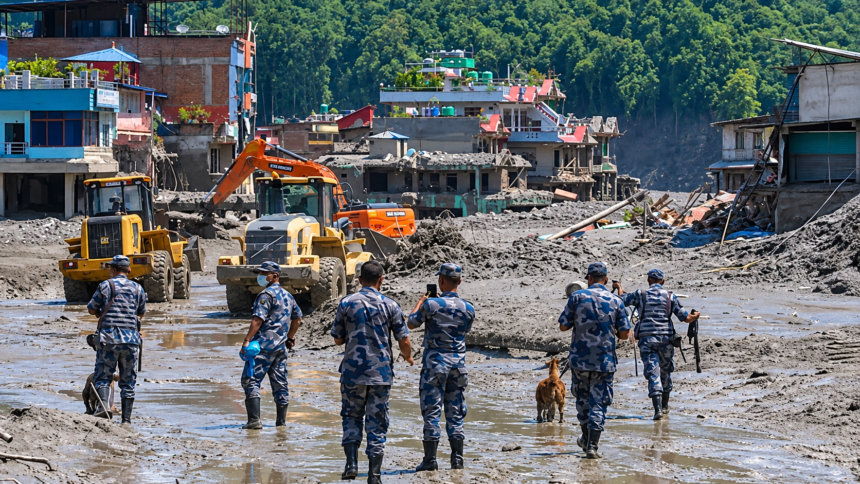
Nepal Finance Minister Swarnim Wagle has expressed his gratitude to Prime Minister Narendra Modi, the Government of India and the people of India for their “extraordinarily generous support” following the devastating flash floods in Nepal.
Speaking to ANI on Friday, Wagle said India had stepped forward to assist Nepal with rescue and relief efforts, similar to its response after the 2015 earthquake. He said the scale of the latest disaster has made international support essential as Nepal prepares for a large-scale reconstruction programme.
“I’m here to express my gratitude to Prime Minister Modi, the Government of India, and the people of India for the extraordinarily generous support that India has extended for the rescue and relief efforts,” Wagle said.
Nepal Estimates $3 Billion in Damage and Losses
According to the latest estimates cited by Wagle, around 1,400 people have died following the floods, while more than 5,000 people remain missing. Nearly 190 Indian nationals are among those reported missing.
Wagle said the disaster had caused widespread damage to communities and livelihoods, creating significant physical and economic losses. He also described the crisis as part of a wider climate-related challenge affecting countries across South Asia and beyond.
Nepal’s initial damage assessment, carried out through the National Disaster Risk Reduction and Management Authority and reviewed by the World Bank, put the physical damage at around USD 2 billion. The country has also suffered an estimated USD 1 billion in additional losses.
The cost of rebuilding could be considerably higher. Wagle said reconstruction based on a “build back better” approach could require more than USD 4.5 billion to USD 5 billion over several years.
Nepal Looks to India and Global Partners
Wagle said Nepal would need substantial international assistance to meet its reconstruction requirements and would continue to seek support from countries including India.
He said Nepal was not currently placing a specific figure on the financial assistance it expects from India. Wagle recalled India’s contribution following the 2015 earthquake, when Nepal had sought around USD 4 billion from the international community and India provided USD 1 billion.
Of that amount, 25 per cent was provided as grants, while the remaining assistance came through concessional lending from EXIM banks.
For the latest reconstruction effort, Wagle said Nepal would consider innovative financing options, including debt-for-recovery swaps. He added that the country would work with international partners as well as neighbouring countries to address its financial needs.
Nepal Steps Up International Outreach
Wagle is also planning an international outreach campaign to seek assistance and raise awareness about the impact of climate-related disasters.
He is scheduled to travel to Doha and engage with the Asian Infrastructure Investment Bank before travelling to New York and Washington DC for discussions with the World Bank and the United Nations. He will later attend the annual meeting of the Bretton Woods institutions in Bangkok in October.
Wagle said Nepal wants to highlight how climate-triggered disasters can affect vulnerable communities and have consequences beyond national borders. He noted that although Nepal’s contribution to global greenhouse gas emissions is very small, its people are facing serious consequences.
Nepalese Prime Minister Balen Shah is also scheduled to visit New York for the UN General Assembly, where he is expected to highlight the impact of the disaster and seek international assistance and solidarity.
Wagle Begins International Visit in New Delhi
Wagle said he chose New Delhi as the starting point of his first international visit because of the importance of India’s support to Nepal during the recovery and reconstruction process.
He expressed appreciation for the support and pledges received from India’s Finance Minister and External Affairs Minister, saying Nepal intends to build on the assistance as its international campaign continues.