
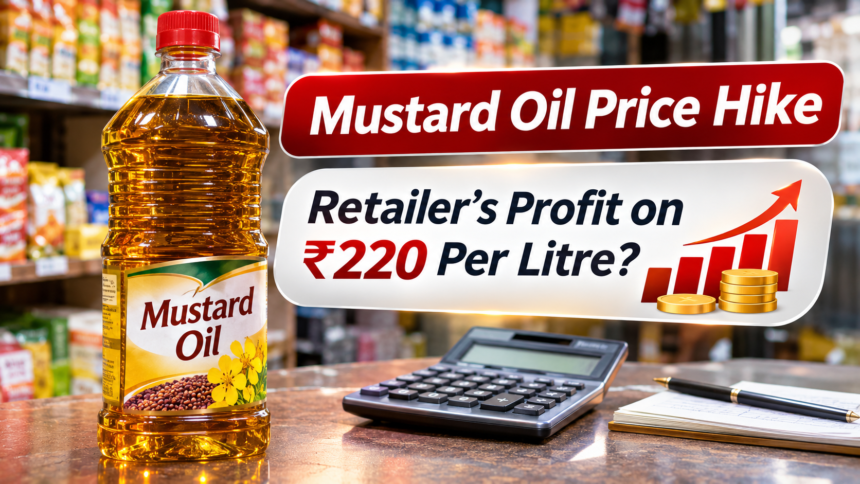
Mustard oil is a staple cooking ingredient in many Indian households. Whenever its price rises, consumers often wonder how much profit retailers make from selling each litre. If mustard oil is being sold at ₹220 per litre, what does a local grocery shop owner actually earn on each bottle or pouch?
The retailer’s earnings depend on several factors, including the brand, wholesale purchase price, distributor rates, order quantity and available trade discounts. The entire difference between the purchase price and the retail selling price does not necessarily become the shopkeeper’s profit.
How Much Does a Shopkeeper Earn on One Litre of Mustard Oil?
Let’s understand the retailer’s margin with a simple example. Suppose a one-litre mustard oil bottle or pouch carries an MRP of ₹220 and the shopkeeper sells it at that price.
The gross margin will depend on the price at which the retailer purchases the product from the distributor or wholesaler.
For example:
| Wholesale purchase price | Selling price | Gross margin |
|---|---|---|
| ₹210 | ₹220 | ₹10 |
| ₹212 | ₹220 | ₹8 |
| ₹215 | ₹220 | ₹5 |
| ₹218 | ₹220 | ₹2 |
These figures are only examples to explain how retail margins work. Actual earnings can differ depending on the oil brand, distributor pricing, quantity purchased and discounts or incentives offered to retailers.
It is also important to understand that gross margin is not the same as net profit. Shopkeepers have to meet other business expenses, including shop rent, electricity bills, transportation costs and staff salaries. These expenses reduce the amount they ultimately earn.
Does an Increase in Mustard Oil Prices Mean More Profit for Retailers?
A higher selling price does not automatically mean that a shopkeeper earns more money. The wholesale purchase cost can also increase when market prices rise, which may reduce the retailer’s margin.
For instance, if a shopkeeper previously purchased mustard oil for ₹190 per litre and sold it for ₹200, the gross margin was ₹10. Later, if the purchase price increased to ₹212 and the selling price rose to ₹220, the margin would fall to ₹8 per litre.
This shows that even when mustard oil becomes more expensive for consumers, the retailer’s earnings may remain the same or decrease. The actual profit depends mainly on the difference between the purchase price and selling price, along with the shop’s operating expenses.
Disclaimer: This article is intended for general informational purposes only. The prices and profit figures mentioned are illustrative examples and do not represent the actual margins of any particular mustard oil brand or retailer. Wholesale rates, discounts and retail earnings may vary depending on the brand, distributor and local market conditions.