
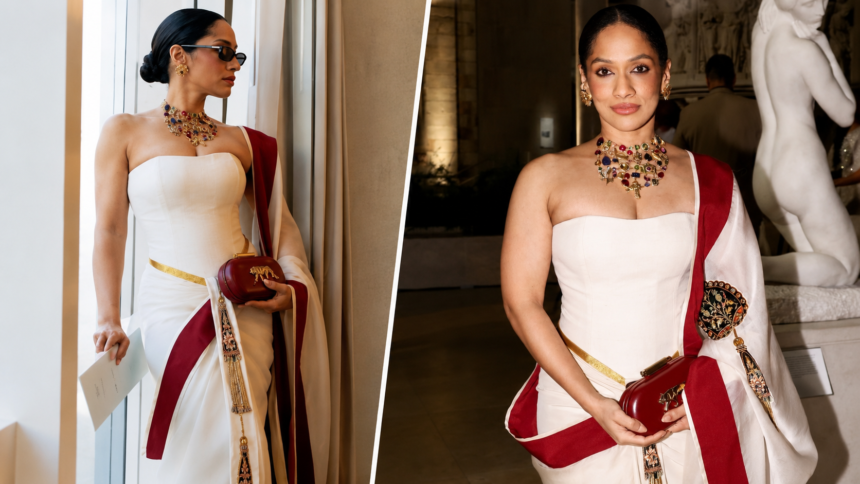
Indian fashion and cultural heritage took centre stage in New York as designer Sabyasachi Mukherjee hosted a landmark Diwali reception at The Metropolitan Museum of Art on October 22, 2026. Among the notable appearances at the event, Masaba Gupta drew attention with a contemporary interpretation of Bengal’s traditional Lal Paar saree, combining cultural elements with modern red-carpet styling.
The designer’s ensemble offered a fresh take on the classic white saree with a bold red border, bringing a traditional Bengali aesthetic to an international fashion event.
Masaba Gupta’s Modern Take on Bengal’s Lal Paar Saree
Known for her distinctive prints and contemporary Indian designs, Masaba Gupta wore a custom creation from House of Masaba with a Sabyasachi-inspired touch. Her outfit reworked the traditional Lal Paar saree into a structured, statement-making ensemble.
The look featured a fitted, strapless corset in white Kora cotton, paired with a flowing satin-organza drape finished with a striking maroon-crimson border. The combination brought together the traditional appeal of the Bengali saree and the clean lines of modern couture.
Intricate embellishments added character to the outfit. The drape featured appliquéd paan motifs, delicate rhinestone embroidery and an ornamental tassel appliqué at the back. For some of her portraits on the Met’s rooftop terrace, overlooking the Manhattan skyline, Masaba added a deep maroon velvet hooded cape that enhanced the dramatic appeal of the ensemble.
In a 20-slide Instagram carousel, the designer shared photographs taken inside the museum, beside its large windows, on the rooftop terrace and at the gala. The pictures highlighted the fluid movement of the drape and the structured silhouette of the corset.
Statement Jewellery and Sabyasachi’s Signature Tiger Clutch
Masaba completed the ivory-and-crimson outfit with statement accessories that complemented its festive character. She wore a multicoloured Trinket Holder Choker Necklace from the House of Masaba x Tribe by Amrapali collection, paired with large gold sunburst earrings.
Black Meller sunglasses added a contemporary edge to the traditional-inspired ensemble, while an iconic maroon Sabyasachi clutch featuring the tiger emblem served as a distinctive finishing touch.
The styling balanced bold accessories with the saree’s heritage-inspired details, creating a look that combined Indian craftsmanship with modern fashion sensibilities.
Why the Lal Paar Saree Remains a Bengali Festive Favourite
The Lal Paar saree holds a special place in Bengali culture and is traditionally worn during Durga Puja and other auspicious occasions. Its characteristic white base and prominent red border are closely associated with Bengali festive traditions, with red often symbolising strength, purity and marital bliss.
By pairing this traditional drape with a strapless corset, Masaba presented a contemporary interpretation of a longstanding cultural style. The ensemble retained the recognisable colours and spirit of the classic saree while adapting its silhouette for a global fashion setting.
Her appearance also highlighted how traditional Indian garments can be reinterpreted through modern tailoring, distinctive embellishments and statement accessories without losing their cultural identity.
How to Recreate Masaba Gupta’s Modern Saree Look for Diwali 2026
Those looking to recreate Masaba’s festive style can start with a white strapless corset and a white satin-organza saree featuring a red border. A white cotton saree with a red velvet border can serve as an alternative if organza is unavailable.
Pairing the saree with a structured corset helps achieve the contemporary silhouette. Drape the pallu neatly over the shoulders, allowing it to fall naturally like a shawl.
For accessories, opt for a sleek bun, statement earrings and a chunky multicoloured choker. Black sunglasses can add a modern touch, while a red clutch or potli bag offers a festive finishing detail. Complete the look with dewy makeup and a nude lip for a balanced appearance.
Sabyasachi’s Diwali reception at The Metropolitan Museum of Art brought Indian fashion and festive traditions into an internationally recognised cultural setting. Masaba Gupta’s interpretation of the Lal Paar saree stood out as a contemporary expression of Bengali heritage, demonstrating how traditional Indian attire can be adapted for modern occasions while retaining its cultural significance.