
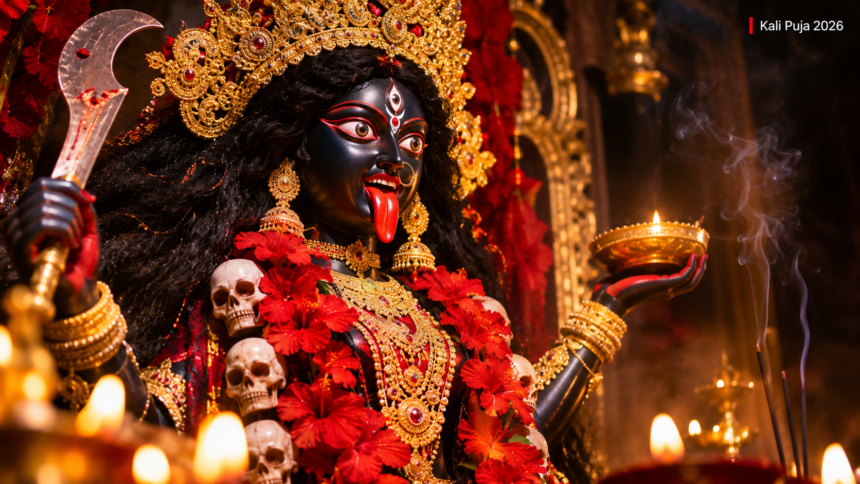
New Delhi: Kali Puja 2026 will be observed on Sunday, November 8, coinciding with the celebration of Diwali. Also called Shyama Puja, this important Hindu festival is dedicated to Goddess Kali, who symbolises the victory of good over evil and protection against negative forces.
Devotees worship Maa Kali with flowers, lamps, sweets and traditional offerings, with the main rituals performed around midnight during Nishita Kaal. In Kolkata, the Nishita Puja Muhurat will begin at 10:55 PM and conclude at 11:46 PM.
The festival holds special importance in West Bengal, particularly in Kolkata, where temples and beautifully decorated pandals organise elaborate night-time celebrations. Here is everything you need to know about Kali Puja 2026, including its date, Amavasya timings, puja muhurat, religious significance and traditional rituals.
Kali Puja 2026 Date and Amavasya Tithi
Kali Puja is celebrated on Kartik Amavasya, the new moon day of the Hindu month of Kartik. In 2026, the festival will take place on November 8.
The occasion is celebrated with great enthusiasm in West Bengal. Devotees visit temples, participate in midnight prayers and attend community celebrations organised at different pandals. The festival is also observed in Assam, Odisha and several other regions with Bengali communities.
Here are the important dates and timings for Kali Puja 2026 in Kolkata:
| Event | Date and Time |
|---|---|
| Kali Puja Date | Sunday, November 8, 2026 |
| Amavasya Tithi Begins | November 8 at 11:27 AM |
| Amavasya Tithi Ends | November 9 at 12:31 PM |
| Nishita Puja Muhurat Begins | November 8 at 10:55 PM |
| Nishita Puja Muhurat Ends | November 8 at 11:46 PM |
| Total Muhurat Duration | 51 minutes |
The midnight period, known as Nishita Kaal, is considered particularly important for Kali Puja. Unlike festivals that follow the evening Pradosh period for worship, the main Kali Puja rituals are performed during the midnight Amavasya period.
Note: All the timings mentioned above are for Kolkata, West Bengal. Actual Panchang timings may differ depending on the location.
Why Is Kali Puja Celebrated? Know the Mythological Story
Kali Puja is dedicated to Goddess Kali, who is worshipped as the divine force responsible for destroying evil and protecting the universe. Her powerful form represents the strength needed to eliminate negative forces and restore balance.
According to Hindu mythology, Goddess Kali appeared during a fierce battle against demons who threatened the universe. One popular story describes how she emerged from Goddess Durga’s forehead to defeat the demon Raktabija.
Raktabija possessed a special power: every drop of his blood that touched the ground created another demon. This made him extremely difficult to defeat. Goddess Kali eventually overcame him by drinking his blood before it could fall to the earth, preventing more demons from emerging.
However, her anger did not immediately subside after the battle. To bring her fury under control, Lord Shiva lay down in her path. When Goddess Kali accidentally stepped on him, she realised what had happened and stuck out her tongue in recognition.
This mythological account explains why Maa Kali is worshipped in her fierce form as well as a compassionate mother who protects her devotees from evil and suffering.
How Is Kali Puja Celebrated? Traditional Rituals and Offerings
Kali Puja is primarily observed during the night. Devotees follow traditional customs, perform special prayers and participate in community celebrations to seek the blessings of Goddess Kali.
Some of the important rituals associated with the festival include:
- Midnight worship: Priests perform special pujas and recite sacred mantras during Nishita Kaal to honour Goddess Kali.
- Offering flowers: Red hibiscus flowers hold special importance and are traditionally offered to the goddess.
- Lighting diyas: Homes and temples are decorated with earthen lamps, candles and decorative lights.
- Kali Puja pandals: Communities install beautifully decorated idols of Maa Kali and organise night-long religious and cultural programmes.
- Offering bhog: Devotees prepare and offer fruits, sweets, khichdi and other traditional food items according to regional and family customs.
- Devotional singing: Many devotees sing Shyama Sangeet and remain awake during the night as part of their worship.
These customs bring families and communities together while keeping traditional religious practices alive.
Religious Significance of Kali Puja and Its Connection With Diwali
The spiritual importance of Kali Puja is closely associated with the goddess’s power to remove ignorance, fear and evil. Her dark appearance represents the vastness of time and the divine power that exists beyond ordinary human understanding.
The sword carried by Goddess Kali symbolises the destruction of ignorance, while her protective hand gestures represent courage, fearlessness and divine protection.
Devotees worship Maa Kali to seek strength during difficult situations, protection from negative influences and the confidence to overcome personal challenges.
Kali Puja also reflects Bengal’s distinctive religious traditions, where Goddess Kali holds an important place in the worship of the Divine Mother.
In 2026, Kali Puja and Diwali will be celebrated together on November 8. However, the principal deities worshipped during the festival differ across regions.
In many parts of India, Diwali celebrations focus on the worship of Goddess Lakshmi and Lord Ganesha, with devotees praying for wealth, happiness and prosperity. In West Bengal, Goddess Kali is the main deity worshipped on Kartik Amavasya night.
Also known as Shyama Puja, the festival represents the strong cultural and spiritual connection between Bengal and Goddess Kali.
Frequently Asked Questions About Kali Puja 2026
Is Kali Puja on November 8 or November 9 in 2026?
Kali Puja will be celebrated on Sunday, November 8, 2026. However, the Amavasya Tithi will continue until 12:31 PM on November 9.
What is the midnight Kali Puja Muhurat in 2026?
In Kolkata, the Nishita Puja Muhurat will begin at 10:55 PM and end at 11:46 PM on November 8. The total duration is 51 minutes.
What is another name for Kali Puja?
Kali Puja is also known as Shyama Puja. The festival is dedicated to Goddess Kali.
Why is Kali Puja performed at midnight?
The main worship takes place during Nishita Kaal, the midnight period associated with Amavasya. This time is considered particularly significant for worshipping Goddess Kali.
Which flowers are traditionally offered to Maa Kali?
Red hibiscus is among the most important traditional flowers offered to Goddess Kali during the puja.
Disclaimer
This article is intended for general informational and religious purposes only. Festival dates, auspicious timings and puja rituals are based on the traditional Hindu calendar and regional Panchang calculations. Actual timings may vary depending on geographical location and local traditions. Devotees are advised to consult their local Panchang or religious authorities for accurate timings before performing the rituals.