
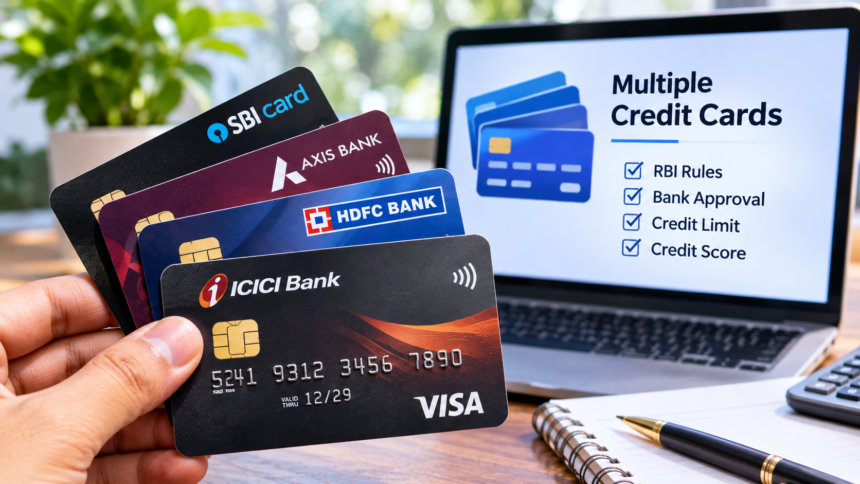
Having multiple credit cards has become increasingly common. Many people use different cards to take advantage of shopping offers, travel benefits, dining discounts and other rewards. However, a common question among cardholders is whether there is a limit on the number of credit cards one person can own.
Does the Reserve Bank of India (RBI) allow individuals to hold only two or three credit cards, or can someone apply for more? The answer is that there is no fixed limit prescribed by the RBI. However, banks follow their own eligibility checks before approving new credit card applications.
Does RBI Set a Limit on the Number of Credit Cards?
The Reserve Bank of India does not prescribe a maximum number of credit cards that an individual can hold. This means a person can have two, three, four or even more cards from different banks, provided they meet the respective banks’ eligibility requirements.
However, the absence of an RBI limit does not mean that banks must approve every application. Financial institutions assess an applicant’s overall financial position before issuing another card.
For example, if someone already has three credit cards with a combined limit of ₹5 lakh and applies for a fourth card, the bank may review the person’s complete financial profile before making a decision.
What Do Banks Check Before Approving Another Credit Card?
When someone applies for an additional credit card, banks generally examine several financial factors. These include the applicant’s monthly or annual income, existing repayment obligations, previous payment history and current outstanding debt.
The bank uses this information to assess whether the applicant can manage additional credit responsibly. Having multiple existing cards does not automatically guarantee approval of another one.
How Should You Manage Multiple Credit Card Limits?
Owning several credit cards can provide flexibility, but cardholders should avoid spending simply because a higher combined credit limit is available.
For instance, if you have four credit cards with a total combined limit of ₹4 lakh, it does not mean you should use the entire amount. Your spending should remain within what you can comfortably repay every month.
Paying the outstanding bill in full by the due date is important. If you fail to clear the full amount on time, interest charges and additional fees may apply to the unpaid balance.
Managing spending carefully can help prevent unnecessary debt and make multiple credit cards easier to handle.
Can Having Multiple Credit Cards Reduce Your CIBIL Score?
Simply owning several credit cards does not automatically damage your credit score. What matters more is how responsibly you use them and whether you make payments on time.
Regular repayments and disciplined credit usage are important aspects of maintaining a healthy credit profile. On the other hand, missed payments and poorly managed outstanding balances can negatively affect your creditworthiness.
Therefore, before applying for another credit card, consider your existing financial commitments and ability to repay the bills.
Disclaimer
This article is intended for general financial awareness and informational purposes only. Credit card approval policies, eligibility requirements, interest rates and charges may vary between banks. Readers should check the latest terms and conditions with their respective card issuers before applying for additional credit facilities. This content should not be considered personalised financial advice.