
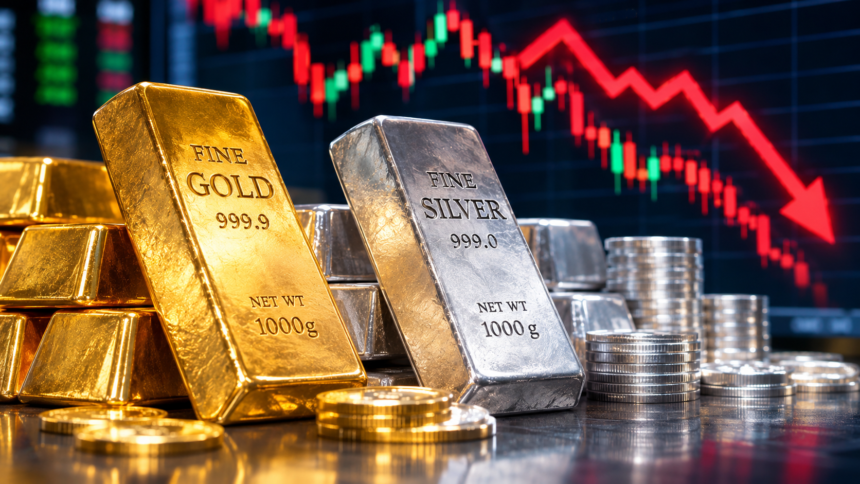
Gold and silver prices have witnessed a sharp correction after delivering strong gains during the previous rally. The sudden decline has caught many investors by surprise, particularly those who purchased precious metals near their record highs earlier this year. With prices falling significantly, investors are now facing an important question: Is this the right time to buy gold and silver at lower levels, or should they wait for the market to stabilise?
The recent sell-off has been driven by several factors, including expectations of higher US interest rates, a stronger dollar, rising bond yields and uncertainty in global financial markets. Silver has experienced an even steeper decline than gold, adding to concerns among investors.
However, market experts believe that a sharp correction does not necessarily mean the long-term investment case for precious metals has disappeared. The right approach may depend on an investor’s financial goals, investment horizon and ability to handle market volatility.
Why Have Gold and Silver Prices Fallen So Sharply?
Gold and silver experienced a major rally before reversing direction in recent weeks. According to market data reported on November 20, gold had fallen approximately 31.5% from its January peak, while silver had declined around 64.2%.
One of the major reasons behind the correction is the changing outlook for US monetary policy. Expectations that the Federal Reserve may keep interest rates higher for longer have reduced the attractiveness of precious metals.
Unlike bonds and fixed-income instruments, gold does not generate regular interest income. When bond yields rise, some investors prefer interest-bearing assets over gold, increasing selling pressure on bullion.
A stronger US dollar has also contributed to the decline. Since international gold and silver prices are generally quoted in dollars, a stronger dollar can make these metals more expensive for buyers using other currencies and weigh on demand.
Another factor is the recent weakness in global equity markets, particularly concerns surrounding artificial intelligence-related investments. Analysts have suggested that some investors may have sold gold and silver to raise cash and manage losses elsewhere in their portfolios.
Silver Has Fallen More Than Gold
The correction in silver has been particularly severe because the metal serves two different purposes. Apart from being an investment asset, silver is widely used in industrial applications.
Concerns about global economic growth and industrial demand have therefore added pressure to silver prices. Expectations of tighter monetary conditions have also affected sentiment across commodity markets.
Supply conditions remain an important factor for silver. The Silver Institute has projected another annual supply deficit, although this has not prevented prices from falling during the recent market sell-off.
Gold, meanwhile, continues to receive support from factors such as central-bank purchases, geopolitical uncertainty and concerns about government debt and inflation. However, these longer-term factors have not been strong enough to prevent the recent correction.
The difference between the two metals is important for investors. Silver generally experiences sharper price movements, making it a comparatively volatile investment during uncertain market conditions.
Should Investors Buy Gold and Silver at Lower Prices?
The recent decline may appear attractive to investors who were waiting for an opportunity to enter the precious-metals market. However, buying immediately after a major fall carries risks because prices may decline further before recovering.
Market experts have advised investors against putting their entire investment amount into gold or silver at once. Instead, staggered buying may help reduce the risk of entering the market at an unfavourable price.
For example, investors planning to allocate a fixed amount to gold could divide their purchases into smaller portions over several weeks or months. This approach reduces dependence on a single entry price and helps manage short-term volatility.
Investors should also consider their existing portfolio allocation. Gold can play a diversification role, but putting too much money into one asset class may create an imbalance in the overall investment portfolio.
Those investing for long-term diversification may approach the current correction differently from short-term traders. Short-term investors should be particularly careful because prices can remain volatile even after a significant decline.
What Should Investors Do Before Making a Decision?
Before buying gold or silver, investors should consider their financial goals, investment period and risk tolerance.
Gold may suit investors looking to diversify their portfolios and maintain exposure to a precious metal over the longer term. Silver, on the other hand, can offer exposure to both investment demand and industrial activity, but its price movements may be more unpredictable.
Investors should also avoid making decisions based only on recent price declines. A lower market price does not automatically mean that an asset has reached its bottom.
It is equally important to review the form of investment being considered. Physical gold and silver, exchange-traded funds and other market-linked products can have different costs, risks and liquidity characteristics.
Rather than attempting to predict the exact bottom, investors may benefit from following a disciplined investment strategy and reviewing their allocation periodically.
Gold and Silver Outlook: Is a Recovery Possible?
The near-term outlook for precious metals remains uncertain. The direction of the US dollar, bond yields, inflation data and Federal Reserve policy will continue to influence investor sentiment.
Some analysts believe the recent decline has pushed gold and silver into oversold territory, creating the possibility of a short-term recovery. However, a temporary rebound should not automatically be considered confirmation that the broader correction is over.
Gold’s longer-term investment case continues to receive support from central-bank demand, geopolitical risks and concerns about inflation and government debt. Silver’s future performance will also depend on industrial demand and the balance between global supply and consumption.
For investors, the current correction presents both an opportunity and a risk. Those planning to invest may consider gradual purchases rather than committing their entire amount immediately. Waiting for clearer signs of market stabilisation is another option for investors who are uncomfortable with further volatility.
Ultimately, the decision to buy or wait should depend on individual financial goals rather than the fear of missing a temporary price recovery.
Disclaimer: This article is intended for general informational and educational purposes only and should not be considered investment advice. Gold and silver prices are subject to market risks and can fluctuate significantly. The market data and expert views mentioned are based on reports available around November 20–22, 2026. Investors should conduct their own research or consult a SEBI-registered financial adviser before making investment decisions.