
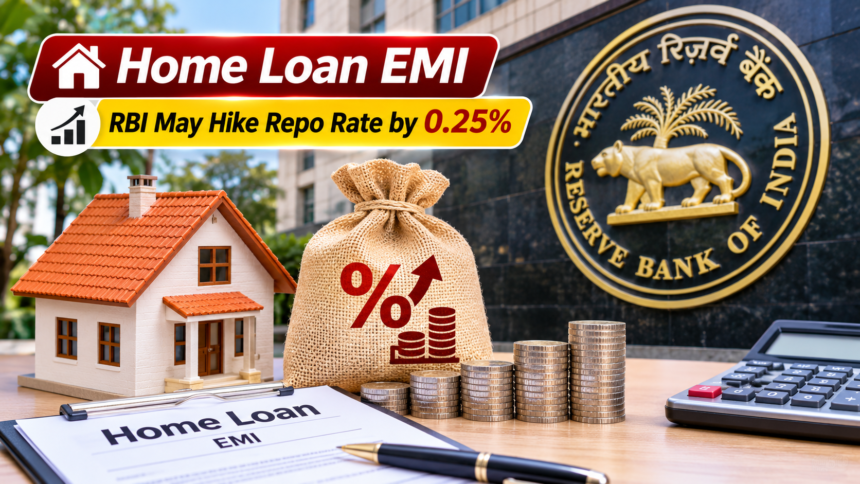
Home Loan EMI: Borrowers and home loan customers are closely watching the Reserve Bank of India’s (RBI) upcoming monetary policy decision. According to an assessment by a senior official at Baroda BNP Paribas Mutual Fund, the central bank could consider increasing the repo rate by 0.25 percentage points in its December policy review.
Lower international crude oil prices have provided some relief on the inflation front. However, concerns about food prices, monsoon conditions and domestic inflationary pressures continue to remain. Experts believe the RBI may need to take a cautious approach while deciding its next interest rate move.
RBI Repo Rate Decision: What Are Experts Predicting?
Prashant Pimpale, Chief Investment Officer for Fixed Income at Baroda BNP Paribas Mutual Fund, believes a 0.25 percentage-point rate increase could be a practical option under the current economic conditions.
According to him, a moderate adjustment would allow the RBI to assess domestic inflation trends while keeping an eye on international developments and geopolitical uncertainties.
He also pointed out that global conditions have changed following developments after the US midterm elections. The resumption of negotiations has helped ease international tensions and contributed to a decline in crude oil prices.
Pimpale shared these views with PTI, suggesting that a measured approach to monetary policy would be more appropriate at this stage.
RBI Monetary Policy Meeting Scheduled for December 2–4
The RBI’s Monetary Policy Committee (MPC) is scheduled to meet from December 2 to December 4 to review the country’s economic conditions and decide on the policy interest rate.
During its October review, the central bank increased interest rates by 0.25 percentage points. This was its first rate hike in nearly four years.
At the time, inflation concerns, a weakening rupee and elevated crude oil prices were among the factors influencing the central bank’s monetary policy outlook.
The RBI also shifted its stance from neutral to phased tightening in its previous review. Governor Sanjay Malhotra indicated that a rate cut was unlikely under the prevailing circumstances.
Falling Crude Oil Prices Offer Some Relief
International crude oil prices have declined below $100 per barrel after previously trading in the range of $115–$118 per barrel.
This fall has reduced expectations of aggressive monetary tightening. Earlier, some market experts had anticipated an increase of 0.25 to 0.50 percentage points, with cumulative hikes of around 0.75 to 1 percentage point across the next few policy reviews.
However, the recent decline in crude oil prices could influence the RBI’s assessment and its approach to future rate decisions.
Food Inflation Remains a Major Concern
Despite the improvement in crude oil prices, domestic inflation continues to require attention.
Pimpale highlighted that food prices remain a concern because of deficient monsoon conditions and other supply-related disruptions. These factors could put additional pressure on household expenses and overall inflation.
The RBI will therefore need to consider both domestic economic conditions and international developments before making its next policy announcement.
For home loan borrowers, any change in the repo rate could influence lending rates and EMI obligations, depending on their loan terms and interest-rate arrangements. The final decision will become clear after the December MPC meeting.
Disclaimer: This article is intended for general informational purposes only and should not be considered financial or investment advice. The possibility of a repo rate increase discussed here represents an expert assessment, not a confirmed RBI decision. Actual interest rate changes will depend on the Monetary Policy Committee’s official announcement.