
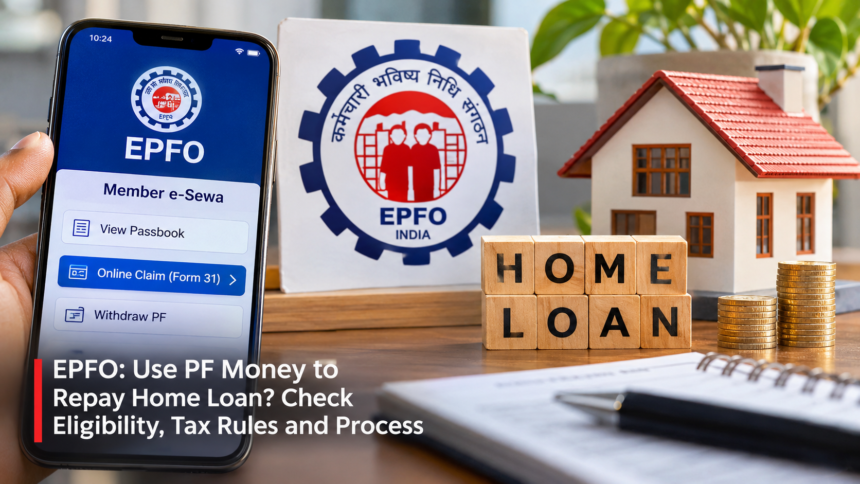
Buying a house often involves taking a home loan that can continue for several years. The monthly EMI can become a financial challenge for borrowers, especially when household expenses increase. However, eligible employees may be able to use a portion of their Employees’ Provident Fund (EPF) savings to meet certain housing-related expenses, including home loan repayment.
Under EPFO rules, members can withdraw money from their PF accounts for specified housing purposes if they fulfil the required conditions. However, this facility is not available to everyone automatically. Employees should understand the eligibility requirements, possible tax implications and impact on their retirement savings before making a withdrawal.
What Are the Eligibility Conditions for Using PF Money to Repay a Home Loan?
According to the rules mentioned in the source information, employees generally need a PF contribution history of around 5 to 10 years to qualify for housing-related withdrawals. Certain recent changes have reportedly reduced this requirement to three years in specific cases.
Eligible members of housing societies and first-time homebuyers may be permitted to withdraw up to 90% of their PF balance, subject to the prescribed conditions.
Another important requirement concerns property ownership. The house for which the loan is being repaid must be owned by the employee, their spouse or jointly by both.
Employees should check the applicable EPFO provisions before submitting a withdrawal request.
What Are the Tax Rules for PF Withdrawals?
The tax treatment of PF withdrawals depends largely on the total period of continuous service.
If an employee completes five years or more of continuous service, the PF withdrawal is generally tax-free, with no TDS deduction. Service with previous employers may also be counted, provided the accumulated PF balance has been transferred to the current account.
However, if the total service period is less than five years, the withdrawal may become taxable, depending on the applicable conditions. In certain cases, withdrawals above the prescribed limits may attract TDS at 10%.
Therefore, employees should check their total service period and applicable tax rules before withdrawing money from their PF account.
How to Apply for PF Withdrawal Online?
Eligible EPFO members can submit their withdrawal applications through the official EPFO Member e-Sewa portal.
The online application process involves the following steps:
- Visit the EPFO Member e-Sewa portal.
- Log in using your UAN and password.
- Select the online claim option.
- Choose Form 31 for the applicable advance withdrawal.
- Enter the required details and submit the application.
Before submitting the claim, make sure your personal information, bank details and other required records are correct.
Is Using PF Money to Repay a Home Loan a Good Decision?
Withdrawing PF money can help reduce the financial burden of a home loan, particularly when the loan interest rate is higher than the interest earned on PF savings.
Using part of the accumulated balance to repay a loan may reduce the outstanding principal and lower the interest payable over time.
However, there is an important disadvantage. Money withdrawn from the PF account will no longer remain invested for retirement. As a result, members also lose the opportunity to earn future interest on the withdrawn amount.
Before making a decision, employees should compare their home loan interest costs with the long-term benefits of keeping their PF savings invested. The withdrawal should be considered carefully, keeping both immediate financial needs and retirement planning in mind.
Disclaimer: This article is intended for general informational and educational purposes only. PF withdrawal eligibility, permitted amounts and tax treatment depend on applicable EPFO rules and individual circumstances. Rules may change, so members should verify the latest provisions through official EPFO notifications or consult a qualified tax professional before submitting a withdrawal claim.