
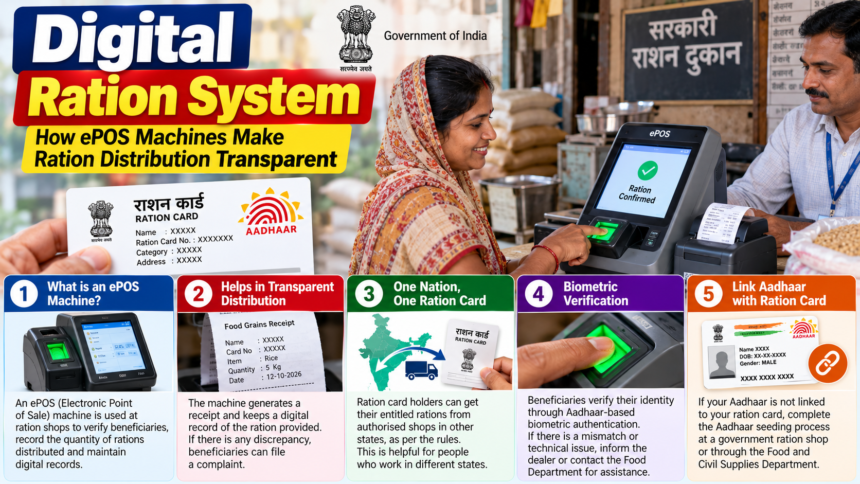
India’s Public Distribution System (PDS) provides subsidised food grains to eligible households through government-authorised ration shops. To improve record-keeping and make the distribution process more transparent, electronic Point of Sale (ePOS) machines are used at many ration outlets.
These devices help verify beneficiaries, record the quantity of ration distributed and maintain digital transaction details. They also support Aadhaar-based biometric authentication and the portability of ration benefits under the One Nation, One Ration Card scheme, subject to applicable rules.
What Is an ePOS Machine at a Ration Shop?
An ePOS machine is an electronic device used to record ration distribution digitally. It helps ration dealers verify eligible beneficiaries, check relevant ration card details and register the quantity of food grains provided.
Where Aadhaar-based biometric authentication is used, beneficiaries may be asked to verify their identity through fingerprints or another approved method. The exact procedure can differ depending on state rules and the systems available at the ration shop.
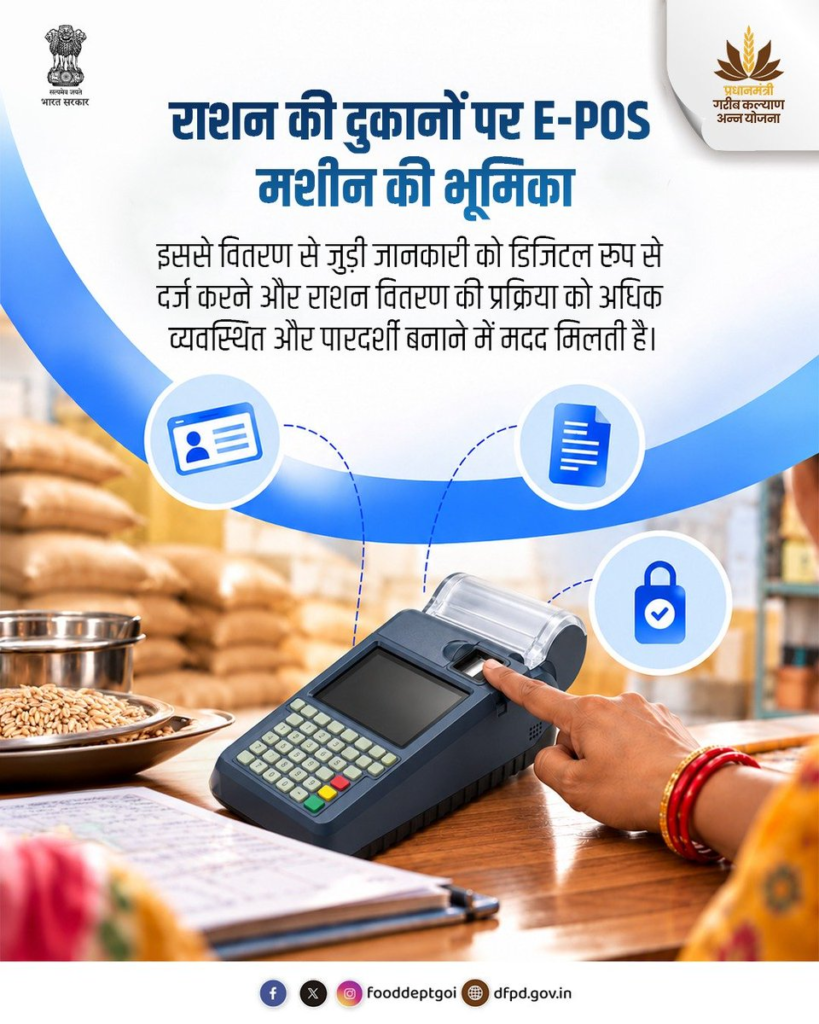
By recording transactions electronically, ePOS machines help maintain a digital trail of ration distribution and make it easier to review transaction details when a discrepancy arises.
Key Benefits of the Digital Ration System
One of the main advantages of ePOS machines is that they create a digital record of the ration issued to each eligible beneficiary. A transaction receipt may also be generated, allowing the recipient to check the details of the distribution.
If the quantity received does not match the entitlement or another problem occurs, beneficiaries can use the available records to raise a complaint with the relevant Food and Civil Supplies Department.
The system also supports the One Nation, One Ration Card facility. Under this arrangement, eligible ration card holders can collect their entitled food grains from authorised ration shops in other states, subject to scheme rules and applicable entitlements. This can be particularly useful for people who move away from their home state for employment.
What to Do If Biometric Verification Fails
Sometimes, fingerprint authentication may fail because of a mismatch, or a ration shop may experience technical or network problems. In such cases, beneficiaries should inform the ration dealer and ask about the approved procedure for resolving the issue.
If the problem continues, they can seek assistance from the local Food and Civil Supplies Department. Eligible beneficiaries who are unable to obtain their ration should also ask about the applicable grievance process.
A failed biometric authentication does not necessarily mean that a person loses their entitlement to ration benefits. The next steps depend on the applicable rules and the alternative verification procedures available in that state.
How to Link Aadhaar With a Ration Card
If Aadhaar has not yet been linked to a ration card, beneficiaries can enquire about the Aadhaar seeding process through their government ration shop or the local Food and Civil Supplies Department.
The required documents and procedure may vary between states. For this reason, cardholders should follow the instructions provided on their state’s official portal or by the relevant department.
Disclaimer: This article is intended for general information and is based on the supplied material. ePOS procedures, Aadhaar linking requirements, biometric verification methods and grievance processes may differ by state and can change over time. For the latest rules and assistance, contact your local Food and Civil Supplies Department or consult the official state government portal.