
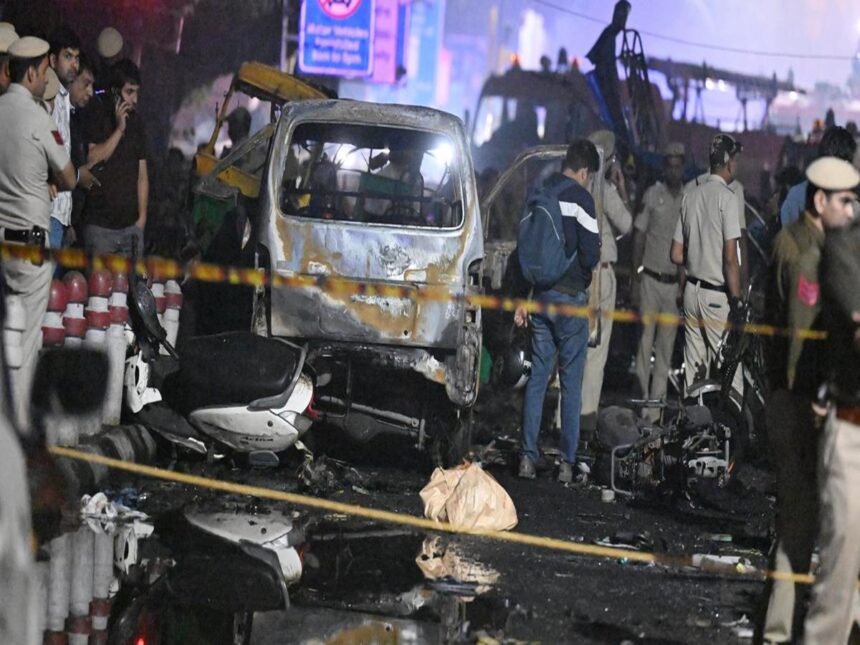
The Digambar Jain Lal Mandir in Delhi’s Chandni Chowk may have been the original target of the suicide bomber behind last year’s deadly Red Fort car blast, according to details contained in the National Investigation Agency’s (NIA) chargesheet.
The revelation emerged during court proceedings related to the distribution of copies of the chargesheet, which outlines the accused’s movements in the moments leading up to the explosion.
Umar-un-Nabi Tried to Park Near Lal Mandir
According to the NIA’s investigation, Umar-un-Nabi was driving an explosives-filled Hyundai i20 when he allegedly attempted to park near Lal Mandir shortly before the blast.
CCTV footage reportedly captured Nabi trying to position the vehicle near the temple. However, the presence of heavy traffic and police personnel appears to have disrupted his plan.
The chargesheet states that Nabi subsequently made a U-turn and drove in the direction of the Red Fort.
Investigators have reconstructed his movements from the Sunhari Masjid parking area. The NIA said Nabi left the parking lot at approximately 6:37 pm, before driving towards Lal Mandir. Around 6:50 pm, the explosives-laden Hyundai i20 exploded near Gate No. 4 of the Red Fort.
Although investigators suspect Lal Mandir could have been the bomber’s first intended target, the NIA has not made a conclusive determination on this point. Nabi was killed in the explosion, making it difficult for investigators to establish his exact intention.
The blast, according to the chargesheet, claimed 11 lives and left 29 people injured.
NIA Identifies Umar-un-Nabi as the Alleged Mastermind
The NIA has described Umar-un-Nabi as the alleged mastermind and operational head of a revived terror network.
Its chargesheet provides details of what investigators have described as the first vehicle-borne improvised explosive device (VBIED) attack reported in the national capital.
According to the agency, the bomb was triggered using a remote command mechanism concealed in one of Nabi’s shoes. A metal component attached to the heel of one shoe was recovered near the Hyundai i20. Investigators said forensic examination detected TATP, potassium and ammonium nitrate on the item.
Alleged Efforts to Revive Terror Module
The NIA has alleged that Nabi, who was also known by the names Pinda and Rahul Bhat, had been working since early 2022 to reactivate a dormant terror module.
The agency claims his objective was to build a network of radicalised individuals who could be used to carry out terrorist attacks against the Indian state.
The chargesheet identifies him as the alleged “operational in-charge” of AGuH Interim, which the NIA describes as a revived form of Al-Qaida in the Indian Sub-continent.
Investigators allege that Nabi played several roles within the network. These included allegedly radicalising recruits, promoting extremist ideas about martyrdom or “Shahadat”, arranging secret meetings, facilitating terror-related training and overseeing logistical requirements.
The chargesheet also mentions an alleged plan by Nabi to travel to Afghanistan for “Hijrat”, against the backdrop of his growing association with the extremist ideology allegedly promoted by the group.
Extremist Material and Explosive Preparations
According to the NIA, Nabi and other members of the alleged module possessed and shared extremist literature that promoted armed conflict and violence.
The agency has also described alleged preparations carried out by Nabi while he was staying in Nuh, Haryana.
Investigators reportedly recovered material linked to urea-based explosives from digital storage devices. The documents allegedly included references to extracting urea from urine as part of preparations.
The chargesheet further cites witness statements concerning a strong foul odour reportedly coming from Nabi’s rented accommodation. According to the accounts cited by the agency, he allegedly kept urine stored inside a polythene bag.
The NIA’s findings form part of its wider investigation into the Red Fort blast and the alleged terror network behind the attack. The agency is continuing to examine the planning, recruitment, logistics and execution of the attack, as well as the possible motives behind Nabi’s final movements before the explosion.