
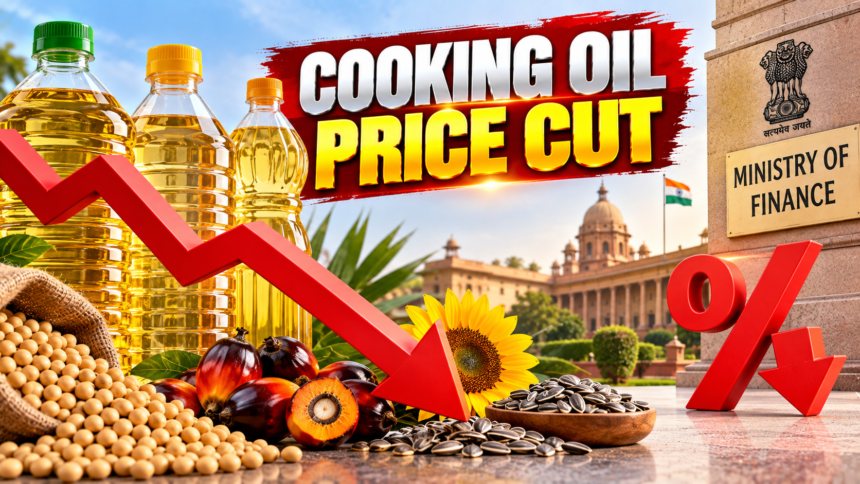
The central government has reduced the basic customs duty (BCD) on several major edible oils ahead of the festive season. The Finance Ministry notified the changes on September 23, with the revised rates coming into effect from September 24, 2026.
The move covers crude and refined soybean, palm and sunflower oils. Lower import duties can reduce the landed cost of imported edible oils, which may eventually put downward pressure on domestic prices, depending on global rates, currency movements and how much of the benefit is passed on through the supply chain.
New Customs Duty Rates on Cooking Oil
Under the revised structure, the BCD on crude soybean oil and crude palm oil has been reduced from 10% to 5%. For refined soybean oil and refined palm oil, the duty has been lowered from 32.5% to 27.5%.
The biggest reduction has been announced for crude sunflower oil, for which the 10% BCD has been removed completely. The duty on refined sunflower oil has also been reduced from 32.5% to 22.5%.
The new rates are effective from September 24, 2026, according to Notification No. 31/2026-Customs dated September 23.
With the festive period approaching, the change could influence the cost of edible oils used by households and food businesses. However, the reduction in import duty does not automatically mean an immediate or equal fall in retail prices.
Vegetable Oil Imports Show a Mixed Trend
Data released by the Solvent Extractors’ Association of India (SEA) shows that India imported 16.09 lakh tonnes of vegetable oil, including edible and non-edible oils, in August 2026, compared with 17.35 lakh tonnes in August 2025. This represents a decline of about 7%. Edible-oil imports stood at 15.72 lakh tonnes, while non-edible oil imports were 37,150 tonnes.
SEA said total vegetable-oil imports during the first 10 months of the 2025-26 oil year, from November 2025 through August 2026, reached 138.84 lakh tonnes, compared with 133.37 lakh tonnes during the corresponding period of the previous year. That amounts to an increase of around 4%.
During the same period, edible-oil imports rose to 136.20 lakh tonnes from 130.25 lakh tonnes a year earlier.
Crude Oil Imports Continue to Dominate
SEA data shows a significant difference between crude and refined oil imports during November 2025-August 2026. Crude edible-oil imports increased to 129.61 lakh tonnes, compared with 113.88 lakh tonnes in the corresponding period a year earlier.
In contrast, refined-oil imports fell sharply to 6.59 lakh tonnes from 16.36 lakh tonnes. As a result, crude oils accounted for about 95% of edible-oil imports during the period, while refined oils accounted for around 5%.
In August alone, crude soybean oil imports rose to 5.54 lakh tonnes, while crude palm oil imports stood at about 7.83 lakh tonnes. Crude sunflower oil imports were around 1.61 lakh tonnes. SEA also reported that the Indian rupee had weakened by more than 9% over the previous year, increasing the landed cost of imported edible oils.
The latest customs duty reduction is therefore expected to lower the import-cost burden on key edible oils, while the actual impact on retail cooking oil prices will depend on international prices, currency movements and the extent to which the benefit reaches consumers.
Disclaimer
This article is based on government notifications and data released by the Solvent Extractors’ Association of India. Changes in international commodity prices, exchange rates, taxes, transportation costs and market conditions can affect the final retail price of edible oils. Readers should check current prices with retailers or official sources before making purchasing decisions.