
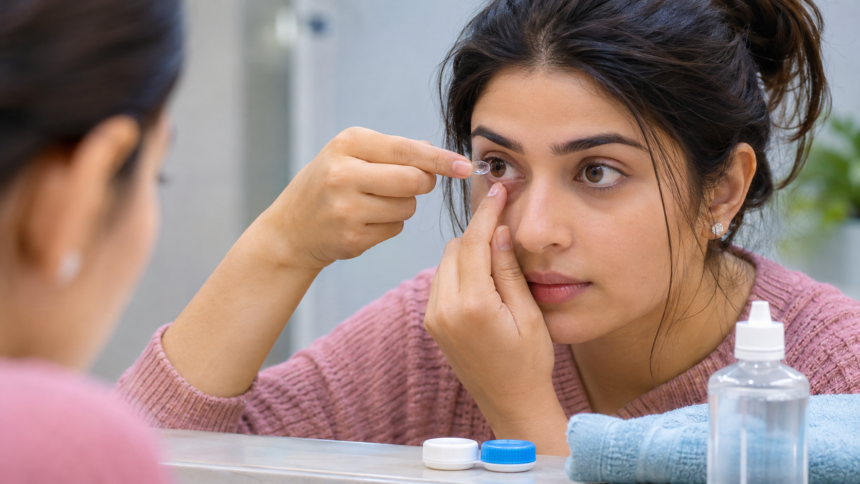
New Delhi: Contact lenses make it easier for people with vision problems to carry out their daily activities without wearing spectacles. However, incorrect use, poor cleaning habits and ignoring replacement schedules can put eye health at risk. What may begin as mild dryness or irritation can sometimes develop into a serious infection that affects vision.
One such complication is microbial keratitis, an infection of the cornea, the transparent layer at the front of the eye. It can be caused by bacteria, fungi, viruses or parasites. The chances of developing this condition increase when contact lenses are not handled, cleaned or stored properly. Following a few essential precautions can help prevent many contact lens-related problems.
6 Contact Lens Habits That Can Put Your Eyes at Risk
1. Sleeping Without Removing Contact Lenses
Forgetting to remove contact lenses before going to bed is a common mistake. Keeping them in the eyes overnight can restrict the oxygen supply to the cornea and increase the possibility of infection. Lenses may also hold microorganisms close to the eye, increasing the risk of damage.
Unless an eye specialist has specifically recommended overnight wear, lenses should always be removed before sleeping. Even products designed for extended use are not completely risk-free and should only be worn according to professional instructions.
2. Cleaning Lenses With Tap Water
Using tap water to rinse or store contact lenses can expose the eyes to harmful microorganisms. Water is not sterile and may contain Acanthamoeba, a parasite responsible for a rare but potentially sight-threatening condition called Acanthamoeba keratitis.
Contact lenses should also be removed before swimming, showering or entering a hot tub. These activities can expose lenses and eyes to microorganisms present in water. If lenses accidentally come into contact with water, follow the advice of an eye care professional before using them again.
3. Adding Fresh Solution to Old Lens Solution
Some contact lens users simply pour additional disinfecting liquid into the solution already present in the storage case. This practice does not provide the same protection as replacing the old liquid with fresh solution.
Used solution may lose its disinfecting effectiveness and allow microorganisms to accumulate. Always clean and disinfect lenses with the recommended product and follow its instructions.
Saline solution and homemade saltwater should never be treated as alternatives to proper contact lens disinfecting solutions. The lens case also needs regular cleaning and maintenance, along with replacement at the recommended intervals.
4. Using Contact Lenses Beyond Their Replacement Date
Wearing lenses longer than the prescribed period can increase the risk of irritation and other eye complications. Over time, protein deposits, dirt and microorganisms may collect on the lens surface.
Daily disposable lenses should be thrown away after use, while reusable varieties must be changed according to their prescribed replacement schedule. Extending their use to save money or avoid inconvenience can cause discomfort and damage the surface of the eye.
5. Inserting or Removing Lenses With Unclean Hands
Hands can carry bacteria, dust and other contaminants that may reach the eyes when contact lenses are handled. Touching a mobile phone, using public transport or applying makeup before handling lenses can increase the chances of transferring unwanted substances.
Wash your hands thoroughly with soap and water before touching contact lenses. Dry them with a clean, lint-free towel before inserting or removing the lenses. Handle them gently to avoid tearing or contaminating them.
6. Treating Redness and Pain as Normal Discomfort
Eye redness, excessive watering, discharge, sensitivity to light and blurred vision should not be ignored. These symptoms may indicate an infection or damage involving the cornea.
If any of these problems occur, remove the contact lenses immediately and arrange an examination with an eye specialist. Do not start wearing them again until medically advised.
Using antibiotic or steroid eye drops without professional guidance is also risky. The wrong treatment may delay proper diagnosis or worsen certain infections.
How to Keep Your Eyes Safe While Wearing Contact Lenses
Good contact lens hygiene starts with following the correct wearing and replacement schedule. Always use the recommended cleaning and disinfecting products, wash your hands before handling lenses and keep them away from water.
Avoid sleeping in contact lenses unless your eye care professional has specifically approved overnight use. Regular eye examinations can also help identify problems and ensure that your lenses remain suitable for your eyes.
Keeping a pair of spectacles as a backup is useful, particularly when your eyes feel dry or uncomfortable and you need to remove your lenses.
Contact lenses are medical devices and should be treated with care. Their convenience does not remove the need for proper hygiene and responsible handling.
When Should You Consult an Eye Specialist?
Although many contact lens-related problems can be avoided through proper care, certain infections may develop quickly and cause permanent damage to eyesight if treatment is delayed.
Persistent eye pain, redness, unusual discharge, light sensitivity or sudden changes in vision require immediate medical attention. Removing the lenses and getting an eye examination promptly can help prevent a minor problem from becoming more serious.
Disclaimer
This article is published for general health awareness and educational purposes. It should not be considered a substitute for professional medical advice, diagnosis or treatment. Contact lens care requirements may differ depending on the lens type and individual eye condition. Always follow the instructions of a qualified eye care professional and seek prompt medical attention if you experience unusual eye symptoms.