
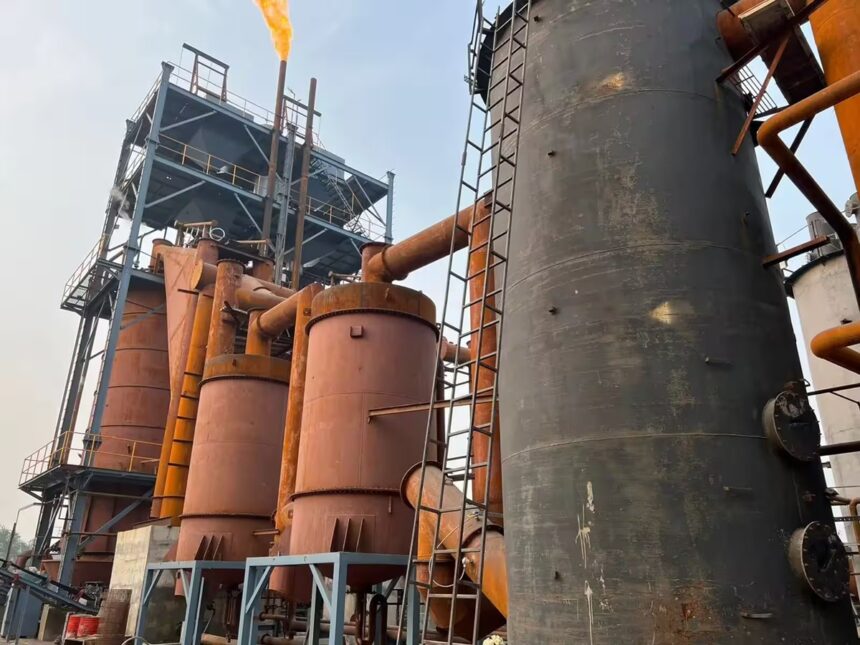
India is stepping up efforts to expand coal gasification, with eight companies, including state-owned Coal India, preparing to produce synthesis gas, or syngas, from coal.
Coal and Mines Minister G Kishan Reddy said work on these projects is expected to gather pace over the coming months as the government seeks to increase the use of domestic coal for producing energy and industrial raw materials.
The Centre is already offering financial incentives for surface coal gasification projects, although similar support is not currently available for underground coal gasification.
What Is Coal Gasification?
Coal gasification is a process in which coal is converted into synthesis gas (syngas). This gas can subsequently be used as a raw material to manufacture several important products, including:
- Methanol
- Urea
- Ammonium nitrate
- Synthetic natural gas
- Various chemical feedstocks
The technology is being promoted as a way to extract greater economic value from India’s abundant domestic coal reserves while reducing the country’s reliance on imported fuels and chemical products.
India Targets 100 Million Tonnes of Coal Gasification by 2030
The government has set an ambitious target of gasifying 100 million tonnes of coal by 2030.
In May, the Centre approved a ₹37,500 crore coal gasification programme aimed at accelerating the rollout of projects across the country. This comes on top of an earlier ₹8,500 crore incentive scheme introduced to support the sector.
The government intends to establish 25 coal gasification plants over a five-year period. Four projects are already under construction and are expected to be completed within the next year.
The programme could generate approximately ₹6,300 crore in annual mining revenue, although the government has not yet quantified the potential reduction in India’s LNG or LPG imports resulting from wider adoption of coal gasification.
Major Companies Show Growing Interest
Corporate interest in coal gasification has also been increasing.
Reports in October 2025 indicated that several major business groups were exploring opportunities to expand their participation in the sector. Government sources had indicated at the time that a new policy framework and action plan were being prepared, with three large conglomerates considering additional investments.
The latest participation by eight companies signals growing momentum around the government’s coal-to-chemicals strategy.
₹25,016 Crore Odisha Coal Gasification Project
One of the country’s most significant projects is taking shape in Lakhanpur, in Odisha’s Jharsuguda district.
Prime Minister Narendra Modi laid the foundation stone for the ₹25,016 crore project in June. Once operational, it is expected to become India’s first commercial-scale coal-to-ammonium nitrate plant.
The facility will have the capacity to manufacture approximately 2,000 tonnes of ammonium nitrate per day using indigenous coal gasification technology.
The project is being developed by Bharat Coal Gasification and Chemicals Ltd, a joint venture between Bharat Heavy Electricals Ltd (BHEL) and Coal India.
The facility will occupy around 350 acres of land held by Coal India’s subsidiary Mahanadi Coalfields Ltd. The two companies signed a land-lease agreement in April.
To facilitate such projects, the Coal Ministry has allowed coal-bearing land to be used for coal gasification initiatives. The Odisha project is also receiving ₹1,350 crore in government support under the coal gasification incentive scheme.
Government Sees ₹3 Lakh Crore Investment Opportunity
The Centre has approved coal and lignite gasification incentive programmes with a combined potential outlay of up to ₹46,000 crore.
The broader objective is to use India’s domestic coal resources to manufacture industrial and chemical feedstocks that are currently imported.
According to the Coal Ministry, India imports approximately ₹2.7 lakh crore worth of finished and intermediate chemical products every year.
The government estimates that its coal gasification programme could attract investments of approximately ₹2.5 lakh crore to ₹3 lakh crore.
It could also generate around 50,000 direct and indirect employment opportunities across the 25 proposed projects, particularly in coal-producing regions.
Coal Gasification Could Reduce Import Dependence
The government’s push reflects a broader strategy to make greater use of India’s domestic coal reserves while reducing dependence on overseas supplies.
By converting coal into syngas and subsequently using it to manufacture products such as methanol, ammonia, urea and ammonium nitrate, India could develop more domestic sources for critical industrial inputs.
With eight companies now preparing to advance syngas projects and major facilities such as the Odisha coal-to-ammonium nitrate plant moving forward, coal gasification is emerging as an important part of India’s strategy for energy security, industrial development and import substitution.