
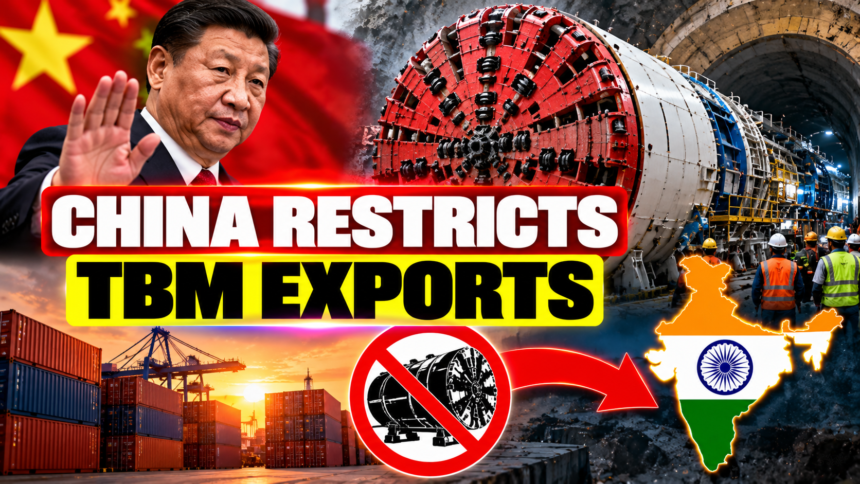
New Delhi: China’s decision to introduce export controls on tunnel-boring machines (TBMs) could create challenges for India’s infrastructure and defence construction projects, according to Pranay Kotasthane, policy expert and Deputy Director of the Takshashila Institution.
Under the new measures, exports of these machines to countries considered to be in dispute with China will require a licence. Kotasthane said the provision could particularly affect India, while also creating additional compliance requirements for international manufacturers and suppliers.
Why China’s New Export Rules Matter to India
Explaining the implications of Beijing’s decision, Kotasthane said the licensing requirement could make it harder for companies to supply tunnel-boring equipment to India.
He noted that the restrictions may extend beyond Chinese manufacturers. German and Japanese companies producing TBMs in China could also need approval from Beijing before exporting those machines to India.
The rules could therefore make manufacturing facilities in China a disadvantage for businesses seeking to serve the Indian market. Companies outside China may also face restrictions on transferring China-origin equipment to countries covered by the measures.
Earlier Delays Raise Concerns Over Construction Projects
Kotasthane pointed to a similar incident in 2024, when tunnel-boring machines manufactured by Germany-based Herrenknecht in China and intended for India were reportedly held up at customs.
He described the earlier episode as an informal restriction and said the latest decision makes the controls official. He also warned that the 3,000-metre threshold could have implications for Indian defence construction.
The new rules could lead to delays in projects that depend on imported tunnelling equipment. However, Kotasthane noted that Herrenknecht already manufactures TBMs in Chennai, including two of India’s largest machines.
He suggested that the restrictions could encourage more companies to expand manufacturing beyond China. According to him, India can benefit from this shift if it offers predictable approvals, reliable processes and faster customs clearances.
China’s Role in the Global Tunnelling Equipment Market
China is a significant supplier of tunnelling and other boring machinery used in projects such as metro rail networks and highways.
According to UN Comtrade data cited in the report, China exported approximately US$793 million worth of self-propelled coal or rock cutters and tunnelling machinery in 2025.
The equipment used in major construction projects can weigh around 3,000 tonnes, making specialised manufacturing and transportation arrangements important for infrastructure developers.
India imported tunnelling machinery worth US$800,000 from China in the last financial year, up from US$500,000 in the previous financial year. The increase followed an easing of border tensions between the two countries after the 2020 Galwan Valley clash.
Export Restrictions Come Amid International Negotiations
China’s export-control decision comes as Beijing continues negotiations with the United States and the European Union.
For India, the potential impact will depend on how the licensing rules are implemented and whether alternative manufacturing and supply arrangements can meet project requirements. Expanding domestic production and making the country more attractive for international manufacturers could become important considerations as infrastructure projects continue.
Disclaimer: This article is based on the information provided and statements attributed to Pranay Kotasthane. The potential effects of China’s export controls may depend on implementation details and individual project requirements. Readers should refer to official government notifications and company announcements for confirmed developments.