
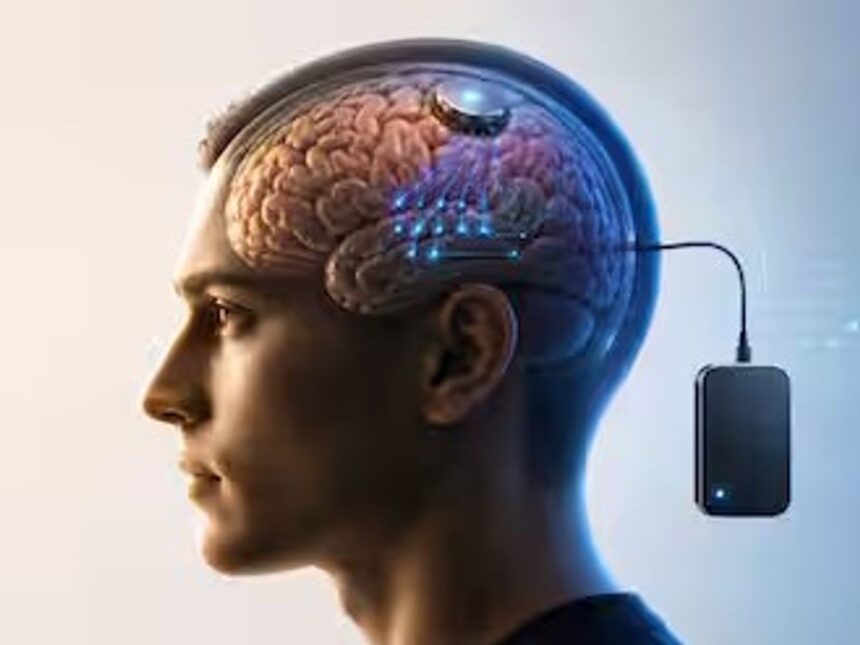
China has taken a major step forward in the brain-computer interface (BCI) race by launching the world’s first commercially approved brain-chip implant for clinical use. While Elon Musk’s Neuralink continues to undergo human clinical trials in the United States, China’s NEO brain-computer interface has already been implanted in a patient as part of a commercial medical procedure.
The landmark surgery, carried out in Shanghai, demonstrates how brain-chip technology is moving beyond experimental research and into real-world healthcare applications, offering new hope to people living with paralysis.
First Commercial Brain-Chip Implant Performed in China
According to Chinese media reports, doctors at Huashan Hospital, affiliated with Fudan University in Shanghai, successfully implanted the NEO brain-computer interface into a patient who had suffered a severe spinal cord injury in an accident.
Despite years of rehabilitation, the patient had been unable to regain proper hand function. After a comprehensive medical evaluation by a multidisciplinary team, doctors selected the patient for the groundbreaking procedure.
The implant was developed by Shanghai-based Neuracle Medical Technology, a company specializing in brain-computer interface solutions.
Patient Reportedly Recovering Well After Surgery
Chinese authorities stated that the patient remained in stable condition following the operation.
Early post-surgery assessments showed that the implant successfully captured high-quality electrical brain signals. These signals are the natural electrical impulses generated by neurons whenever the brain sends commands to different parts of the body.
The successful signal recording is considered an important step toward restoring movement in patients affected by paralysis.
What Is the NEO Brain-Computer Interface?
The NEO brain-computer interface is designed to detect and interpret brain activity before converting those signals into digital commands for external assistive devices.
Unlike traditional implants that penetrate brain tissue, the coin-sized NEO device is positioned on the surface of the brain, making the procedure less invasive.
When a patient imagines moving a hand or performing another physical action, the brain generates electrical signals. NEO captures these signals and transmits them to a computer, which interprets the brain’s intentions and sends commands to connected devices such as a robotic glove.
The primary objective of the technology is to help people with paralysis regain hand movement and perform daily activities more independently.
Regulatory Approval Marks a Major Breakthrough
A key milestone for the technology came earlier this year when China’s National Medical Products Administration (NMPA) granted commercial approval to the NEO system.
The approval made NEO the country’s first commercially authorized Class III brain-computer interface medical device, allowing hospitals to use the technology in clinical treatment rather than limiting it to research studies.
This regulatory clearance represents a significant advancement in the commercialization of brain-computer interface technology.
NEO vs Neuralink: What Sets Them Apart?
Although both NEO and Neuralink aim to help people with paralysis communicate with and control electronic devices using brain signals, the two technologies differ in both development stage and design.
Neuralink remains in the clinical trial phase in the United States. Its first product, Telepathy, is intended to enable users with paralysis to control smartphones, computers, and other digital devices through thought alone. However, the technology has not yet received full regulatory approval for commercial medical use.
NEO, by comparison, has already entered commercial healthcare in China following regulatory clearance, allowing hospitals to offer the treatment to eligible patients.
Another key difference lies in the implantation method.
Neuralink uses ultra-thin flexible threads that are inserted directly into brain tissue with the help of a specialized surgical robot. NEO, however, is positioned on the brain’s surface without penetrating the tissue, making it a less invasive alternative while still capturing the electrical signals needed for brain-computer communication.
Brain-Computer Interface Technology Enters a New Era
China’s commercial rollout of the NEO brain-chip implant marks an important moment in the evolution of brain-computer interfaces. By moving beyond clinical trials into approved medical treatment, the technology could accelerate the adoption of AI-powered neurotechnology for patients living with spinal cord injuries and paralysis.
Meanwhile, Neuralink continues to advance its clinical research in the United States as it works toward securing regulatory approval for broader commercial use. The progress of both companies highlights the rapidly evolving global competition to bring next-generation brain-computer interface technology into mainstream healthcare.