
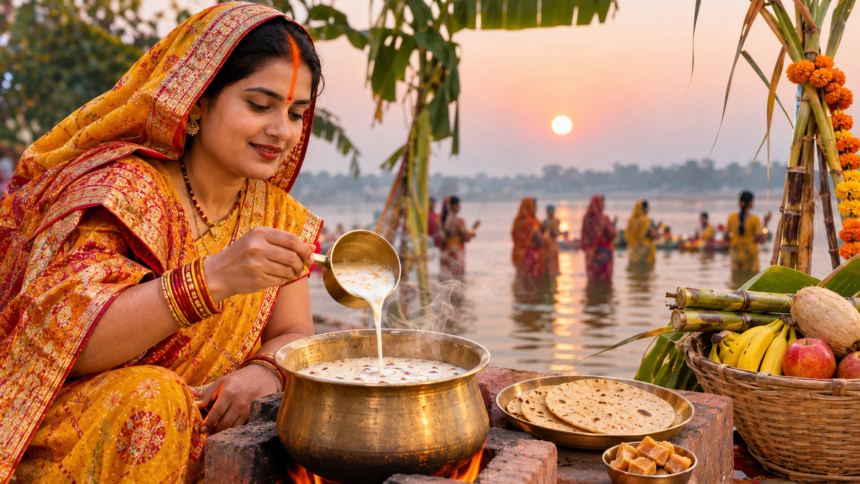
New Delhi: Chhath Puja 2026 has reached its second day on November 14, which is observed as Kharna. This day holds special importance in the four-day festival, as devotees observe a day-long fast and prepare traditional offerings of jaggery-based kheer and wheat roti.
The prasad is first offered to Chhathi Maiya and Surya Dev before devotees consume it in the evening. After completing the Kharna rituals, devotees begin a strict 36-hour nirjala fast, during which they avoid both food and water.
But why are gur ki kheer and roti traditionally prepared on Kharna? What is the significance of this ritual, and how does the fasting process continue? Here is everything to know about the second day of Chhath Puja.
Chhath Puja Kharna 2026: Why Is This Ritual Observed?
Kharna is the second day of Chhath Puja and is considered an important part of the festival’s religious observances.
Devotees maintain a fast from morning until evening. After sunset, they take a bath and prepare the traditional prasad while following strict cleanliness practices.
The prepared offerings are presented to Chhathi Maiya and the Sun God with prayers and devotion. After the worship is completed, devotees consume the prasad themselves.
This ritual marks the beginning of the more demanding nirjala fast, which continues for approximately 36 hours.
Why Are Gur Ki Kheer and Wheat Roti Prepared on Kharna?
The traditional Kharna offering mainly consists of gur ki kheer and wheat flour roti. These simple preparations have a special place in Chhath Puja traditions.
The kheer is generally prepared using rice, milk and jaggery instead of refined sugar. Jaggery is traditionally considered a sattvic ingredient, while wheat roti represents simplicity and traditional food practices.
In many households, devotees prepare the prasad on an earthen stove using mango wood as fuel. The food is cooked with particular attention to purity and cleanliness because it is considered an important religious offering.
Although preparation methods may differ slightly between regions and families, gur ki kheer and roti remain central to the Kharna tradition.
When Does the 36-Hour Nirjala Fast Begin?
The nirjala fast begins after devotees complete the evening Kharna rituals and consume the prasad on November 14.
During this period, devotees avoid eating and drinking until the fast is completed through the prescribed Chhath rituals.
The upcoming observances are scheduled as follows:
- November 14, 2026 – Kharna: Devotees observe a day-long fast and consume the traditional prasad in the evening.
- November 15, 2026 – Sandhya Arghya: Devotees offer prayers and arghya to the setting Sun.
- November 16, 2026 – Usha Arghya: Prayers are offered to the rising Sun, followed by Paran, marking the conclusion of the fast.
These rituals form the central part of Chhath Puja, during which devotees pray for family happiness, health and prosperity.
What Precautions Are Followed While Preparing Kharna Prasad?
Cleanliness is given particular importance while preparing food for Kharna. Families take special care to maintain the purity of the kitchen, cooking utensils and ingredients.
Many households keep separate utensils exclusively for preparing Chhath prasad. Traditional cooking methods are also followed, although the exact preparation process can vary depending on regional customs.
The food is prepared with devotion and offered to Chhathi Maiya and Surya Dev before being distributed or consumed according to family traditions.
Kharna is therefore not just about preparing a traditional meal. It marks an important transition in Chhath Puja, as devotees complete the first stage of fasting and prepare themselves for the demanding 36-hour observance.
Disclaimer: This article is intended for general informational and cultural purposes only. Rituals, food preparations and fasting practices may vary across regions and families. Devotees should follow their family traditions and seek appropriate medical advice before undertaking prolonged fasting, particularly if they have health concerns.