
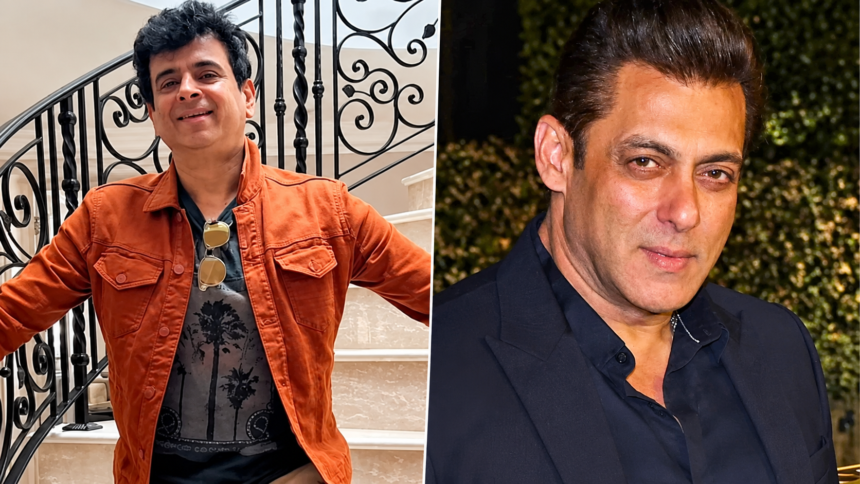
Singer Palash Sen, the frontman of Euphoria, has criticised Salman Khan over his recent comments on paid public relations campaigns and online trolling in Bollywood. The singer suggested that influential figures in the film industry have also contributed to the practices they now speak out against.
Sen’s remarks follow Khan’s comments on a Bigg Boss 20 episode of ‘Weekend Ka Vaar’, during which the actor raised concerns about online harassment, negative publicity and paid campaigns targeting celebrities.
What Did Salman Khan Say on Bigg Boss 20?
During the reality show’s ‘Weekend Ka Vaar’ segment, Salman Khan expressed his displeasure over the growing trend of social media trolling. He also defended Katrina Kaif after she faced body-shaming comments about her post-pregnancy weight.
Khan questioned the practice of paying individuals or groups to spread negativity about others in the entertainment industry, bringing renewed attention to the issue of organised online campaigns.
Palash Sen Questions Salman Khan’s Role in Paid PR
Palash Sen offered a different perspective on the controversy, arguing that such practices often begin with influential people at the top of the industry.
“He’s a part of starting this. Let’s not forget that. Problems never arise from the bottom of the hierarchy; it starts from the top,” Sen said.
The singer further suggested that established personalities in Bollywood have relied on public relations professionals to maintain their positions over the years.
“I am not pointing a finger at anyone, but if you live by the sword, you are also going to get killed by the sword. Everybody in the film industry who has maintained their position for many, many years, obviously has played with the PR guys; we all know it,” he added.
Although Sen acknowledged that Khan had spoken openly about the issue, he questioned whether the actor’s comments were entirely spontaneous or part of a planned narrative on Bigg Boss 20.
Palash Sen on the Challenges of Identifying Paid Campaigns
Sen also discussed how difficult it has become to distinguish genuine audience responses from reactions allegedly driven by organised PR campaigns.
As an example, he recalled a film trailer featuring a leading female actor that received an unusually high number of dislikes. According to Sen, YouTube subsequently disabled the dislike feature for that particular video. He cited the incident as an example of how online activity can complicate the process of understanding public opinion.
The Euphoria frontman also explained why he has chosen to stay away from the political dynamics he associates with Mumbai’s film industry. He said he preferred not to live in the city to avoid industry politics, the formation of groups and the pressure to flatter influential individuals.
Sen expressed the view that show business can sometimes place greater emphasis on appearances and public perception than on genuine artistic expression.
His comments have brought the debate over paid PR, online trolling and the influence of powerful industry figures back into focus, following Salman Khan’s remarks on Bigg Boss 20.