
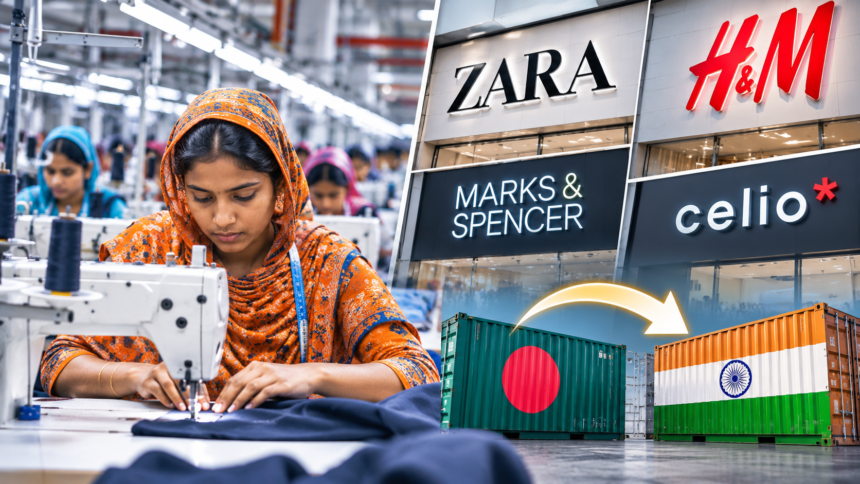
Several major international fashion brands are reportedly moving their garment manufacturing orders away from Bangladesh, creating fresh opportunities for India’s textile industry. Companies including Zara, H&M, Marks & Spencer and Celio have shifted orders worth approximately $254 million (around Rs 2,350 crore), with India emerging as the biggest beneficiary.
New Delhi: Bangladesh’s garment manufacturing sector is facing increasing pressure as labour unrest, factory shutdowns and production delays disrupt operations. According to an exclusive Reuters report published on November 27, international retailers are redirecting a significant volume of their orders to alternative manufacturing destinations, with Indian suppliers receiving the largest share.
The development could have important consequences for Bangladesh’s export-dependent economy, where the garment sector contributes more than 80 per cent of total export earnings. At the same time, Indian textile manufacturers are getting an opportunity to attract international buyers and expand their production business.
Why Are Zara, H&M and Other Brands Moving Orders From Bangladesh?
The shift in manufacturing orders comes amid ongoing wage-related protests by garment workers in Bangladesh. Demonstrations have continued since early November, creating uncertainty for factories and international clothing companies.
On November 25, Bangladesh’s wage board approved a 36 per cent increase in the minimum monthly wage, taking it from 12,500 taka to 17,000 taka. However, workers had demanded a minimum monthly salary of 18,000 taka, and the revised amount has not prevented further protests.
Production activities have also been affected by repeated factory closures, energy shortages and political uncertainty. These disruptions have made it increasingly difficult for manufacturers to maintain production schedules and fulfil international orders on time.
For global fashion retailers, timely deliveries are essential because their products are linked to seasonal collections and fixed retail schedules. Delays of even a few weeks can affect the availability of clothing in stores, encouraging brands to look for more reliable manufacturing locations.
Bangladesh Garment Industry Crisis: What the Numbers Indicate
The scale of the disruption is becoming a concern for Bangladesh’s export industry. According to the Bangladesh Garment Manufacturers and Exporters Association (BGMEA), factory and production disruptions between November 1 and November 18 resulted in substantial business losses.
The reported transfer of orders worth approximately Rs 2,350 crore highlights the growing pressure on the country’s garment manufacturers.
The industry employs more than 40 lakh people and remains one of Bangladesh’s most important sources of export revenue and foreign exchange. Any prolonged slowdown could affect factory workers, manufacturers and the wider economy.
How India Could Benefit From Bangladesh’s Garment Industry Crisis
India’s textile manufacturing sector could gain significantly as international brands search for alternative suppliers. Manufacturing centres such as Tiruppur and Noida may receive additional orders, potentially improving factory utilisation and creating employment opportunities.
The increase in wages in Bangladesh could also reduce the manufacturing cost advantage that the country previously enjoyed over some competing markets.
However, India is not the only destination attracting international fashion companies. Vietnam, Cambodia and Indonesia are also competing to secure manufacturing contracts from global retailers.
Speaking to Reuters, BGMEA director M Mohiuddin Chowdhury said that delivery schedules become more important than pricing when international brands face strict deadlines. He also pointed out that Indian manufacturers can offer a delivery advantage of approximately one week compared with Bangladesh.
Could Bangladesh Permanently Lose Its Garment Orders?
Whether Bangladesh loses these international orders permanently will depend largely on how quickly the country can restore normal factory operations and address workers’ concerns.
With more than 40 lakh people employed in the garment industry, continued disruptions could put employment, export earnings and foreign exchange inflows under pressure.
For Bangladesh, stabilising production and resolving wage-related disputes will be important to maintaining relationships with international fashion retailers.
India, meanwhile, will need to demonstrate that its manufacturers can handle large international orders while maintaining competitive prices, consistent quality and reliable delivery schedules.
The long-term impact will depend on whether Indian manufacturers can turn this temporary shift in business into lasting partnerships with global fashion brands.
Disclaimer: This article is based on the information provided and the Reuters report referenced in the original source. The reported order transfers and estimated financial figures may change as further information becomes available. The discussion of potential benefits for India’s textile industry reflects the reported developments and should not be treated as a confirmed forecast of future business or employment growth.