
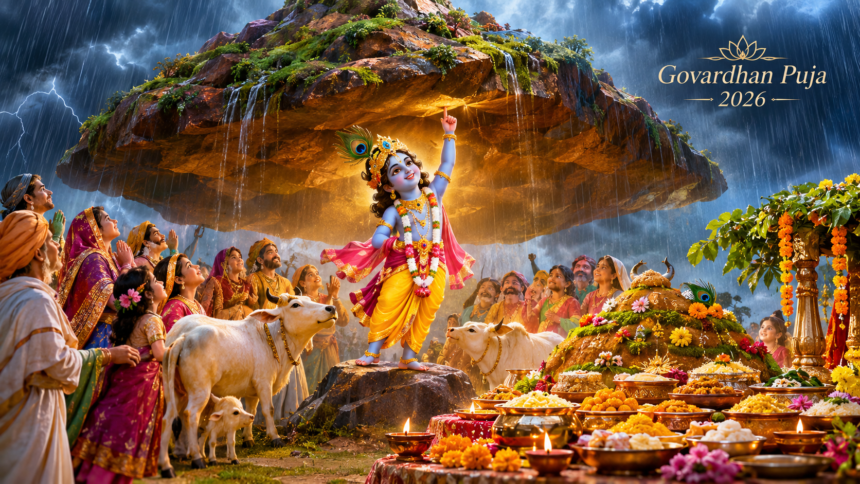
New Delhi: Govardhan Puja is observed on Kartik Shukla Pratipada, the first day of the bright fortnight following Diwali. The festival marks the occasion when Lord Krishna lifted Govardhan Hill to shield the people of Braj from heavy rainfall unleashed by Lord Indra. It symbolises divine protection, respect for nature and the importance of humility over arrogance.
Popularly known as Annakut, Govardhan Puja is an integral part of the five-day Diwali celebrations. On this occasion, devotees worship Lord Krishna, prepare special food offerings and express gratitude towards nature, agricultural resources, cattle and everything that supports human life.
Govardhan Puja 2026: Date and Puja Timings
Govardhan Puja will be celebrated on Tuesday, November 10, 2026, in New Delhi. The festival is observed according to the Hindu Panchang and the timing of Pratipada Tithi.
Here are the important dates and timings for Govardhan Puja 2026:
- Festival Date: Tuesday, November 10, 2026
- Pratipada Tithi Begins: November 9 at 12:31 PM
- Pratipada Tithi Ends: November 10 at 2:00 PM
- Morning Puja Muhurat: 6:40 AM to 8:50 AM
Govardhan Puja is traditionally celebrated a day after Diwali. However, the festival will take place on November 10 in 2026, while Diwali Lakshmi Puja falls on November 8.
This difference is related to the timing of Pratipada Tithi. It begins after sunrise on November 9, making November 10 the appropriate day for Govardhan Puja under the sunrise-based Panchang calculation.
Govardhan Puja History: The Story of Lord Krishna Lifting Govardhan Hill
The legend associated with Govardhan Puja is described in the Shrimad Bhagavata Purana. According to the traditional account, the people of Vrindavan and Braj regularly worshipped Lord Indra, who was believed to control rainfall and thunderstorms. They performed these rituals to seek sufficient rain, prosperity and good harvests.
Krishna questioned the purpose of worshipping Indra and explained that Govardhan Hill, nearby forests, grazing fields and cattle played a direct role in supporting their daily lives. The hill provided grass for cows, water for the surrounding land and essential resources for the local community.
He encouraged the villagers to recognise the importance of nature and express their gratitude towards Govardhan Hill instead. Following Krishna’s advice, the people of Braj organised special offerings and worshipped the hill.
When Lord Indra discovered that the villagers had stopped performing his traditional worship, he became angry. Considering their decision an insult, he decided to teach them a lesson by sending extremely heavy rainfall over the region.
How Lord Krishna Protected the People of Braj
To punish the villagers, Indra summoned the powerful Samvartaka clouds and instructed them to release torrential rain over Braj. Strong winds, thunderstorms and continuous rainfall soon created a dangerous situation for the residents and their cattle.
Seeing the suffering of the people, Lord Krishna lifted the entire Govardhan Hill using the little finger of his left hand. He instructed the villagers to take shelter beneath the mountain with their families, cattle and belongings.
Krishna continued holding the hill for seven days and seven nights, protecting everyone from the devastating storm. Despite Indra’s efforts, the villagers and their animals remained safe under the mountain.
Eventually, Indra understood that Krishna’s divine strength was beyond his power. He stopped the rainfall, withdrew the clouds and accepted his mistake. His arrogance was brought under control, allowing the people of Braj to return to their normal lives.
Following this incident, Lord Krishna became widely known as Govardhan-dhari, meaning the one who lifted or held Govardhan Hill.
Why Govardhan Puja Is Also Known as Annakut
The word Annakut refers to a large collection or mountain of food. Food offerings form one of the most important parts of Govardhan Puja celebrations.
On this day, devotees prepare numerous vegetarian dishes and present them before Lord Krishna as an expression of devotion and gratitude. This practice is connected with the original offerings made by the people of Braj when Krishna encouraged them to worship Govardhan Hill.
Many temples also organise the traditional Chhappan Bhog, which consists of 56 different food preparations offered to the deity. The dishes and their number may differ depending on local customs and religious traditions.
Once the offerings are completed, the food is distributed among devotees as prasad. The Annakut tradition highlights the importance of food, agricultural prosperity and gratitude for the natural resources that sustain life.
How Govardhan Puja Is Celebrated Across India
Govardhan Puja is observed through several religious customs and devotional activities. Families and temples follow traditional rituals to mark the occasion.
Govardhan Hill Preparation: Devotees create a symbolic representation of Govardhan Hill using cow dung or clay. It is decorated with flowers, leaves and small figures of Lord Krishna before worship.
Annakut Bhog: A variety of vegetarian dishes are prepared and offered to Lord Krishna. Temples often arrange elaborate food displays as part of the celebrations.
Gau Puja: Cows are worshipped and offered food as a mark of respect for their contribution to agriculture and traditional rural life.
Govardhan Parikrama: Devotees visit Govardhan Hill in the Braj region and perform a religious circumambulation known as Parikrama as an expression of their devotion to Krishna.
The festival is celebrated with particular enthusiasm in Mathura, Vrindavan and other parts of the Braj region. Temples organise special prayers, devotional programmes and Annakut offerings.
Govardhan Puja Significance: Spiritual Lessons and Importance
Govardhan Puja carries an important message about respecting nature and recognising its contribution to human survival. The story of Lord Krishna reminds devotees that land, water, animals, forests and other natural resources are essential for sustaining life.
The festival also highlights the value of humility and responsible use of power. Lord Indra’s pride led him to create difficulties for innocent people, whereas Krishna used his strength to protect the villagers and their cattle.
His act of lifting Govardhan Hill represents divine protection, compassion and responsibility towards all living beings.
As Govardhan Puja follows the Diwali celebrations, devotees remember Lord Krishna’s protection and offer prayers for prosperity, nourishment and well-being. The festival encourages people to remain humble, respect nature and appreciate the resources that make life possible.
Disclaimer: The religious stories, rituals, dates and timings mentioned in this article are based on traditional Hindu beliefs and Panchang calculations. Puja timings may vary depending on geographical location and local traditions. This article is intended for general informational purposes and should not be considered a substitute for guidance from a qualified priest or local Panchang.