
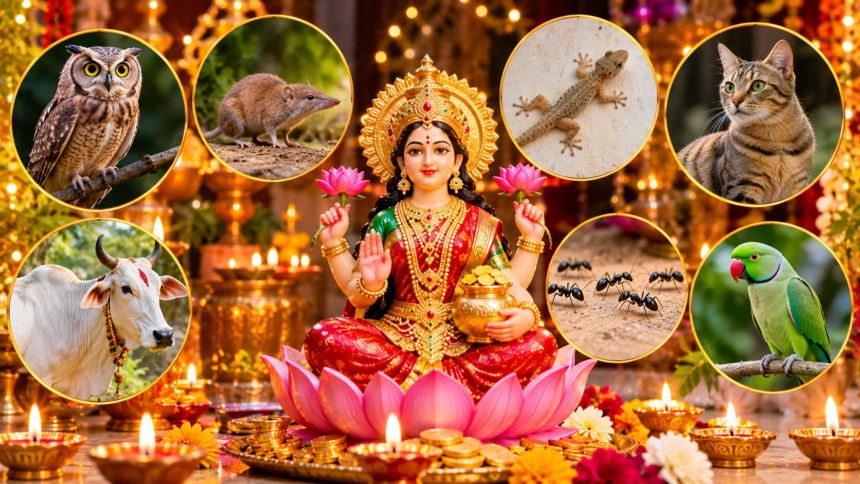
Diwali, the festival of lights, will be celebrated on November 8, 2026. The occasion is associated with the worship of Goddess Lakshmi and Lord Ganesha, as devotees pray for wealth, happiness, prosperity and good fortune. People decorate their homes with diyas and colourful lights and celebrate the festival with family members.
Apart from religious ceremonies, Diwali is also connected with several traditional beliefs. According to Shakun Shastra, spotting certain animals and creatures on this occasion is considered a positive sign. Some people believe their appearance indicates the blessings of Goddess Lakshmi and the arrival of prosperity.
From an owl to a parrot, here are seven creatures traditionally associated with good fortune during Diwali.
1. Owl: A Symbol Associated with Goddess Lakshmi
In Hindu tradition, the owl is considered the vehicle of Goddess Lakshmi. According to Shakun Shastra, seeing an owl on Diwali is regarded as an auspicious sign associated with wealth and prosperity.
Traditional beliefs suggest that its appearance may indicate relief from financial difficulties and the arrival of better opportunities. Spotting an owl at night during Diwali is considered particularly fortunate.
2. Shrew: A Sign of Financial Improvement
The appearance of a shrew on Diwali is also considered favourable in certain traditional beliefs. According to Shakun Shastra, seeing this small creature is associated with relief from financial problems and progress in life.
Some people interpret its presence as a positive indication of improving economic circumstances.
3. Lizard: Considered Auspicious During Lakshmi Puja
Seeing a lizard during Diwali is traditionally regarded as a good sign, especially when it appears on a wall while Lakshmi Puja is taking place.
According to popular beliefs, this occurrence is associated with the acceptance of prayers and the blessings of Goddess Lakshmi. Its appearance is also believed to indicate positive developments in the coming year.
4. Cat: What Does Its Appearance Mean?
Shakun Shastra associates the sighting of a cat on Diwali with good fortune. A cat entering the house during the festival is also considered favourable in these traditional interpretations.
However, some beliefs make a distinction between seeing a cat and hearing it cry. While its appearance is considered auspicious, a cat crying on Diwali is traditionally viewed as an unfavourable sign.
5. Cow: A Sign of Divine Blessings
The cow holds a sacred position in Hindu tradition. According to religious beliefs, 33 crore deities reside in the cow, making it an important symbol of divinity.
For this reason, seeing a cow on Diwali is considered auspicious. Traditional beliefs associate the sighting with divine blessings, positive changes and good fortune.
6. Black Ants: An Indication of Growing Prosperity
Spotting a group of black ants on Diwali is another occurrence considered favourable in Shakun Shastra.
According to traditional interpretations, seeing black ants is associated with an increase in accumulated wealth and relief from money-related difficulties. Some people regard it as a sign of improving financial prosperity.
7. Parrot: Traditionally Linked with Wealth
A parrot is also included among the creatures believed to bring good fortune when seen during Diwali.
According to traditional beliefs, spotting a parrot during the festival is associated with financial growth, increasing wealth and prosperity.
Traditional Beliefs Associated with Diwali
These seven animal and creature sightings are mentioned in traditional interpretations of Shakun Shastra. For some families, such beliefs form part of the cultural and religious traditions associated with Diwali.
Whether or not people follow these interpretations, the festival remains an occasion centred on devotion, hope, happiness and the celebration of light over darkness.
Disclaimer: The information in this article is based on traditional beliefs and interpretations of Shakun Shastra. These signs are matters of cultural and religious faith and are not scientifically established predictions of future events. Readers may follow their own family traditions and beliefs.