
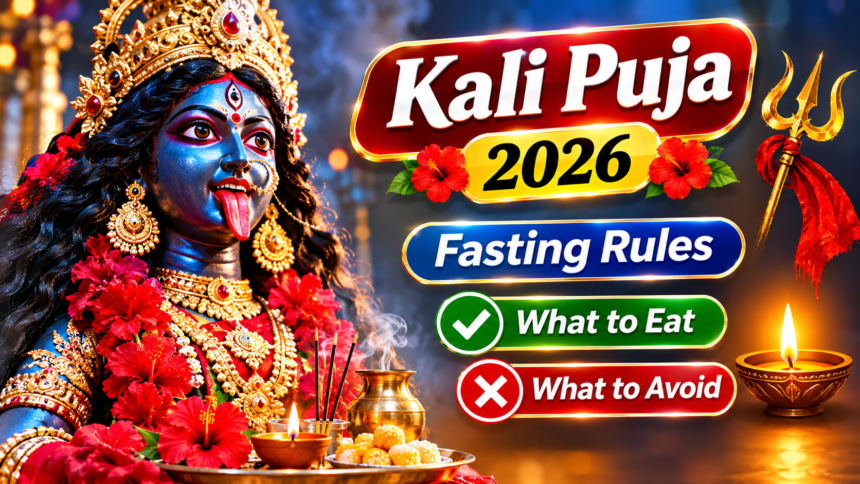
New Delhi: Kali Puja 2026 will be celebrated on Sunday, November 8, on the occasion of Kartik Amavasya. Devotees across different parts of the country will worship Goddess Kali and seek her blessings for protection, courage, strength and the well-being of their families.
Fasting is an important part of the celebration for many devotees. While some observe a strict fast without consuming food, others follow a fruit-based or vegetarian diet throughout the day. In Bengal, the main Kali Puja rituals are traditionally performed at night, and many devotees continue their fast until the worship is completed.
If you are planning to observe Kali Puja Vrat this year, here is everything you need to know about fasting rules, permitted foods, items to avoid and the traditional way of completing the fast.
Why Do Devotees Observe a Fast on Kali Puja?
Fasting during Kali Puja is regarded as a way of expressing devotion to Maa Kali. It encourages spiritual discipline, self-control and concentration during prayers.
Devotees observe the vrat to seek the Goddess’s blessings for protection from negative forces, strength to overcome difficulties and peace within their families.
The festival holds particular importance in Bengal, where worship is generally performed during the night. Many devotees maintain their fast until the main puja rituals are completed and prasad is offered.
What Can You Eat During Kali Puja 2026 Vrat?
The food permitted during Kali Puja fasting depends on regional customs and individual family traditions. Devotees following a fruit-based or light fasting diet can choose from several food options.
1. Fresh fruits: Bananas, apples, papaya, pomegranates and seasonal fruits are commonly consumed during fasting. They provide nourishment and can help devotees maintain energy throughout the day.
2. Milk and dairy products: Milk, curd, paneer and homemade sweets can be included in fasting meals according to personal traditions.
3. Dry fruits and nuts: Almonds, cashews, raisins, walnuts and dates are convenient options for a light fasting meal.
4. Sabudana dishes: Sabudana khichdi and sabudana kheer are popular vrat preparations. They can be cooked with potatoes, peanuts and suitable spices.
5. Kuttu and Singhara flour: Buckwheat flour and water chestnut flour are commonly used to prepare fasting puris, rotis and other traditional dishes.
6. Coconut water and fruit juices: Coconut water, milk and fresh fruit juices can help maintain fluid intake during the fasting period.
Foods to Avoid During Kali Puja Fasting
Devotees following traditional fasting practices generally avoid certain food items. However, the exact restrictions may differ depending on family customs and regional traditions.
Commonly avoided foods include:
- Meat, fish and eggs.
- Alcoholic beverages.
- Onion and garlic.
- Regular grains such as rice and wheat, particularly during stricter vrat observances.
- Regular table salt, with many devotees choosing sendha namak instead.
- Packaged and processed foods containing ingredients that are not permitted during fasting.
Devotees should follow the food restrictions associated with their particular vrat tradition.
Kali Puja Vrat Rules and Rituals to Follow
Those observing Kali Puja fast can follow these traditional practices throughout the day.
Start with a morning bath: Wake up early, take a bath and wear clean clothes before beginning the day’s prayers.
Take a vrat sankalp: Offer prayers to Maa Kali and make a sincere intention to observe the fast with devotion.
Maintain cleanliness: Keep the puja area clean and arrange the required worship materials in advance.
Pray and chant mantras: Spend time reciting Maa Kali’s mantras, reading devotional texts or listening to Shyama Sangeet.
Maintain a peaceful attitude: Avoid anger, negative thoughts and unnecessary arguments. Patience and self-discipline are also considered important parts of the vrat.
Perform the main puja at night: Worship Maa Kali according to the local muhurat and family traditions.
Complete the fast: Many devotees break their fast after the puja and distribution of prasad, while others follow their family’s established rituals.
When Should You Break the Kali Puja Fast in 2026?
There is no single fasting schedule followed by all devotees during Kali Puja. The time for completing the vrat depends on family traditions and the type of fast being observed.
Many devotees continue fasting until the main night-time worship is completed. Some break their fast after offering bhog and receiving prasad, while others follow the guidance of their family priest.
Since Kali Puja is associated with Nishita Kaal, devotees observing a strict vrat may continue their fast until the midnight worship rituals are over.
Can You Observe Kali Puja Without a Strict Fast?
Yes. Devotees do not necessarily have to remain without food throughout the day to express their devotion to Maa Kali.
People who cannot observe a complete fast can consume fruits or follow a light vegetarian diet. They can also participate in prayers, mantra chanting and other religious activities.
Pregnant women, children, elderly people and individuals with medical conditions should avoid restrictive fasting without appropriate medical advice. Maintaining adequate nutrition and hydration is important.
Spiritual Significance of Kali Puja Vrat
Kali Puja fasting is associated with devotion, discipline and spiritual reflection. Goddess Kali represents the strength to overcome fear, ignorance and negative influences.
The vrat reminds devotees to develop courage, patience and compassion while facing challenges in everyday life.
Ultimately, Kali Puja is an occasion to seek the blessings of the Divine Mother. Devotees can observe the fast according to their health, personal capacity and family traditions.
Disclaimer: This article is intended for general informational purposes only. Fasting practices, food restrictions, puja timings and rituals may vary according to regional customs and family traditions. Devotees should follow their established religious practices and consult a qualified priest for specific ritual guidance. People with health concerns should seek appropriate medical advice before undertaking a strict fast.