
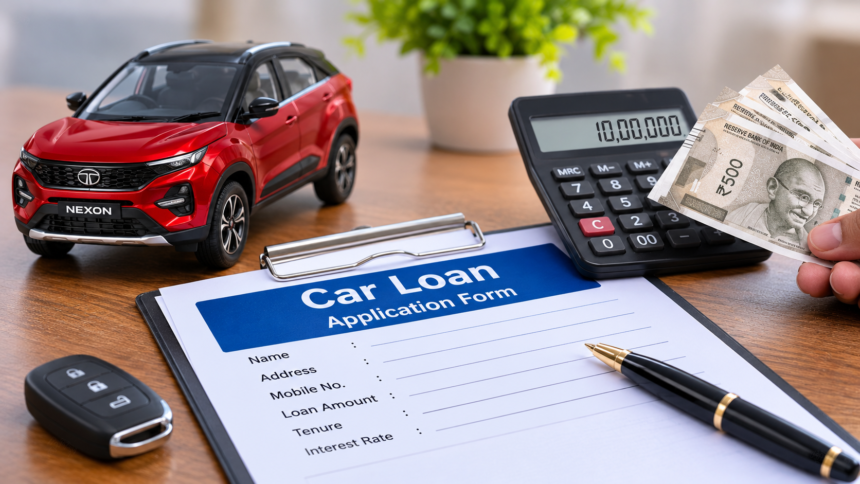
Buying a new car with the help of a loan can make the purchase easier to manage financially. However, choosing the right repayment period is important because it affects both your monthly EMI and the total interest you pay over the loan term.
Before applying, borrowers should compare interest rates, repayment options and the lender’s credibility. A loan with a lower monthly instalment may appear affordable, but a longer repayment period can increase the overall borrowing cost.
If you are considering a ₹10 lakh car loan, here is how the EMI and total repayment amount could change across different tenures.
₹10 Lakh Car Loan: EMI for 3, 5 and 7 Years
According to data from Paisabazaar, car loan interest rates offered by major banks and lenders ranged from 7.55% to 14.30% per annum as of 27 October 2026.
Based on this interest rate range, the estimated monthly instalments and overall repayment amounts for a ₹10 lakh loan are as follows:
| Loan tenure | Monthly EMI | Total interest | Total repayment |
|---|---|---|---|
| 3 years | ₹31,129–34,324 | ₹1.21–2.36 lakh | ₹11.21–12.36 lakh |
| 5 years | ₹20,062–23,424 | ₹2.04–4.05 lakh | ₹12.04–14.05 lakh |
| 7 years | ₹15,363–18,906 | ₹2.90–5.88 lakh | ₹12.90–15.88 lakh |
Note: These are illustrative estimates for a ₹10 lakh loan calculated at annual interest rates of 7.55% and 14.30% using the monthly reducing balance method. The first figure in each range represents the calculation at 7.55%, while the second represents the calculation at 14.30%. Processing fees and other lender charges are not included.
The actual interest rate and loan tenure offered to an applicant may depend on factors such as credit score, repayment capacity and existing financial commitments.
Which Car Loan Repayment Period Should You Select?
The figures highlight the difference between choosing a shorter and a longer repayment period. A longer tenure reduces the monthly EMI, but it also increases the total interest paid.
For example, at an interest rate of 7.55%, selecting a seven-year tenure instead of three years reduces the monthly EMI by nearly ₹15,766. However, the total interest cost increases by approximately ₹1.70 lakh.
Therefore, borrowers should not select a longer repayment period only to bring down their monthly instalments. It is important to consider the overall cost of the loan and choose a repayment schedule that fits comfortably within the monthly budget.
Before finalising an offer, compare the interest rate, processing fees and foreclosure charges. Checking the lender’s credibility and the experiences of existing borrowers can also help you make a more informed decision. If required, consult a certified financial advisor.
Mistakes to Avoid When Applying for a Car Loan
Taking a car loan without proper financial planning can create repayment difficulties later. Keep these points in mind before borrowing:
- Avoid making a loan decision based only on emotions or the excitement of buying a new car.
- Prepare a realistic repayment plan before choosing the loan amount and tenure.
- Keep enough money aside to manage unexpected expenses and emergencies.
- Compare the total repayment amount under different interest rates and tenure options.
- Borrow only from RBI-regulated lenders and avoid unverified lending sources.
Final Takeaway
The right car loan tenure should offer a balance between an affordable monthly EMI and a reasonable overall interest cost. A shorter tenure generally means higher monthly payments but lower total interest, while a longer tenure reduces the EMI but increases the overall repayment amount.
Carefully comparing loan offers and planning repayments can help you manage your car loan without putting unnecessary pressure on your finances.
Disclaimer: The EMI and repayment figures mentioned in this article are illustrative estimates, not guaranteed loan offers. Actual costs may vary depending on the lender’s interest rate, the borrower’s credit profile, repayment terms and applicable fees or charges. Always check the latest loan conditions directly with the lender before applying. This article is intended for general informational purposes and should not be treated as financial advice.