
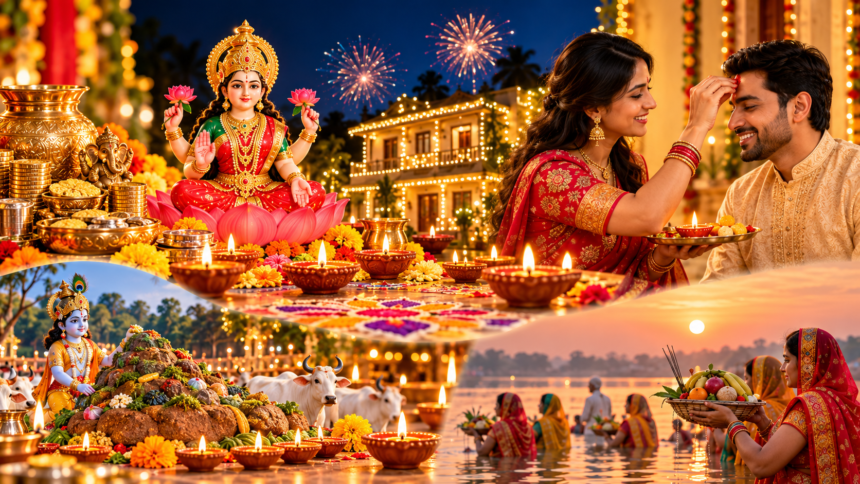
Diwali 2026 will be celebrated with several days of religious ceremonies and family traditions, beginning with Dhanteras and concluding with Bhai Dooj. The major celebrations include Dhanteras on November 6, Kali Chaudas on November 7, Narak Chaturdashi and Lakshmi Puja on November 8, Govardhan Puja on November 10 and Bhai Dooj on November 11.
One notable feature of this year’s festival calendar is that Narak Chaturdashi and the main Diwali Lakshmi Puja fall on the same date. Meanwhile, Kali Chaudas will be observed separately on November 7 according to the New Delhi Panchang.
Each festival has its own religious significance, from seeking prosperity and good health to celebrating the victory of good over evil and strengthening family relationships. Here are the important Diwali 2026 dates, puja timings and traditions to know before the celebrations begin.
Diwali 2026 Calendar: Important Dates and Puja Timings
The following schedule provides the major festival dates and muhurats for New Delhi. Timings may vary in other cities depending on local Panchang calculations.
| Festival | Date | Important Puja Timing |
|---|---|---|
| Dhanteras | Friday, November 6 | 6:02 PM to 7:57 PM |
| Kali Chaudas | Saturday, November 7 | Nishita Muhurta: 11:39 PM to 12:31 AM on November 8 |
| Narak Chaturdashi (Choti Diwali) | Sunday, November 8 | Abhyang Snan: 5:41 AM to 6:38 AM |
| Diwali (Lakshmi Puja) | Sunday, November 8 | 5:54 PM to 7:50 PM |
| Govardhan Puja | Tuesday, November 10 | 6:40 AM to 8:50 AM |
| Bhai Dooj | Wednesday, November 11 | Tilak: 1:10 PM to 3:20 PM |
Although Diwali is commonly described as a five-day festival, the main observances will not take place on five consecutive dates in 2026. This is because festival dates are determined by lunar tithis, resulting in the overlap of Narak Chaturdashi and Diwali on November 8.
Diwali 2026: Significance of Each Festival
1. Dhanteras – November 6
Dhanteras, also known as Dhantrayodashi, marks the beginning of the main Diwali celebrations in many Hindu households. The festival is associated with wealth, prosperity and good health.
On this occasion, devotees worship Goddess Lakshmi and Lord Kubera for financial well-being. Lord Dhanvantari, who is traditionally regarded as the divine physician, is also worshipped for good health.
Buying gold, silver, utensils and other household goods is a widely followed custom on Dhanteras, although making a purchase is not compulsory.
In New Delhi, the Dhanteras puja muhurat will be from 6:02 PM to 7:57 PM. Many families also observe Yama Deepam by lighting a lamp as a prayer for protection and the well-being of their loved ones.
2. Kali Chaudas – November 7
Kali Chaudas is observed with particular importance in western parts of India, especially Gujarat. The day is dedicated to Goddess Kali and is traditionally associated with protection, spiritual strength and the removal of negativity. Hanuman Puja is also listed for this date in the New Delhi calendar.
Certain religious rituals are performed during the midnight period. According to the New Delhi Panchang, the Nishita Muhurta begins at 11:39 PM on November 7 and continues until 12:31 AM on November 8.
Kali Chaudas is sometimes observed alongside Narak Chaturdashi, but the two occasions can follow different ritual timings. In the 2026 New Delhi calendar, they are assigned separate dates.
3. Narak Chaturdashi (Choti Diwali) – November 8
Narak Chaturdashi, popularly called Choti Diwali or Roop Chaturdashi, is associated with the traditional story of Lord Krishna’s victory over the demon Narakasura.
One of the important rituals performed on this day is Abhyang Snan, a ceremonial bath taken before sunrise. It is traditionally believed to represent purification and the removal of negativity.
In New Delhi, the Abhyang Snan muhurat will be from 5:41 AM to 6:38 AM on November 8.
This year, the morning observance of Narak Chaturdashi and the evening Lakshmi Puja for Diwali fall on the same calendar date.
4. Diwali and Lakshmi Puja – November 8
The main Diwali celebration is centred on the worship of Goddess Lakshmi, who is associated with wealth, happiness and prosperity. Lord Ganesha is also worshipped for wisdom and auspicious beginnings.
Before the festival, families clean and decorate their homes with rangoli, flowers and colourful lights. On Diwali evening, people light diyas, prepare sweets, perform prayers and celebrate with their families.
The lighting of lamps represents the victory of light over darkness and good over evil.
The Lakshmi Puja muhurat in New Delhi is scheduled from 5:54 PM to 7:50 PM. The Amavasya tithi begins at 11:27 AM on November 8 and ends at 12:31 PM on November 9. This timing places the main evening Lakshmi Puja on November 8.
5. Govardhan Puja – November 10
Govardhan Puja commemorates an important episode from the life of Lord Krishna. According to Hindu tradition, Krishna lifted Govardhan Hill to protect the people of Braj and their cattle from heavy rainfall sent by Lord Indra.
Devotees worship Govardhan Hill and offer food to Lord Krishna. Annakut is also prepared, featuring a variety of dishes presented as a special religious offering.
The festival is a reminder of the importance of nature, food, cattle and the resources that support human life.
The Govardhan Puja morning muhurat in New Delhi will be from 6:40 AM to 8:50 AM.
6. Bhai Dooj – November 11
Bhai Dooj marks the conclusion of the main Diwali celebrations and honours the relationship between brothers and sisters.
As part of the traditional ceremony, sisters apply tilak to their brothers’ foreheads, perform aarti and pray for their health, happiness and long life. Families often celebrate together over a meal, while brothers give gifts to their sisters.
The festival is connected with the story of Lord Yama and his sister Yamuna. It is also known as Yama Dwitiya and is celebrated under regional names such as Bhau Beej and Bhai Phonta.
The Bhai Dooj tilak muhurat in New Delhi will be from 1:10 PM to 3:20 PM on November 11.
Why Are Diwali Festival Dates Different in 2026?
Hindu festivals are determined by the lunar calendar and the timing of specific tithis rather than fixed dates in the Gregorian calendar. A particular tithi may begin on one date and continue into the following day. Different festivals also follow their own religious rules for selecting the appropriate time for rituals.
For example, Abhyang Snan is performed before sunrise, while Lakshmi Puja is associated with the evening Pradosh period.
In 2026, Chaturdashi prevails before sunrise on November 8, while Amavasya begins later that morning. This timing allows the Narak Chaturdashi morning ritual and the main Diwali Lakshmi Puja in the evening to take place on the same date.
Since puja timings depend on local sunrise, sunset and Panchang calculations, devotees should check the calendar for their own city before planning religious ceremonies.
From the Dhanteras lamp to the Bhai Dooj tilak, each occasion brings its own traditions and spiritual significance. Together, these celebrations make Diwali a time for family gatherings, prayers, gratitude and renewed hope.
Disclaimer: The festival dates and puja timings mentioned in this article are based on the New Delhi Hindu Panchang for 2026. Actual muhurats may differ depending on the city, local sunrise and sunset timings, regional customs and Panchang calculations. Readers are advised to consult a local Panchang or qualified priest before performing rituals.