
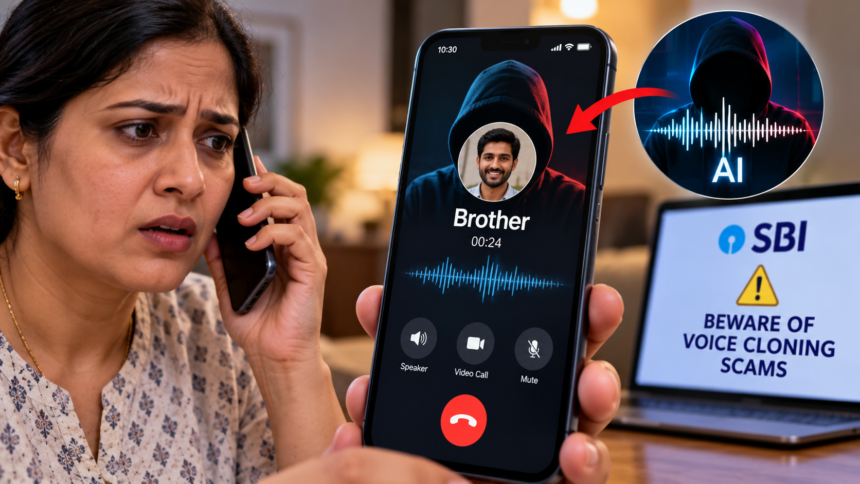
The growing use of artificial intelligence (AI) is creating new challenges in cybersecurity, including voice-cloning scams. Fraudsters can imitate the voices of family members, friends and other familiar people to trick victims into transferring money or revealing confidential information.
A phone call that sounds like it comes from a trusted person may not always be genuine. Scammers often use urgent requests, claiming that a relative needs money immediately or that personal or banking information must be verified without delay.
The State Bank of India (SBI) has issued a warning about these scams through its National Cyber Security Month Special Campaign 6.0. In a post on X dated October 16, 2026, the bank urged people to verify unexpected requests before sending money or sharing personal details.
How Do AI Voice-Cloning Scams Work?
Voice-cloning scams use AI technology to reproduce a person’s voice and make fraudulent calls appear authentic. Once a victim believes the caller is someone they know, the fraudster may request an urgent money transfer or ask for sensitive information.
In the awareness video shared alongside SBI’s post, a scammer calls a woman named Sunita and pretends to be her brother, Sonu. The caller asks her to send ₹20,000 and tries to convince her that the request is genuine.
The example demonstrates why it is important to verify the caller’s identity independently. Instead of transferring the money immediately, Sunita should call Sonu on his saved phone number and confirm whether he actually made the request.
SBI’s message was clear: do not trust unexpected calls asking for money or personal information. If something seems suspicious, call the person back to confirm their identity.
5 Ways to Protect Yourself From Voice-Cloning Scams
1. Verify the caller before taking action
If someone calls requesting money or confidential information, end the conversation and contact the person directly using a trusted phone number. Never rely on the voice alone to establish their identity.
2. Do not rush into transferring money
Fraudsters may create panic by describing an emergency or insisting that a payment must be made immediately. Take time to check the facts, even if the caller sounds like a family member or close friend.
3. Keep banking details private
Never share your one-time password (OTP), PIN, password, CVV or other confidential banking credentials over the phone. These details should remain private, regardless of who claims to be calling.
4. Establish a family verification code
Consider agreeing on a private word or phrase with family members that can be used to verify unusual emergency requests. Discussing voice-cloning fraud with relatives can help everyone recognise suspicious calls and avoid falling for impersonation attempts.
5. Report suspected cyber fraud promptly
If you discover that money has been transferred fraudulently, contact your bank immediately. You can also call India’s cybercrime helpline at 1930 or file a complaint through the official website, cybercrime.gov.in.
What Did SBI Say in Its Cybersecurity Warning?
As part of its National Cyber Security Month Special Campaign 6.0, SBI highlighted the growing risk of criminals using cloned voices to deceive people.
The bank advised customers not to trust unexpected calls requesting money or personal information and emphasised the importance of verifying the caller before acting.
The warning also serves as a reminder that AI-generated voices can make impersonation attempts more convincing. As this technology becomes easier to access, people need to be especially careful when responding to unusual financial requests.
Taking a moment to verify a caller can help prevent unauthorised transactions, financial losses and the stress associated with cyber fraud.
Disclaimer
This article is intended for general informational and cybersecurity awareness purposes only. It does not constitute financial or legal advice. Readers should follow official guidance issued by their banks and relevant authorities. If you suspect cyber fraud, contact your bank and report the incident to the appropriate authorities without delay.