
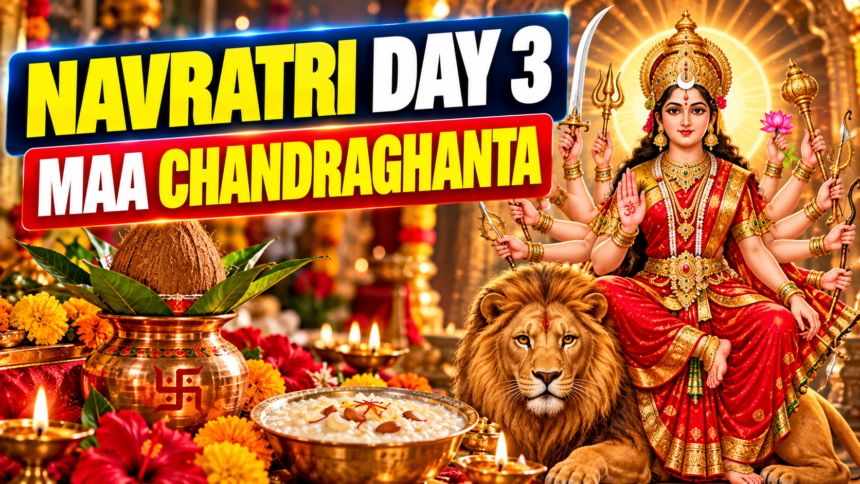
The third day of Sharad Navratri will be observed on Tuesday, October 13, 2026, in honour of Maa Chandraghanta, the third form of Goddess Durga. She symbolises courage, strength, protection and inner peace. Devotees worship the goddess to seek confidence, mental strength and the ability to overcome challenges.
Red is traditionally associated with Navratri Day 3, representing energy and bravery. Milk, kheer and other milk-based sweets are among the offerings commonly presented to the goddess. Devotees may perform puja at home, chant her mantras, offer flowers and conclude the rituals with aarti. Here is everything to know about Maa Chandraghanta’s significance, puja vidhi, mantra, bhog and fasting practices.
Who Is Maa Chandraghanta? Significance of Navratri Day 3
Maa Chandraghanta is the third manifestation of Goddess Durga worshipped during the nine days of Navratri. Her name comes from the crescent moon on her forehead, which resembles a bell, known as a ghanta.
According to traditional depictions, the goddess has ten arms carrying various weapons and sacred objects, and she rides a lion. Her appearance reflects both courage and compassion, symbolising the power to confront evil while maintaining inner calm.
Devotees pray to Maa Chandraghanta for protection, fearlessness, confidence and peace of mind. Her worship also represents the strength required to face difficult situations without losing balance or patience.
Navratri Day 3 Colour 2026: Red
Red is the traditional colour associated with the third day of Navratri. It represents strength, enthusiasm, courage and energy.
Devotees who follow the Navratri colour tradition can wear red clothes during the puja. Red flowers and decorations may also be used to prepare the worship area.
Maa Chandraghanta Mantra and Dhyan Mantra
Chanting Maa Chandraghanta’s mantra is an important part of the day’s worship. Devotees can recite the following mantra during morning or evening puja.
Maa Chandraghanta Mantra
ॐ देवी चन्द्रघण्टायै नमः॥
Om Devi Chandraghantayai Namah
Those who follow a regular chanting practice may repeat the mantra 108 times using a mala, according to their religious tradition.
Maa Chandraghanta Dhyan Mantra
पिण्डजप्रवरारूढा चण्डकोपास्त्रकैर्युता।
प्रसादं तनुते मह्यं चन्द्रघण्टेति विश्रुता॥
This traditional verse invokes Maa Chandraghanta in her powerful warrior form and expresses the devotee’s prayer for her grace and blessings.
Maa Chandraghanta Puja Vidhi and Samagri
Devotees can perform the third-day puja at home by following their family traditions. The rituals may be simple, provided the worship is conducted with sincerity and devotion.
Step-by-step puja vidhi
- Begin the day with a bath and clean the place of worship.
- Light a diya and incense sticks before starting the puja.
- Offer prayers to the Navratri Kalash established on the first day, if applicable.
- Place Maa Chandraghanta’s picture or idol in the prayer area.
- Offer roli or kumkum, akshat and flowers. Red flowers may be used according to tradition.
- Present milk, kheer or another suitable offering to the goddess.
- Chant Maa Chandraghanta’s mantra and meditate on her form.
- Recite the Durga Chalisa, Durga Saptashati or other prayers followed by the family.
- Perform Maa Durga’s aarti and distribute the prasad among family members.
Puja samagri checklist
Keep the following items ready before beginning the puja:
- Picture or idol of Maa Chandraghanta
- Diya and ghee or oil
- Roli or kumkum and akshat
- Red flowers
- Incense sticks
- Milk, kheer or milk-based sweets
- Fruits and prasad
- Water and a puja bell
- Durga Chalisa or a prayer book
Families that installed the Navratri Kalash on Day 1 can continue its worship alongside Maa Chandraghanta’s puja.
Maa Chandraghanta Bhog and Navratri Day 3 Vrat Food
Milk-based dishes are commonly offered to Maa Chandraghanta on the third day of Navratri. Devotees may prepare rice kheer, milk sweets or other offerings according to their household customs.
Milk, fruits, mishri and other suitable sattvic foods may also be included in the bhog. After the puja, the offerings are distributed as prasad.
Those observing a fast can choose foods permitted under their family’s fasting traditions. Common options include fruits, milk, curd, makhana, sabudana, kuttu flour, singhara flour, samak rice, potatoes, permitted vegetables, nuts and sendha namak.
Fasting practices differ between communities and households. People with medical conditions, pregnant women, children and older adults should consider their health needs before following restrictive fasting practices and seek appropriate dietary advice when necessary.
Why Is Maa Chandraghanta Worshipped on Day 3?
Maa Chandraghanta represents the combination of courage and tranquillity. Her warrior-like form symbolises the ability to confront negativity and difficulties, while her peaceful expression reflects compassion and emotional balance.
During Navratri Day 3, devotees traditionally seek the following blessings:
- Courage to face difficult situations
- Freedom from fear
- Protection from negativity
- Mental peace and emotional strength
- Confidence and resilience
- Harmony within the family
- Spiritual growth
Devotees can observe the day through prayer, mantra chanting, traditional offerings and evening aarti. Wearing red, following suitable fasting practices and spending time in prayer are other ways to mark the occasion.
The central message associated with Maa Chandraghanta is that strength and calmness can go hand in hand. Her worship encourages devotees to face challenges with confidence while maintaining compassion and peace in everyday life.
Disclaimer: This article provides general information about religious traditions and customary Navratri rituals. Puja methods, offerings, mantras and fasting practices may vary according to regional customs, family traditions and personal beliefs. Readers are advised to follow the practices appropriate to their traditions and health needs.