
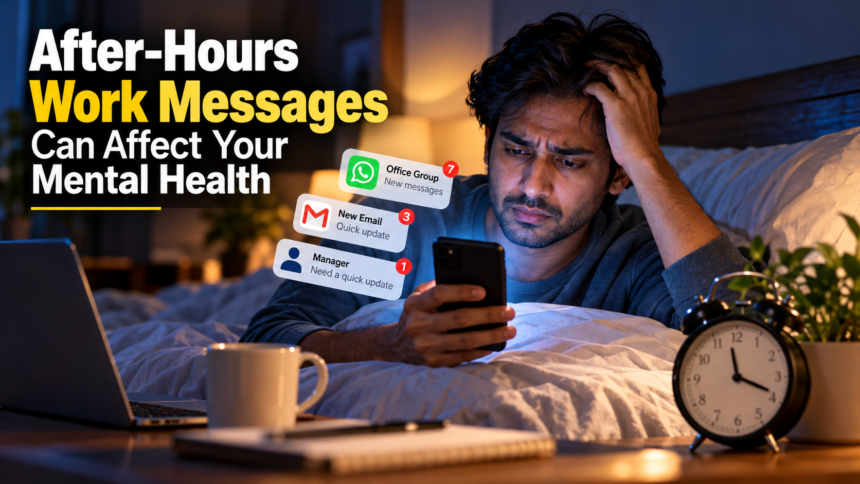
New Delhi: For many employees, finishing office hours no longer means the working day is truly over. A WhatsApp notification from a manager during dinner, an email arriving late at night or a request for a quick update can bring work-related concerns back into personal time.
Digital communication has made workplace coordination faster and more convenient, but it has also blurred the boundaries between professional responsibilities and personal life. The growing expectation of being available beyond working hours raises important questions about employee well-being on World Mental Health Day 2026.
Speaking exclusively to News9 Digital, Dr Paramjeet Singh, Consultant Psychiatrist at PSRI Hospital, New Delhi, explained that work responsibilities can follow employees home through messages, emails and office group notifications.
He noted that occasional communication outside working hours may be unavoidable in some professions. The problem arises when employees feel compelled to remain available all the time, even when there is no genuine emergency.
Why Disconnecting From Work Is Important
Employees do not always need to respond to a late-night message for it to affect their personal time. Simply seeing a notification can bring unfinished tasks, upcoming deadlines and next-day responsibilities back into their thoughts.
According to Dr Singh, difficulty mentally disconnecting from work can contribute to prolonged stress. Even when employees do not reply, a message may remind them of pending assignments or workplace expectations.
Time away from work plays an important role in psychological recovery. Sleep, family interactions, exercise and leisure activities give employees opportunities to recover from professional demands.
When work-related thoughts continue throughout the evening, this recovery period can become shorter, potentially affecting overall well-being.
Signs That Constant Availability May Be Taking a Toll
Receiving an occasional work message during a busy period is different from facing a daily expectation to respond immediately. When employees are routinely expected to remain reachable, the pressure can gradually affect their mood, concentration and daily routines.
Dr Singh explained that some employees may experience irritability, difficulty concentrating, sleep disturbances, emotional exhaustion or reduced motivation over time.
These symptoms do not automatically indicate burnout. However, persistent changes may suggest that the current work routine is becoming unhealthy and that employees need to reassess how work is affecting their time away from the office.
Recognising these warning signs can help employees identify when professional demands are interfering with rest and personal responsibilities.
Should Employees Mute Work WhatsApp Notifications After Office Hours?
Setting boundaries around work communication does not mean neglecting professional responsibilities. Employees can consider muting non-urgent notifications after working hours and clearly communicating when they will be available.
Dr Singh also highlighted the role of managers in establishing healthier workplace expectations. A culture in which every message requires an immediate response can unintentionally increase stress across a team.
However, the right approach depends on the nature of the job. Healthcare workers, emergency service personnel, operations teams and some senior professionals may legitimately need to remain available outside regular working hours.
The aim is therefore not to prohibit all after-hours communication, but to distinguish genuine operational needs from unnecessary expectations of constant availability.
When After-Hours Work Becomes a Workplace Concern
The central issue is whether employees are expected to remain connected beyond working hours without a clear business or safety-related reason.
When this becomes a regular pattern, personal time may no longer provide enough opportunity to rest and recover from workplace pressure.
Dr Singh advised employees to seek support if work-related stress begins affecting their sleep, relationships, mood or everyday functioning. Speaking with a mental health professional may help them manage persistent difficulties.
He emphasised that a healthy workplace does not have to be free of pressure. Instead, employees need sufficient predictability, recovery time and psychological space to manage professional demands sustainably.
As digital communication continues to connect employees to their workplaces, setting reasonable boundaries can help protect personal time while allowing essential work responsibilities to be fulfilled.
Disclaimer
This article is intended for general informational and educational purposes only. The information provided does not constitute medical advice, diagnosis or treatment. Workplace stress and its effects can vary from person to person. Anyone experiencing persistent emotional distress, sleep difficulties or problems with daily functioning should consider consulting a qualified mental health professional.