
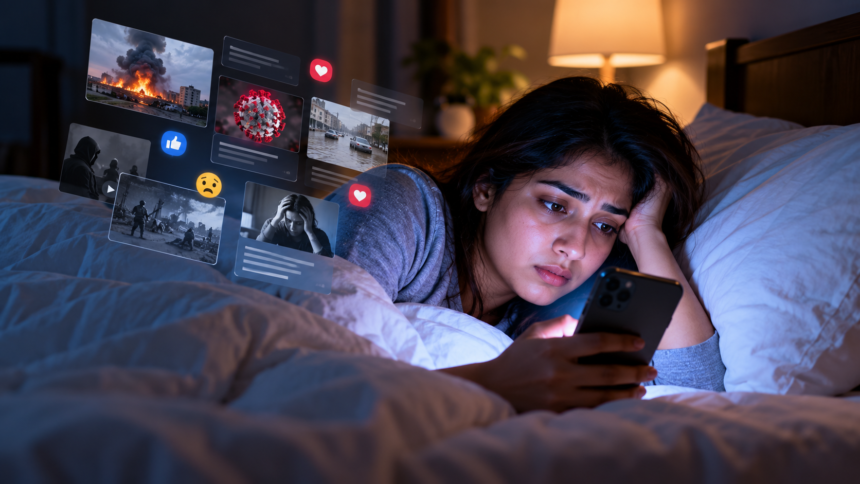
New Delhi: You are lying in bed, ready to sleep, when you decide to check your social media feed one final time. A disturbing headline grabs your attention, followed by another update and a video that leaves you concerned. Before long, you find yourself scrolling through reactions and more news, spending far longer on your phone than you intended.
For many people, watching reels and checking social media before sleeping has become a regular habit. However, repeatedly consuming upsetting news and alarming updates can make it difficult to relax mentally at the end of the day.
On World Mental Health Day 2026, this habit, commonly known as doomscrolling, deserves attention. Reading negative news does not automatically cause anxiety or insomnia, but repeatedly engaging with distressing content, particularly late at night, may affect emotional well-being and sleep.
Speaking exclusively to News9 Digital, Dr Paramjeet Singh, Consultant Psychiatrist at PSRI Hospital, New Delhi, explained that checking the news before bed may appear harmless, but continuous exposure to negative headlines, disturbing videos and alarming social media posts can keep the mind active when it should be preparing for sleep.
He clarified that not everyone who reads negative news will develop anxiety or insomnia. However, repeatedly consuming distressing information can increase emotional arousal and make it harder to switch off mentally.
Why Is It Difficult to Stop Doomscrolling?
A troubling headline can create an urge to learn more, encouraging people to keep scrolling instead of putting their phones away. According to Dr Singh, negative and threatening information naturally attracts attention.
Repeated exposure to stories about accidents, conflict, illness, crime and other disturbing events may leave people thinking about these subjects even after they stop using their phones.
As a result, putting the device away does not necessarily end the mental engagement triggered by the content. Thoughts and worries about what someone has just read or watched may continue, making it harder to relax before sleep.
How Doomscrolling May Affect Sleep and Anxiety
The time spent scrolling is an important factor. Using a smartphone immediately before bedtime can expose people to stimulating content and delay their transition to sleep. The habit may also push bedtime later, reduce total sleep duration and contribute to a cycle in which inadequate sleep is followed by greater irritability and anxiety the next day.
Dr Singh explained that doomscrolling can also become a form of reassurance-seeking behaviour for some individuals. They may repeatedly refresh their feeds because they feel they need one more update to understand what is happening.
However, this constant checking may reinforce the habit instead of providing lasting reassurance.
The combination of distressing information, delayed bedtime and ongoing worry can make it more difficult to establish a relaxing nighttime routine.
Practical Ways to Break the Bedtime Scrolling Habit
Avoiding the news completely is not necessarily the solution. Instead, creating clear boundaries around when and how much news you consume can help make the habit more manageable.
Dr Singh recommends setting a fixed time to stop checking the news, leaving a gap between the final update and bedtime. Turning off notifications from news and social media applications at night can also reduce the temptation to return to the screen.
Replacing late-night scrolling with quieter activities may help the mind prepare for sleep. Reading a book, listening to relaxing music or practising breathing exercises are possible alternatives.
He also stressed the importance of understanding the difference between staying informed and feeling compelled to follow every development in real time. People can remain aware of important events without checking every update as it appears.
If anxiety, persistent worry, nightmares or sleep difficulties continue despite changes to the nighttime routine, seeking professional help may be appropriate. Ongoing symptoms should not automatically be attributed to smartphone use alone.
Building a Healthier Relationship With News
The aim is not to disconnect completely from current events but to develop healthier habits around information consumption.
Being selective about when news is checked, limiting repeated exposure to distressing content and allowing time to unwind before sleeping may help create a more balanced routine.
As Dr Singh emphasised, the focus should be on setting boundaries around the timing, amount and emotional impact of news consumption, particularly during the hour before bedtime.
Disclaimer
This article is intended for general informational and educational purposes only. The information presented is not a substitute for professional medical advice, diagnosis or treatment. Doomscrolling and sleep difficulties can affect individuals differently, and persistent anxiety or sleep-related symptoms may have various causes. Anyone experiencing ongoing distress should consult a qualified healthcare or mental health professional.