
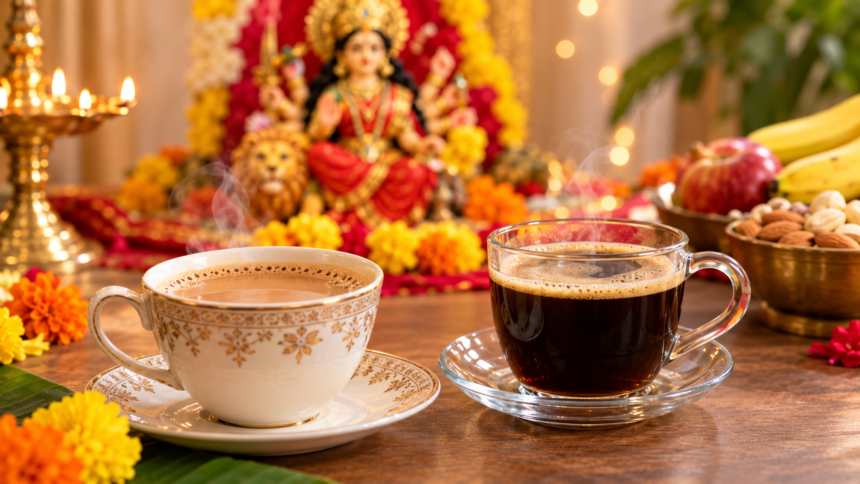
Tea and coffee are allowed during many Navratri fasts, meaning devotees may continue enjoying their regular morning chai or coffee while observing vrat. However, people following stricter fasting practices may choose to avoid caffeine as part of their religious discipline. Hindu fasting traditions do not universally allow tea while prohibiting coffee.
Shardiya Navratri 2026 begins on October 11. Before observing the nine-day festival, devotees should understand the dietary rules associated with their chosen form of vrat, including whether everyday beverages such as tea and coffee are permitted.
Is Tea Allowed During Navratri Fasting?
Tea is commonly consumed during Navratri by devotees whose fasting practices allow beverages. Both milk tea and black tea are accepted in many households.
However, preparation and ingredients can matter for those following specific dietary restrictions. Milk and sugar are permitted in many common fasting practices, but individual family traditions may have additional rules. Packaged tea mixes should also be checked for ingredients that may not be suitable for your vrat.
If your family traditionally avoids tea during Navratri, you can follow that custom. Otherwise, devotees whose fasting rules permit tea generally do not need to stop drinking it simply because the festival has started.
Can You Drink Coffee During Navratri Vrat?
Coffee is also permitted in many household fasting routines. Depending on the rules being followed, devotees may choose black coffee or coffee prepared with milk.
Both tea and coffee contain caffeine, although the amount varies depending on the drink and how it is prepared. Some families allow tea but avoid coffee because of personal preferences or established household customs. This distinction does not represent a universal religious rule.
Those observing a stricter vrat may decide to avoid both beverages. Others continue consuming tea or coffee in moderation while following the remaining restrictions of their fast.
Milk Tea, Black Coffee and Green Tea: What Is Allowed?
The following table outlines common practices during Navratri fasting. Actual rules may differ according to family customs and the type of vrat being observed.
| Beverage | Common practice during vrat |
|---|---|
| Milk tea | Allowed in many household fasting routines |
| Black tea | Commonly permitted when tea is allowed |
| Coffee with milk | Allowed in many flexible fasting practices |
| Black coffee | Permitted when the chosen vrat allows coffee |
| Green tea | Depends on the fasting tradition being followed |
This is a general guide rather than a universal religious ruling. Devotees following a particular family or community tradition should use its guidelines to decide which beverages are appropriate.
Should You Avoid Caffeine During Navratri?
Avoiding caffeine is a personal choice for many devotees rather than a compulsory requirement for every Navratri fast. Some people give up tea and coffee to practise greater restraint during the festival, while others continue drinking them according to their fasting rules.
Health considerations may also influence this decision. Caffeine can worsen acidity, cause jitters or interfere with sleep in some individuals. If tea or coffee causes discomfort, reducing consumption or choosing a suitable alternative may help.
Staying hydrated is also important during fasting. Drink sufficient water unless a healthcare professional has advised you to limit fluid intake.
What Is the Rule for Tea and Coffee During Navratri 2026?
The main consideration is the specific fasting tradition you follow. Tea and coffee are neither universally permitted nor universally prohibited during Navratri. If your household allows these beverages, moderate consumption is common. If your religious vow excludes caffeinated drinks, you should follow that commitment.
Navratri fasting practices vary across families and communities. Understanding the rules before October 11 can help devotees prepare for the festival and avoid confusion about their daily tea or coffee.
Disclaimer
This article is intended for general informational and educational purposes only. Navratri fasting rules can vary according to regional customs, family traditions and individual religious commitments. The information provided should not be interpreted as a universal religious ruling or medical advice. People who experience discomfort from caffeine or have specific health concerns should consult a qualified healthcare professional when necessary.