
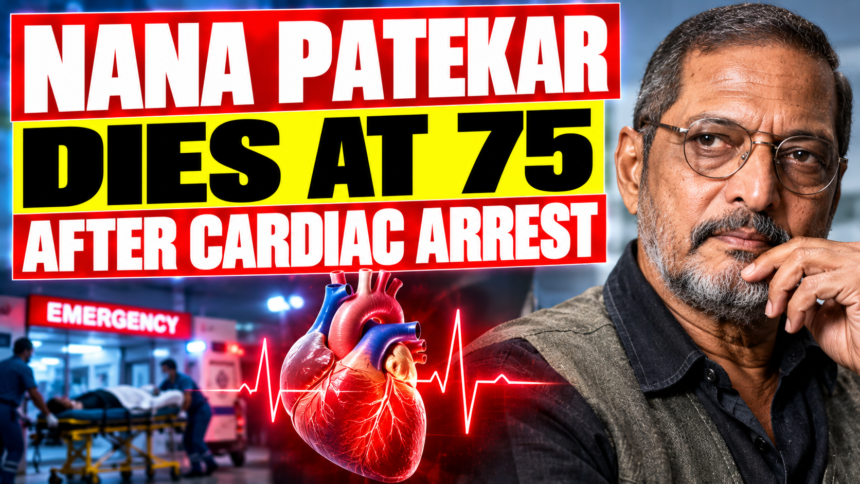
Veteran actor and filmmaker Nana Patekar died after suffering a cardiac arrest at his home in Goa. He was 75. Hospital sources said doctors attempted to revive him for nearly 45 minutes after he was brought to the hospital, but resuscitation efforts were unsuccessful. He was declared dead at 5:20 am.
The incident raises an important question: can cardiac arrest occur suddenly in someone who appears healthy and has no obvious warning signs? Cardiologists also point out that the length of CPR alone cannot determine whether a person can be revived.
Dr Ravi Prakash, Senior Consultant Cardiology at PSRI Hospital, New Delhi, explains how sudden cardiac arrest occurs, what prolonged CPR may indicate and which symptoms people with existing heart conditions should take seriously.
Can Cardiac Arrest Happen Without Warning?
Yes. According to Dr Ravi Prakash, sudden cardiac arrest can occur even in people who appear healthy and have not experienced noticeable symptoms.
Cardiac arrest is different from a heart attack. During cardiac arrest, the heart suddenly stops pumping blood effectively, often because of a dangerous abnormal heart rhythm.
Dr Prakash said cardiac arrest can sometimes be the first indication of an underlying heart condition. Possible causes include coronary artery disease, cardiomyopathy and electrical abnormalities affecting the heart.
However, some people may experience subtle warning symptoms beforehand. Unexplained chest discomfort, breathlessness, unusual tiredness, dizziness, fainting or a sudden decline in exercise capacity should not be ignored.
These symptoms do not necessarily mean that cardiac arrest is imminent, but they may indicate an underlying heart problem that requires medical evaluation.
What Does 45 Minutes of CPR Mean?
In Patekar’s case, doctors reportedly continued CPR for around 45 minutes without successfully restoring circulation.
Dr Prakash said prolonged CPR without a sustained return of spontaneous circulation indicates a severe and prolonged cardiac arrest, particularly when resuscitation does not produce a lasting response.
However, the duration of CPR by itself cannot determine the possibility of revival.
Several factors influence the outcome, including how quickly CPR begins, whether an AED or defibrillator is used when appropriate, the underlying cause of the cardiac arrest, the initial heart rhythm and the person’s overall health.
The amount of time the brain and other vital organs remain without adequate oxygen-rich blood is also critical. A prolonged lack of blood flow increases the risk of irreversible organ damage.
This is why immediate recognition of cardiac arrest, prompt CPR and rapid defibrillation when indicated can be crucial during an emergency.
Symptoms Heart Patients Should Not Ignore
People with existing heart disease should pay particular attention to new or worsening symptoms, Dr Prakash said.
Persistent or recurring chest pressure or pain is an important warning sign, particularly if the discomfort spreads to the arm, shoulder, back, neck or jaw. Sudden breathlessness, unexplained sweating, nausea, fainting or a feeling of being close to fainting may also require urgent medical attention.
A newly developed rapid or irregular heartbeat, severe weakness or an unexpected decline in exercise tolerance should also not be dismissed.
Dr Prakash advised people not to wait for symptoms to become severe during a suspected cardiac emergency and not to attempt to drive themselves to a hospital.
Calling emergency medical services as early as possible can be important because cardiac emergencies are time-sensitive and early treatment can affect the outcome.