
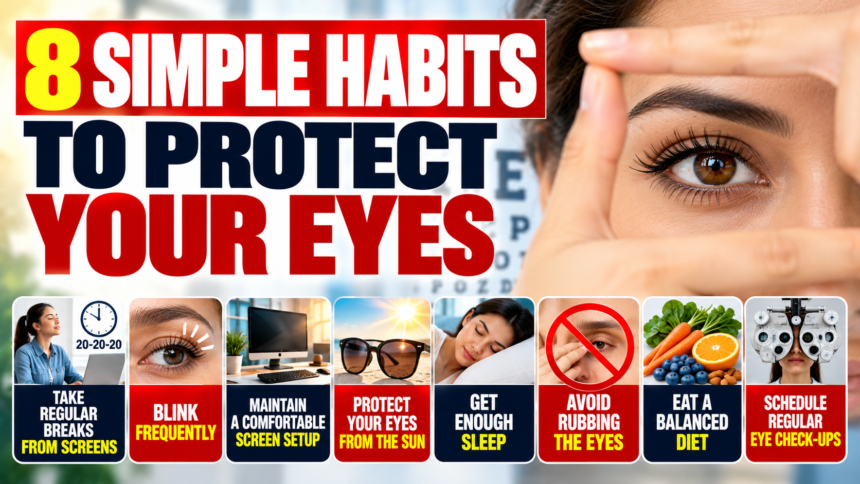
New Delhi: Healthy eyesight is closely linked to everyday habits. Spending long hours in front of digital screens, getting insufficient sleep, working in poor lighting and staying outdoors in strong sunlight for extended periods can affect eye comfort.
Although certain eye problems require professional medical treatment, adopting a few simple habits can help reduce avoidable eye strain and support overall eye health.
1. Give Your Eyes Regular Screen Breaks
Phones, computers and tablets have become part of everyday work, study and entertainment. However, continuously focusing on a screen can leave the eyes feeling tired or dry.
The 20-20-20 rule can be useful during extended screen sessions. After every 20 minutes, look at something approximately 20 feet away for around 20 seconds. Longer breaks are advisable when screen use continues for several hours.
Children should also be encouraged to take regular breaks when using smartphones, tablets or computers.
2. Blink More and Set Up Your Screen Properly
Concentrating on a screen or reading for long periods can cause people to blink less frequently, which may contribute to dryness and irritation. Making a conscious effort to blink regularly and taking short breaks between tasks can help.
Screen positioning also matters. Keep the display at a comfortable viewing distance and slightly below eye level. Adjust the brightness to match the surrounding environment and minimise reflections from windows or overhead lighting.
Increasing the text size can also make reading more comfortable when small content causes eye strain.
3. Protect Your Eyes From UV Exposure
Extended exposure to ultraviolet (UV) radiation can affect eye health over time. People who spend long periods outdoors should take appropriate precautions.
Wearing sunglasses with suitable UV protection can help protect the eyes from sunlight. A hat or cap can provide additional coverage during strong sunlight.
It is also important to avoid looking directly at the sun and take extra precautions during activities that involve prolonged outdoor exposure.
4. Get Enough Sleep and Avoid Rubbing Your Eyes
Sleep gives the eyes an opportunity to rest after a day of reading, screen use and other visual activities. Maintaining a consistent sleep schedule and limiting excessive screen exposure immediately before bedtime can support better rest.
Eye rubbing is another habit worth avoiding. While rubbing may temporarily relieve irritation, it can worsen discomfort and may transfer dirt or germs to the eyes.
Wash your hands before touching the area around your eyes and use clean tissues when wiping away tears or discharge. Continued itching or irritation should be discussed with an eye care professional.
5. Follow a Balanced Diet
Nutrition also plays a role in maintaining overall health, including eye health. A balanced diet should contain a variety of fruits, vegetables and other nutrient-rich foods.
Leafy green vegetables can be included as part of regular meals, while adequate hydration should be maintained throughout the day.
Rather than relying on supplements without professional guidance, focus on maintaining a varied and balanced diet.
6. Do Not Skip Regular Eye Check-Ups
Eye care should not begin only after symptoms appear. Regular eye examinations can help monitor vision and identify changes that may not be immediately noticeable.
Keep up with recommended eye examination schedules and have your vision checked if you experience persistent blurring, frequent headaches or other changes in vision.
Children should also undergo vision assessments whenever recommended by an eye care professional.
Sudden changes in vision require prompt professional attention.
Simple Habits Can Make a Difference
Protecting eye health does not necessarily require major changes to your routine. Taking regular breaks from screens, blinking frequently, reducing glare, protecting the eyes from UV exposure, getting adequate sleep and maintaining a balanced diet are practical steps that can support everyday eye care.
Regular eye examinations are equally important, as some changes in vision or eye health may not be obvious until they become more noticeable.