
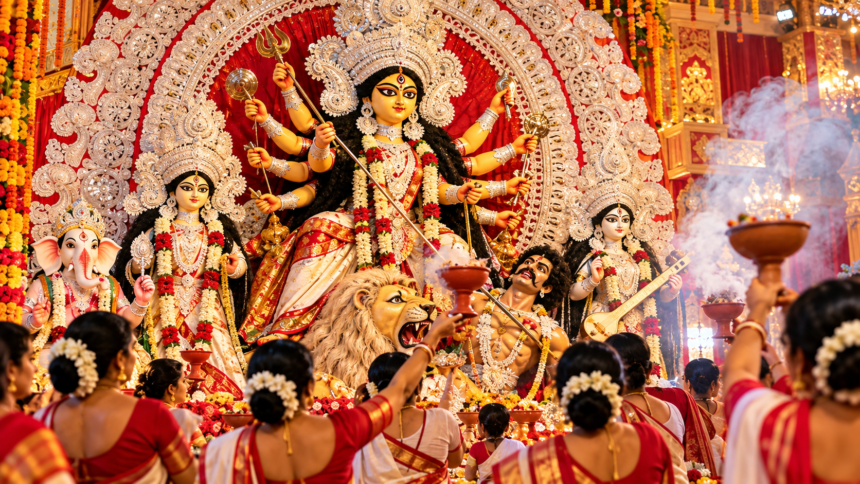
New Delhi: Durga Puja 2026 is approaching, bringing with it one of India’s most celebrated festivals dedicated to Goddess Durga and her victory over evil. The main celebrations traditionally continue for five days, from Shashti to Dashami, and combine religious rituals with art, food, fashion and community celebrations.
While Durga Puja is particularly prominent in Assam, West Bengal, Odisha and Tripura, the festival has developed its own character in each region. From historic royal traditions and centuries-old temples to elaborate pandals and distinctive cuisines, every state adds its own cultural flavour to the celebrations.
The history of Durga Puja in these regions also goes back several centuries. Traditions are associated with different periods, including around 997 AD in Bengal, the 11th century in Odisha, around 500 years ago in Tripura and the 19th century in Assam.
Durga Puja History and Heritage in Four States
Assam
The royal tradition of Durga Puja in Assam is associated with Ahom King Rudra Singha, who is credited with establishing a royally sponsored celebration at Gargaon. As the capital shifted, the tradition moved first to Rongpur and later to Burhi Gosani Devalaya in Jorhat.
King Rudra Singha is also associated with the introduction of idol worship and related rituals. The idols were brought from the Jaintia Hills of Meghalaya.
Another historic celebration is held at Zamindar Bari in Gauripur, in Dhubri district. The Durga Puja here has continued for more than 400 years. The celebration was originally held in Rangamati before King Pratap Chandra Barua moved it to Gauripur in 1850.
Sivasagar also has an important place in Assam’s Durga Puja heritage. At Devi Doul, the Ahom rulers were traditionally associated with distributing Mahashtami prasad first among certain Muslim and local families, including Doullah and Konseng Barpatra Gohain. The tradition is often highlighted as an example of the region’s long-standing communal harmony.
West Bengal
West Bengal is widely associated with the grandest and most popular forms of Durga Puja. The Mrinmoyee Temple in Bishnupur is considered one of the oldest centres of Durga Puja in the Bengal region. The tradition is linked to Jagat Malla and is believed to have begun around 997 AD.
In Bengal, Durga Puja was initially associated largely with royal, noble and landlord households. According to one account, the Sabarna Roy Chowdhury family conducted the first recorded household Durga Puja in the Kolkata region in 1610.
Over the years, the festival gradually moved beyond private family celebrations. By the 18th century, community-based forms of worship, known as Barowari or Sarbojanin Puja, began becoming part of the tradition.
Odisha
Odisha has its own ancient Durga Puja traditions, including the Puja-by-Gosani form of worship. Puri’s Gosani Jatra is regarded as one of the oldest forms of the celebration that continues to be practised.
The worship of clay idols of Maa Durga is said to have been introduced in Puri during the reign of Ganga King Chodaganga Dev in the 11th century.
Cuttack also has a long association with public Durga Puja. A recorded public celebration is said to date back to 1832 in the Kazi Bazaar area.
Chaitanya Mahaprabhu’s visit to Cuttack during the early 16th century is also associated with the influence or introduction of Durga Puja at Balu Bazar.
Tripura
Tripura’s Durga Puja traditions are closely connected with its royal heritage. The Durga Puja at Durgabari Temple in Agartala is more than 500 years old and was originally established by the royal family.
The celebration remains state-sponsored and continues to receive close attention from the erstwhile royal dynasty.
A later form of the celebration at Durgabari is associated with King Krishna Kishore Manikya Bahadur, who introduced it in the early 19th century.
How Durga Puja Celebrations Differ Across These States
Although the religious significance of Durga Puja remains common, the festival looks and feels different across the four states.
Traditional Attire
Fashion is an important part of the festive experience. In Assam, women traditionally wear the mekhela sador during Puja celebrations. In West Bengal, the classic white saree with a red border remains closely associated with the festival.
Odisha brings its own regional identity through Sambalpuri sarees, while women in Tripura can be seen wearing traditional rignai attire. At the same time, younger generations and children often choose contemporary outfits for pandal visits and other celebrations.
Food and Festive Specialties
Food is another major part of Durga Puja celebrations, with each region offering its own specialities.
In Bengal, popular festive dishes include khichuri, labra, bhog and various fish preparations. Assam is known for dishes such as pitha, khichdi and doi-chira.
Odisha adds traditional favourites such as dalma, chhena poda and rasabali, while Tripura combines Bengali-style bhog with traditional tribal delicacies.
Pandal Art and Decoration
The artistic presentation of Durga Puja also varies from state to state. West Bengal is particularly known for elaborate themed pandals that transform the festival into a major artistic spectacle.
Odisha is recognised for the use of silver filigree work in pandal decorations. Assam is known for community-oriented and theme-based pandals, while Tripura showcases a combination of folk art traditions and Bengali cultural influences.
Rituals and Cultural Programmes
The sound and atmosphere of Durga Puja are equally distinctive across the regions. Bengal’s celebrations feature dhak, dhunuchi naach and sindoor khela along with a wide range of cultural programmes.
In Assam, Bihu music and dance become part of the festive atmosphere. Odisha features performances by folk groups, while Tripura showcases its tribal dance traditions alongside other cultural activities.
One Festival, Many Regional Traditions
Despite the differences in food, clothing, decoration and cultural performances, the central spirit of Durga Puja remains the same. Idol worship, bhog offerings and the immersion of Maa Durga’s idol are important parts of the celebrations, accompanied by the hope and belief that the Goddess will return again the following year.
From historic temples and royal traditions to modern pandals, music, food and fashion, Durga Puja brings together families and communities across different regions. The regional variations make the festival a reflection of India’s diverse cultural heritage while preserving its shared spirit of devotion and celebration.
Disclaimer
The historical details, dates, traditions and cultural references mentioned in this article are based on the information provided in the source material. Historical accounts and local traditions may vary between sources. Readers are advised to refer to authoritative historical or official cultural sources for further verification.