
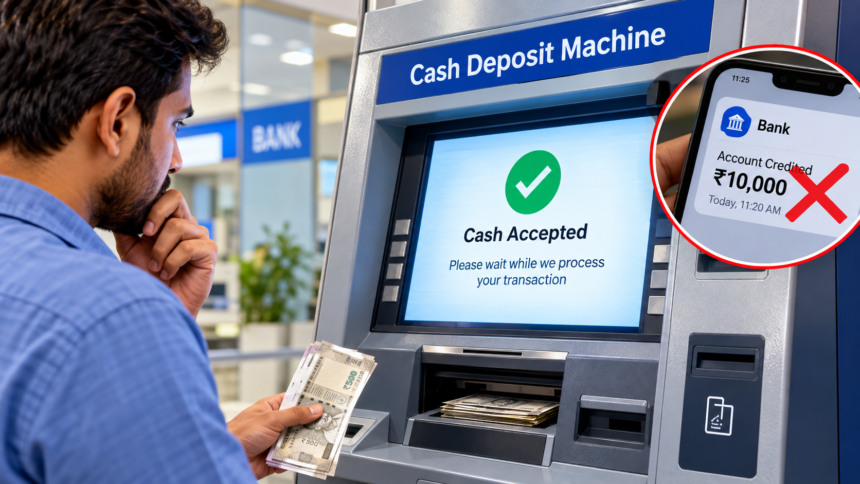
Cash Deposit Machines (CDMs) have made it easier for customers to deposit money without standing in long queues at bank branches. These machines allow cash to be deposited directly into a bank account, making the process quicker and more convenient.
However, technical problems can sometimes occur. A machine may accept the cash but the amount may not immediately appear in the customer’s account. Such a situation can be worrying, but customers should avoid panicking and take the right steps to report the failed deposit.
What to Do After a Failed Cash Deposit
The first thing customers should do is preserve the transaction receipt, if the machine provides one. The receipt can contain important details that help the bank trace the transaction.
If no receipt is generated, note down as much information as possible. This should include the date and time of the transaction, the location of the CDM, the amount deposited and the machine or terminal number displayed on the machine.
Customers should then contact their bank through customer care, the concerned branch or the bank’s grievance-redressal system. While registering the complaint, make sure to keep the complaint or reference number safely for future follow-up.
The bank can use transaction records and machine-related information to investigate the issue and verify the cash deposit. The exact time taken for resolution can depend on the bank’s applicable process and the nature of the dispute. Some bank policies specifically provide timelines and compensation provisions for disputed CDM transactions.
Will the Deposited Money Be Returned?
If the machine has accepted the cash but the amount has not been credited, customers should report the matter to the bank as soon as possible rather than waiting for an extended period.
The Reserve Bank of India has prescribed timelines and compensation rules for certain types of failed ATM transactions. For example, when an ATM transaction results in the customer’s account being debited but cash is not dispensed, the prescribed maximum reversal period is T+5 calendar days, with compensation applicable for delays beyond that period. This rule should not automatically be treated as the resolution timeline for every CDM cash-deposit dispute.
Banks may have their own policies covering disputed Cash Deposit Machine transactions. SBI, for example, has provisions dealing specifically with delayed credit from CDM transactions, subject to verification.
Therefore, keeping the receipt or transaction details and filing a complaint promptly is important for establishing the deposit and allowing the bank to investigate it.
Do Not Share Your PIN, OTP or CVV
Customers should also be careful about fraud attempts after reporting a failed cash deposit. If someone contacts you claiming to be a bank employee and asks for your ATM PIN, OTP, CVV or other confidential banking credentials, do not share them.
Banks do not require customers to disclose such sensitive authentication details to resolve a CDM complaint. Use only the bank’s official customer-care number, branch or grievance-redressal channel to follow up on the transaction.
Disclaimer
This article is intended for general informational purposes. Banking procedures, timelines and compensation provisions may vary depending on the type of transaction and the concerned bank’s applicable policy. Customers should verify the latest terms with their bank and use official banking channels when reporting a failed Cash Deposit Machine transaction.