
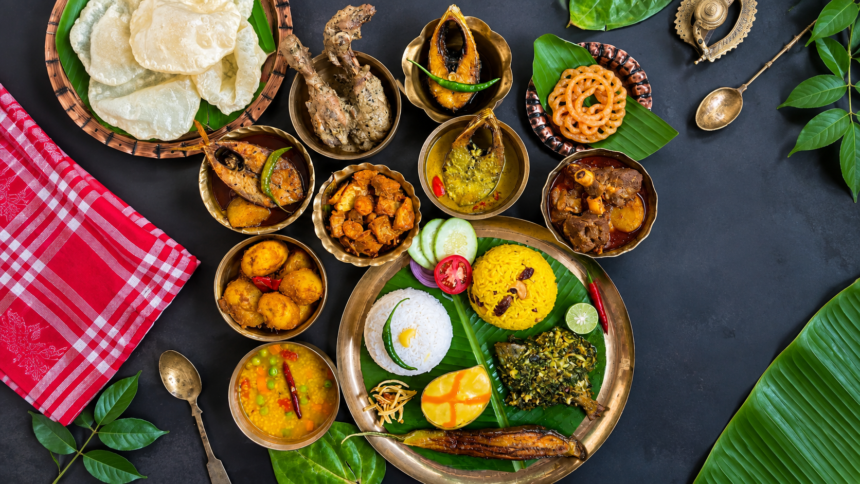
Navratri is traditionally associated with fasting and dietary restrictions across many parts of India. However, Durga Puja in Bengal follows a distinctly different cultural and culinary tradition. During the festival, Bengali households and communities celebrate with elaborate meals that can include fish, meat, sweets and other festive delicacies.
The difference is closely linked to regional customs, Shakta traditions and the way Goddess Durga is viewed in Bengali culture.
Why Do Bengalis Eat Non-Veg During Durga Puja?
Durga as the Daughter Returning Home
While Navratri in northern and western parts of India is often observed through fasting, prayer and self-discipline, Bengali Durga Puja celebrates the Goddess’s annual visit to her maternal home.
In Bengali tradition, Maa Durga is not only worshipped as a powerful deity but is also regarded as a daughter returning home. Her arrival is therefore associated with celebration, hospitality and elaborate food, much like the welcome given to a beloved family member.
Shakta Tradition and Ritual Significance
Bengali Durga Puja is deeply influenced by the Shakta tradition, in which Goddess Durga represents the supreme Shakti, or divine power and energy.
Within this cultural and religious framework, non-vegetarian food has a place in certain Durga Puja traditions. The practice and specific rituals can vary, but food remains an important part of the wider festive celebrations.
What Do Bengalis Eat During Durga Puja?
Vegetarian dishes remain an important part of traditional Puja food. Khichuri, labra, luchi and aloor dom are among the familiar festive preparations served during the celebrations.
At the same time, Bengali festive meals can also feature fish preparations, mutton dishes, popular street foods such as phuchka and rolls, and traditional sweets including rosogolla and mishti doi.
Fish and meat are also associated with ideas of abundance and prosperity in the festive culinary tradition.
In some traditions, fish or meat may be prepared in a niramish style, meaning without onion or garlic. Such preparations have a specific place in certain religious and festive practices.
What Is the Connection Between Meat and Ritual Offerings?
The presence of meat in some Durga Puja traditions is also connected with the historical practice of Bali, or ritual sacrifice. In traditions where such offerings are performed, consuming the associated food can be viewed as part of receiving the Goddess’s protective and powerful energy.
However, practices differ between communities and Puja celebrations, and not every Durga Puja follows the same ritual or dietary customs.
Durga Puja vs Navratri: What Is the Difference?
| Aspect | Navratri | Bengali Durga Puja |
|---|---|---|
| Primary focus | Fasting, penance and self-restraint | Celebration, worship and the Goddess’s homecoming |
| Food practices | Often involves avoiding meat, onion and garlic | Can include vegetarian and non-vegetarian festive dishes |
| View of the Goddess | Worshipped as the supreme warrior Goddess | Also welcomed as a beloved daughter returning home |
The contrast between Navratri fasting and Bengali Durga Puja feasting reflects India’s diverse regional traditions. While dietary practices differ, both celebrations are centred around devotion to Goddess Durga and the spiritual significance associated with her worship.