
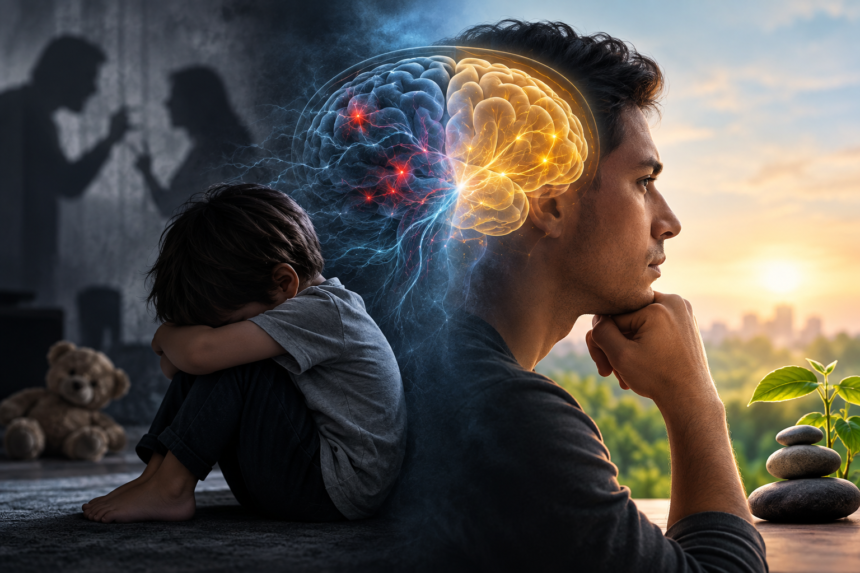
Childhood Trauma and Depression: Experiences during childhood can influence much more than a person’s early years. Difficult or unsafe environments may affect how the developing brain responds to stress, processes emotions and builds relationships later in life. For some people, these effects can contribute to anxiety, low mood and a greater vulnerability to depression.
However, experiencing childhood adversity does not automatically mean someone will develop a mental-health disorder. Genetics, personality, coping abilities, relationships and access to support all play an important role.
How Childhood Trauma Can Affect the Brain
Brain development begins very early in life and continues through childhood, adolescence and into early adulthood. This makes the developing brain particularly sensitive to prolonged stress and environmental experiences.
According to Dr Ashutosh Shah, Consultant, Psychiatry, Sir H. N. Reliance Foundation Hospital and Research Centre, intense or prolonged stress during childhood can influence several areas involved in emotional regulation and memory.
The amygdala, which plays an important role in detecting threats, may become more reactive. At the same time, changes involving the prefrontal cortex can make it more difficult to regulate strong emotions. Long-term stress may also affect the hippocampus, an area involved in memory and distinguishing between safe and threatening experiences.
Chronic stress can further interfere with the body’s HPA axis, the system responsible for coordinating the stress response, as well as neurotransmitter signalling.
Why Childhood Trauma Does Not Affect Everyone the Same Way
Two people can experience similar difficult circumstances during childhood and still have very different outcomes as adults.
Dr Pavitra Shankar, Associate Consultant, Psychiatrist, Aakash Healthcare, explains that factors such as genetics, temperament, coping skills, the severity and duration of adversity and the availability of social support can influence how a person responds.
A stable relationship with a supportive caregiver, healthy connections and timely mental-health care can act as protective factors.
Dr Shah also points to biological differences between individuals. Genetic variations, changes associated with early-life stress, brain connectivity, inflammation and the timing of traumatic experiences can all contribute to differences in vulnerability.
This means genetics alone cannot determine whether someone will develop depression or another psychiatric condition.
Emotional Neglect Can Also Leave a Lasting Impact
Childhood trauma does not necessarily involve one major or dramatic incident. Emotional neglect, repeated criticism, rejection, family conflict and unpredictable home environments can also affect a child’s sense of safety and self-worth.
Over time, such experiences may make it harder for some people to:
- Trust others
- Develop healthy relationships
- Maintain self-esteem
- Set appropriate boundaries
- Manage strong emotions
- Feel secure in close relationships
Dr Shankar emphasises that adversity should not automatically be equated with mental illness. People can experience difficult childhoods and remain psychologically healthy, particularly when they have protective relationships and effective coping resources.
How Unresolved Childhood Trauma May Show Up in Adults
The effects of unresolved childhood experiences can sometimes appear through emotional, behavioural or relationship patterns. However, these signs are not proof of childhood trauma and can occur for many other reasons.
Possible emotional experiences include:
- Persistent anxiety or fear
- Emotional numbness
- Strong anger or emotional reactions
- Fear of rejection or abandonment
- Excessive self-blame
- Difficulty understanding or expressing emotions
- Low self-esteem
Some behavioural patterns may include people-pleasing, difficulty establishing boundaries, avoiding intimacy, perfectionism, impulsive coping behaviours or constantly remaining alert to potential threats.
Sleep problems and unhealthy coping mechanisms may also occur.
Dr Shah notes that similar symptoms can be associated with conditions such as ADHD, autism spectrum disorder and anxiety disorders. Therefore, self-diagnosis based on a list of symptoms can be misleading.
When Should You Seek Professional Help?
There is no single symptom that confirms unresolved childhood trauma.
If anxiety, low mood, relationship difficulties, sleep problems, intense emotional reactions or unhealthy coping behaviours are persistent and interfere with everyday life, speaking with a qualified mental-health professional can help identify the underlying cause.
A professional assessment is particularly important because similar symptoms can arise from several different psychological, neurological or environmental factors.
Can the Brain Recover From Childhood Trauma?
The good news is that the brain is not permanently fixed by childhood experiences. Neuroplasticity allows the brain to adapt and form or strengthen neural connections throughout life.
Dr Shah explains that consistent therapy and healthy coping strategies can support healthier emotional responses. Techniques involving emotional awareness, stress management and controlled breathing may help improve regulation of the body’s stress response.
Physical activity and other healthy lifestyle practices may also support brain health and stress regulation.
For some people with significant mental-health symptoms, medication may be recommended by a doctor alongside psychological treatment.
Therapy Can Help Change Trauma-Related Patterns
Evidence-based psychological therapies can help people understand how earlier experiences may influence their present thoughts, emotions and behaviour.
Trauma-focused cognitive behavioural therapy (CBT) and other appropriate psychological treatments can help individuals challenge negative beliefs, develop healthier coping strategies and improve emotional regulation.
The aim is not to erase difficult memories. Instead, treatment can help a person respond to those memories and present-day situations in healthier ways.
Sleep, Exercise and Supportive Relationships Matter
Recovery is not limited to therapy. Everyday habits and a supportive environment can also contribute to emotional wellbeing.
Helpful strategies may include:
- Maintaining a regular sleep schedule
- Staying physically active
- Building healthy relationships
- Practising stress-management techniques
- Avoiding harmful coping mechanisms
- Seeking professional support when needed
These approaches can strengthen resilience and help the nervous system respond more effectively to stress.
Childhood Trauma Does Not Define Your Future
Early adversity can influence brain development, emotional regulation and stress responses, but it does not determine a person’s future.
People respond to difficult experiences differently, and the brain retains the ability to adapt throughout life. With appropriate support, therapy, healthy relationships and effective coping strategies, many people can develop healthier emotional patterns and improve their quality of life.
Important: Childhood trauma symptoms can overlap with several other mental-health conditions. If you are experiencing persistent depression, anxiety, sleep problems or difficulty functioning, consult a qualified mental-health professional rather than attempting to diagnose yourself.