
India’s nuclear weapons stockpile is estimated to have reached 190 warheads, putting the country ahead of Pakistan and increasingly close to the United Kingdom’s arsenal, according to a new assessment by the US-based Federation of American Scientists (FAS).
The estimate appears in the FAS report “India’s Nuclear Weapons – 2026”, authored by Hans Kristensen, director of the organisation’s Nuclear Information Project. The assessment also indicates that India’s nuclear arsenal could continue expanding as new delivery systems enter service.
India Operates Nine Nuclear-Capable Systems
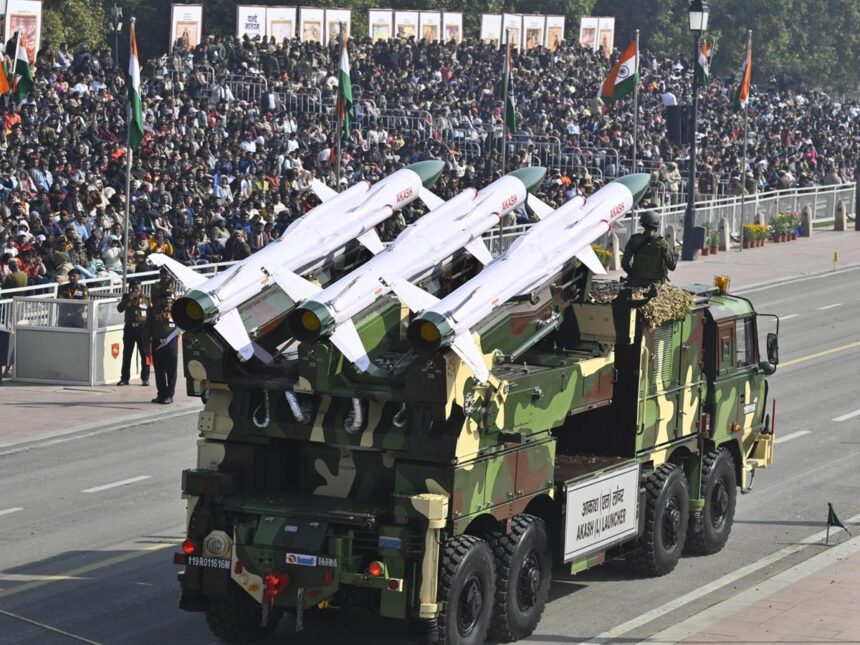
According to the FAS assessment, India currently has nine nuclear-capable delivery systems in operation. These include two aircraft-based systems, six land-based ballistic missile systems and one sea-based ballistic missile system.
At least two additional nuclear-capable systems are reportedly under development and approaching completion. They are expected to be introduced into the Indian armed forces over the coming years.
The FAS estimates that India’s currently operational nuclear forces can deliver more than 160 warheads. Additional warheads have reportedly been produced for missiles that are still in production, taking the country’s overall inventory to an estimated 190 warheads.
The report expects India’s stockpile to grow further as newer nuclear delivery platforms become operational.
India’s Plutonium Stockpile Supports Further Expansion
The assessment also examined India’s production of weapons-grade plutonium. It estimates that the country has produced approximately 730 kilograms of weapon-grade plutonium, although the figure carries an uncertainty margin of about 170 kilograms.
The estimate draws on a 2026 assessment by the International Panel on Fissile Materials.
Assuming that roughly four kilograms of plutonium are needed to manufacture one nuclear warhead, the amount of material attributed to India could theoretically support between 140 and 225 warheads.
India Continues to Follow No-First-Use Policy
India has traditionally maintained a nuclear No-First-Use (NFU) policy, meaning it declares that it will not be the first country to use nuclear weapons in a conflict.
This doctrine reduces the requirement for maintaining nuclear forces specifically designed to launch a pre-emptive or disabling first strike.
The development of a more secure and reliable sea-based nuclear deterrent could further strengthen India’s retaliatory capability. Such a capability may also reduce the need to maintain land-based nuclear forces at particularly high levels of readiness.
Pakistan Maintains a Different Nuclear Doctrine
India’s nuclear posture differs significantly from that of Pakistan.
Pakistan does not subscribe to a No-First-Use policy and has retained the option of using nuclear weapons first under certain circumstances. Islamabad’s nuclear strategy is largely intended to compensate for India’s conventional military advantage.
Pakistani officials have repeatedly described the country’s nuclear arsenal as a deterrent against major conventional military action. Its doctrine leaves open the possibility of nuclear use if conventional defences are overwhelmed or the country faces what it considers an existential threat.
How India Compares With Other Nuclear Powers
Despite India’s growing arsenal, its nuclear stockpile remains far smaller than those of the world’s two largest nuclear powers.
According to figures cited by the FAS and the Stockholm International Peace Research Institute, Russia has the world’s largest nuclear inventory, with an estimated 5,420 warheads. The United States follows with approximately 5,042.
Together, Russia and the US account for around 86% of the world’s total nuclear warheads.
China ranks third, with an estimated 620 warheads. Its nuclear arsenal is also expanding rapidly, with the country currently adding to its stockpile at a faster pace than other nuclear-armed states.
France is estimated to possess about 370 warheads, while the United Kingdom has approximately 225.
India Now Ahead of Pakistan
Within South Asia, India is estimated to have around 190 nuclear warheads, compared with approximately 170 held by Pakistan.
Elsewhere, Israel is believed to possess roughly 90 warheads, although the country continues to maintain a policy of nuclear ambiguity and does not officially acknowledge its nuclear arsenal.
North Korea is estimated to have around 60 nuclear warheads, according to the figures cited in the assessment.
With its estimated inventory now at 190 warheads, India is therefore 35 warheads behind the UK’s estimated stockpile of 225. Continued development and deployment of new nuclear-capable systems could further increase India’s arsenal in the coming years.