
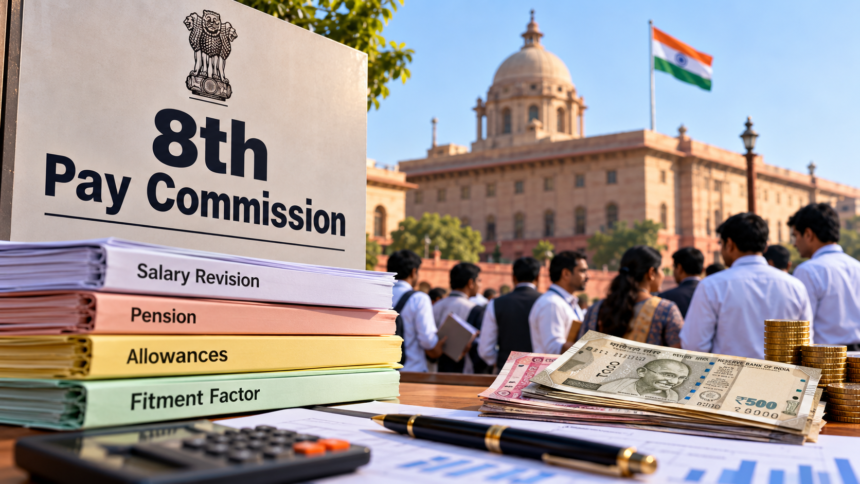
The 8th Central Pay Commission has become a major focus for central government employees and pensioners, with discussions covering salary revision, the fitment factor, allowances and pension-related issues.
Constituted on November 3, 2025, the Commission is chaired by Justice Ranjana Prakash Desai. It has been given 18 months to submit its recommendations to the government.
The Commission has been holding interactions with employee unions, associations and other stakeholders across different parts of the country. Following meetings in Puducherry and Chandigarh, a further interaction is scheduled in Bengaluru on October 7 and 8, 2026. The Commission has also listed visits to other locations as part of its consultation process.
OPS and NPS Debate Takes Centre Stage
Along with salary and allowance revisions, pension has emerged as a major issue in representations submitted by employee organisations. Employees who joined government service after 2004 have been seeking greater pension security, with several organisations calling for a guaranteed pension arrangement.
Employee groups have raised concerns about the contributory nature of the National Pension System (NPS) and have sought a return to the defined-benefit structure associated with the Old Pension Scheme (OPS).
The 8th Pay Commission is considering representations from employees, pensioners and organisations through its consultation process. The government has also provided an online mechanism for stakeholders to submit their memoranda and representations.
Major Pension Demands Before the Commission
Several employee and pensioner organisations have placed specific demands before the Commission.
The Ministerial Staff Association of the Survey of India has sought restoration of the Old Pension Scheme and demanded a pension of at least 50% of an employee’s final basic salary after retirement.
The Federation of National Postal Organizations (FNPO) has argued that the existing NPS and UPS arrangements do not adequately address employees’ concerns. It has sought the return of NPS and UPS participants to the traditional defined-benefit pension system.
The Railway Senior Citizens Welfare Society (RSCWS) has raised issues concerning the financial and health security of retired railway employees and has called for a guaranteed minimum pension along with stronger pension protection.
The Bharat Pensioners’ Samaj (BPS) has also submitted several demands. These include increasing the minimum pension to Rs 45,000 per month, setting pension at 67% of the last salary and raising family pension to 50% of the last salary.
Pay, Fitment Factor and Other Issues Under Discussion
During its interactions with stakeholders, the Commission has received representations on several issues, including an increase in the fitment factor, a higher minimum wage and pension equalisation.
The Commission’s consultations are continuing across different regions as it gathers views from employees, pensioners, unions, associations and other stakeholders.
The government has given the 8th Central Pay Commission 18 months from its constitution to submit its recommendations.
Once the Commission submits its report, the recommendations will be considered by the Central Government before any decision on their implementation.
The pension structure remains one of the closely watched issues, particularly for employees covered by NPS and UPS and for organisations seeking changes to the existing system. The final recommendations of the Commission will determine what changes, if any, are proposed in relation to salaries, allowances and pensions.
Disclaimer: This article summarises information and demands raised by employee and pensioner organisations in connection with the 8th Central Pay Commission. These demands do not represent final government decisions or confirmed pension and salary benefits. Any changes to pay, allowances or pension arrangements will depend on the Commission’s recommendations and subsequent government decisions.