
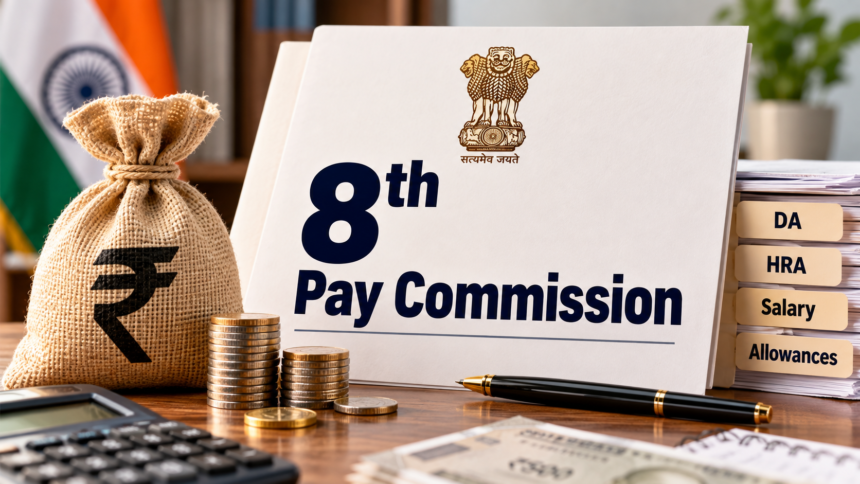
The 8th Pay Commission is being closely watched by more than 5 million central government employees who are awaiting its report and eventual implementation. The Commission has been given 18 months to complete its work, and more than 10 months of this period have already passed.
The report is expected to be submitted by May next year. If the process takes longer, central employees could face a further wait for revised salaries and related benefits, potentially increasing their financial loss.
When Could the 8th Pay Commission Be Implemented?
Employees may expect salary revisions with effect from January 1, 2026, but arrears based on the revised basic pay may not necessarily cover allowances such as Dearness Allowance (DA), House Rent Allowance (HRA) and transport allowance.
According to a report by The Economic Times, once the Pay Commission completes its report, it will be submitted to the government, after which it will require approval from the Union Cabinet.
Past experience indicates that implementing a Pay Commission report can take around two to three years after the report is prepared. A Live Mint report has suggested that employees may have to wait until 2029 or even 2030 for the 8th Pay Commission recommendations to be fully implemented.
How Delay Could Affect DA and Salary Benefits
An earlier implementation could provide central government employees with higher DA payments if their basic salaries are revised sooner. Since DA is calculated in relation to basic pay, a higher revised basic salary could result in a higher DA amount.
However, after the 8th Pay Commission comes into effect, DA could potentially be reset to zero from the existing 60 percent, as part of the salary restructuring.
A prolonged implementation period, meanwhile, could mean employees miss out on the financial benefit of a higher revised basic salary for a longer period.
Level 7 Employee Salary Calculation
The potential impact can be understood through the example of a Level 7 employee under the 7th Pay Commission. The current basic pay for Level 7 is Rs 44,900.
For an employee in an X-class city, HRA is currently calculated at 24 percent of basic pay. The transport allowance, along with DA, could reach 65 percent by May 2027.
If the fitment factor under the 8th Pay Commission is fixed at 2.1, the basic salary could increase to Rs 94,290. Under this calculation, HRA could be around Rs 22,630, while the transport allowance could amount to Rs 7,560.
These figures are only based on the assumed fitment factor and are not official. The 8th Pay Commission has not yet announced the final fitment factor or revised salary structure.
If the implementation process takes 17 months, a Level 7 employee could potentially face a financial loss of around Rs 3 lakh due to the delay.
Disclaimer: The salary figures, fitment factor and potential loss mentioned in this article are based on the assumptions and reports cited in the source material. They are not final figures announced by the 8th Pay Commission or the Central Government. Actual salary revisions, allowances, arrears and implementation dates may differ once official decisions are announced.