
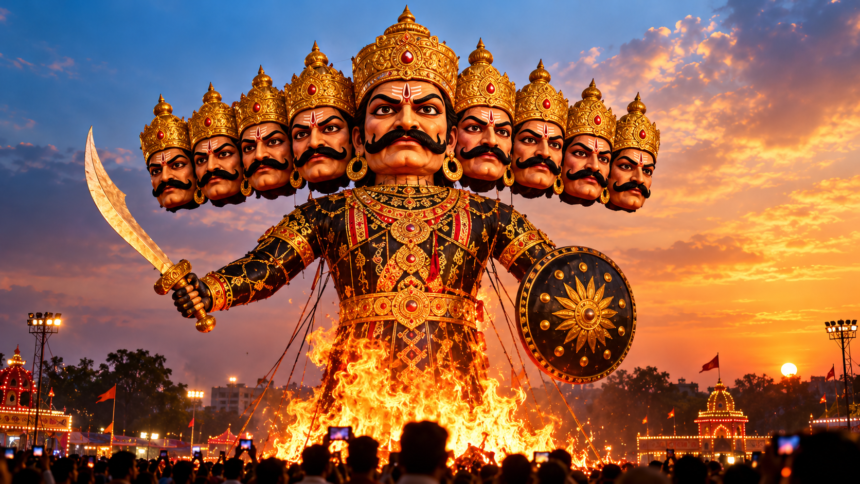
Ravana, the powerful king of Lanka in the Ramayana, is traditionally depicted with ten heads. This distinctive image is more than a symbol of his extraordinary strength. Across Hindu traditions and popular interpretations, Ravana’s ten heads have been linked to his vast knowledge, intellectual abilities and the human weaknesses that can lead even a powerful person towards destruction.
The symbolism becomes especially significant during Dussehra, when effigies of Ravana are burnt to mark Lord Rama’s victory. The tradition recalls the triumph of righteousness while encouraging people to reflect on pride, uncontrolled desires and the misuse of power.
Ravana is remembered as a learned scholar, a formidable ruler and a devotee of Lord Shiva. Yet his knowledge and abilities could not save him from his eventual downfall. His story raises an enduring question: can intelligence and achievement protect a person when ego and desire begin to influence their decisions?
Why Is Ravana Known as the Ten-Headed King?
Ravana is known by the Sanskrit names Dashanana, meaning the ten-faced one, and Dashagriva, meaning the ten-necked one. His multiple heads and arms have become defining features of his representation in Hindu art and iconography.
Within the Ramayana tradition, his ten-headed appearance emphasises his extraordinary nature and immense power. Over time, different retellings and religious interpretations have attached additional symbolic meanings to this image.
One popular explanation connects the ten heads with Ravana’s extensive knowledge of the four Vedas and six Shastras. Another views them as representations of human weaknesses, conflicting desires and different aspects of the mind.
However, there is no single explanation accepted across every Ramayana tradition. The meaning of Ravana’s ten heads varies according to the text, cultural tradition and interpretation being followed.
What Do Ravana’s 10 Heads Symbolise?
A widely shared moral interpretation treats Ravana’s ten heads as reminders of the negative tendencies that can weaken judgement and influence human behaviour. According to this perspective, the symbolism extends beyond Ravana himself and applies to the challenges people face in their own lives.
The ten tendencies commonly associated with this interpretation include:
- Desire: Wanting something without considering the consequences.
- Anger: Allowing rage to overpower reason.
- Greed: Remaining dissatisfied regardless of what one already possesses.
- Attachment: Becoming so emotionally invested in something that clear judgement suffers.
- Pride: Believing that personal achievements or strength make someone superior to others.
- Envy: Resenting another person’s success or happiness.
- Ego: Placing personal superiority above truth and responsibility.
- Injustice: Ignoring what is right to protect personal interests.
- Cruelty: Disregarding the pain and suffering of others.
- Abuse of power: Using authority to control or dominate rather than act responsibly.
This list represents a popular contemporary interpretation, not a universally prescribed explanation found in every Ramayana text. Its central message is that harmful tendencies become dangerous when they begin to control a person’s actions and decisions.
Do Ravana’s Ten Heads Also Represent His Knowledge?
Yes. Another popular interpretation associates Ravana’s ten heads with his exceptional scholarship and command of sacred knowledge.
According to this explanation, the heads symbolically represent the four Vedas and six Shastras. The Vedas are among the foundational sacred texts of Hindu tradition, while the Shastras refer to bodies of knowledge and systematic teachings.
This reading highlights the complexity of Ravana’s character. He is remembered not simply as a powerful antagonist but also as a learned figure whose abilities made his eventual downfall particularly striking.
Nevertheless, the association between the ten heads and the four Vedas and six Shastras is one symbolic interpretation rather than the only established explanation. The traditional depiction of Ravana with ten heads is more widely established than any single interpretation assigning a specific meaning to each head.
Why Is Ravana’s Effigy Burnt on Dussehra?
Dussehra celebrates Lord Rama’s victory over Ravana and symbolises the triumph of righteousness over wrongdoing. The burning of Ravana’s effigy brings this story into public celebrations through Ramlila performances and other festive traditions.
The ritual also offers a moral lesson about the difference between possessing knowledge and using it wisely. Ravana’s learning, authority and extraordinary abilities could not justify his actions or shield him from the consequences of his choices.
This is where the symbolism of his ten heads becomes especially relevant. Intelligence and achievement alone cannot guarantee good judgement. When pride, uncontrolled desires or the misuse of power take priority over moral responsibility, even considerable abilities can become a source of downfall.
Ultimately, Ravana’s ten heads continue to fascinate because they carry several meanings across different interpretations. They can represent extraordinary knowledge and power, as well as the weaknesses that require discipline and self-awareness.
During Dussehra, the burning effigy reminds people that overcoming an external enemy is only one part of the story. Recognising and controlling destructive tendencies within ourselves is equally important. Ravana’s story continues to offer a lasting lesson: greatness depends not only on what a person knows or achieves, but also on how that knowledge and power are used.
Disclaimer: This article is intended for general informational and educational purposes. The symbolic meanings discussed reflect interpretations found in religious traditions and popular accounts, and they may differ across texts, regions and communities. Readers interested in the subject should consult relevant Ramayana texts and authoritative sources on Hindu traditions for further study.