
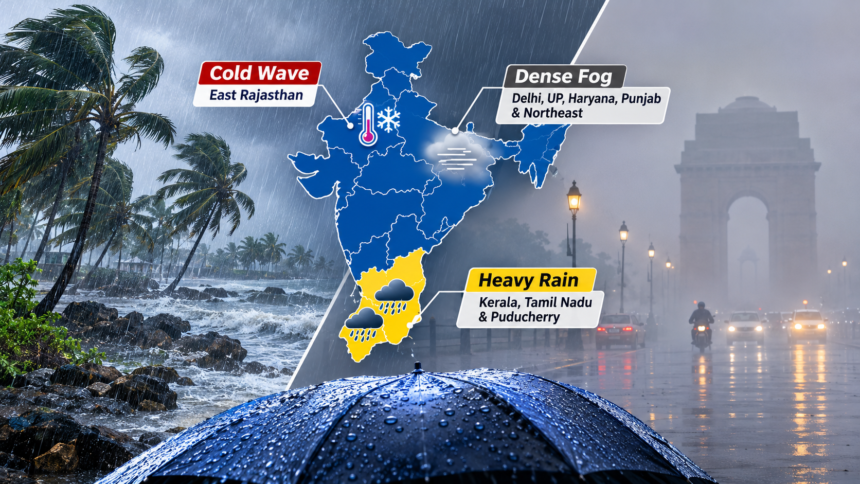
The India Meteorological Department (IMD) has issued a nationwide weather forecast for November 27, 2026, warning of heavy rainfall in parts of southern India, cold wave conditions in East Rajasthan and dense fog across several northern and northeastern states.
According to the IMD’s evening bulletin released on November 26, isolated areas of Kerala, Mahe, Tamil Nadu, Puducherry and Karaikal are likely to receive heavy rainfall. Meanwhile, residents of Delhi, Uttar Pradesh, Haryana, Punjab, Himachal Pradesh and several northeastern states may experience dense fog during the morning and night.
Thunderstorms accompanied by lightning and gusty winds reaching 30–40 kmph are also expected in parts of southern India. Coastal areas near Kerala and Lakshadweep have been placed under a warning for squally weather.
Here is a detailed state-wise breakdown of the IMD weather forecast for November 27.
IMD Weather Forecast for November 27, 2026: Heavy Rainfall Alerts
Southern India is expected to experience the most significant rainfall activity, with isolated heavy showers forecast in several regions.
Kerala and Mahe: Heavy rainfall is very likely at isolated locations. Fairly widespread to widespread rain is also expected, accompanied by thunderstorms, lightning and gusty winds of 30–40 kmph, with speeds occasionally reaching 50 kmph.
Tamil Nadu, Puducherry and Karaikal: Isolated areas may receive heavy rainfall. Thunderstorms, lightning and strong winds of 30–40 kmph, with gusts reaching 50 kmph, are also likely.
Andhra Pradesh, Yanam and Rayalaseema: Thunderstorms accompanied by lightning and gusty winds of 30–40 kmph are expected at isolated places. Strong surface winds and isolated to scattered rainfall are also forecast.
Lakshadweep: Fairly widespread to widespread rainfall is likely, along with thunderstorms, lightning and gusty winds reaching 30–40 kmph.
Andaman and Nicobar Islands: Isolated to scattered rainfall is expected in parts of the island territory.
Dense Fog Alert for Delhi, UP, Haryana, Punjab and Northeast India
The IMD has warned of dense fog in several parts of North India, particularly during early morning and night hours.
Delhi, Chandigarh, Haryana, Punjab, Uttar Pradesh and Himachal Pradesh are likely to experience dense fog at isolated locations.
Similar conditions are expected across parts of Northeast India, including Assam, Meghalaya, Nagaland, Manipur, Mizoram and Tripura.
Reduced visibility during foggy conditions could affect road travel and other transportation activities. Commuters should remain cautious, particularly during early morning journeys.
Cold Wave Warning for East Rajasthan, Coastal Weather Alert
East Rajasthan is likely to experience cold wave conditions in isolated pockets on November 27.
The IMD has also issued a coastal and marine warning for areas along and off the Kerala coast and across the Lakshadweep region.
Squally weather is expected in these areas, with wind speeds ranging from 35–45 kmph and gusts potentially reaching 55 kmph. These conditions may create challenging weather for marine activities.
People in the affected coastal areas should pay attention to local weather warnings and follow the advisories issued by the authorities.
Weather Outlook for November 27: What to Expect Across India
The latest IMD forecast indicates contrasting weather conditions across different parts of the country.
Southern states are likely to experience rainfall, thunderstorms and gusty winds, while northern regions may face reduced visibility due to dense fog. East Rajasthan is also expected to experience isolated cold wave conditions.
Meanwhile, no significant weather activity has been forecast over West and Central India in the latest bulletin.
Residents are advised to remain updated with local weather forecasts, particularly in areas covered by heavy rainfall, fog and coastal wind warnings.
Disclaimer: This article is based on the India Meteorological Department’s weather bulletin issued on November 26, 2026. Weather forecasts and warnings are subject to change depending on atmospheric conditions. Readers should refer to official IMD updates and local authorities for the latest alerts and safety instructions.