
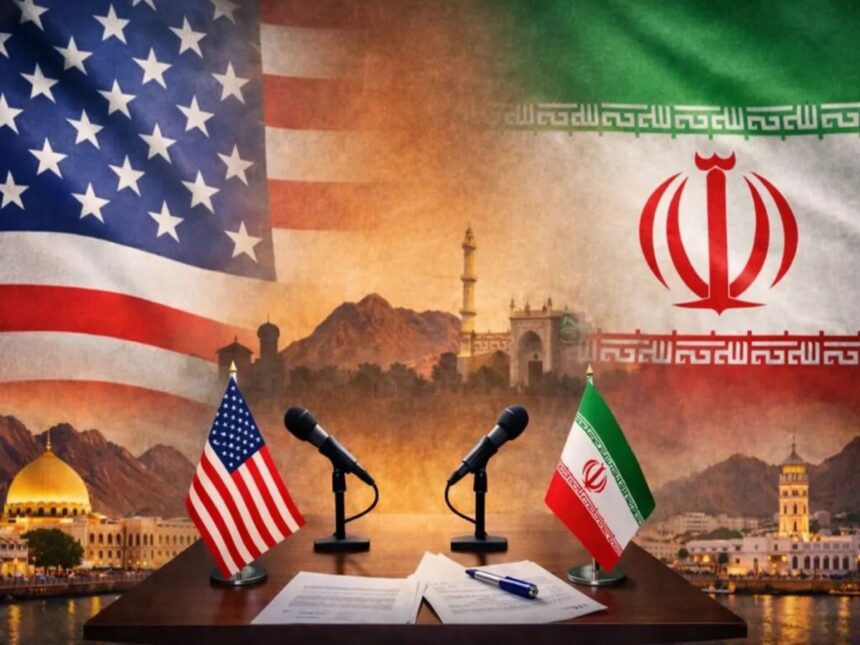
US-Iran tensions: The 60-day framework agreed between Washington and Tehran expires on August 17, but the deal has already unravelled in practice. With the Strait of Hormuz emerging as the biggest sticking point, both sides are hardening their positions while back-channel diplomacy continues.
The deadline for the US-Iran memorandum of understanding (MoU) arrives Monday, August 17, with little indication that either Washington or Tehran is prepared to simply extend the existing arrangement.
Instead, the final days of the agreement have been marked by increasingly aggressive rhetoric, stalled negotiations and a growing confrontation over the Strait of Hormuz, a vital global shipping route that handled roughly one-fifth of worldwide oil and LNG flows before the conflict.
Iranian Foreign Minister Abbas Araghchi has said Tehran has not decided whether to resume negotiations with the United States. US President Donald Trump, meanwhile, continues to threaten increased pressure while making increasingly bold statements about the strategic waterway.
The key question now is no longer simply whether the June agreement will survive. It is what framework, if any, will replace it.
What Was the June US-Iran Agreement Supposed to Achieve?
The MoU was signed on June 17 by US President Donald Trump and Iranian President Masoud Pezeshkian after months of conflict.
The agreement was intended to provide a framework for ending military hostilities. Both sides committed to an immediate and permanent end to military operations and agreed to work towards a comprehensive agreement within 60 days.
However, the proposed arrangement went far beyond a simple ceasefire.
Under the framework, Washington was expected to:
- End its naval blockade within 30 days
- Ease sanctions against Iran
- Provide waivers for Iranian oil exports
- Allow Tehran access to frozen financial assets
- Support a reconstruction and development package worth at least $300 billion
Iran, meanwhile, was expected to:
- Clear mines from the Strait of Hormuz
- Allow commercial vessels to pass through the waterway without charges for 60 days
- Reaffirm that it would not pursue nuclear weapons
- Enter negotiations over the more complicated issue of uranium enrichment
The agreement, however, soon ran into disagreements over how its commitments should be interpreted.
Washington accused Tehran of failing to reopen Hormuz, while Iran argued that the US had not fulfilled its obligations concerning the blockade, sanctions and frozen assets.
By July 7, Trump declared that the agreement was effectively over. Iran subsequently accused the US of violating its commitments and said Tehran had suspended its own obligations.
As a result, the August 17 deadline is effectively bringing an already weakened framework to an end.
Why the Strait of Hormuz Has Become the Biggest Flashpoint
The Strait of Hormuz has emerged as the central issue in the latest US-Iran confrontation.
Iran maintains that it has control over the waterway and has rejected the idea that commercial shipping will automatically return to normal simply because the 60-day agreement has expired.
Iranian Deputy Foreign Minister Kazem Gharibabadi recently said the strait would be opened or closed under Iran’s authority and demanded that Washington recognise what Tehran considers its defeat.
Trump has taken the opposite position.
The US president has threatened to claim control over Hormuz after defeating Iran and has repeatedly portrayed the American naval blockade as a powerful instrument of pressure.
Iran has responded by warning that the strategic waterway cannot simply be taken over through military force or political declarations.
The dispute is already affecting shipping activity.
According to Reuters data cited in the original report, only five commodity vessels crossed the strait on Saturday, while none were recorded on Sunday. That compared with 31 vessels crossing during the previous weekend.
The UAE has also accused Iran of attacking three vessels operated by ADNOC, allegations that Tehran has not accepted.
Trump’s Recent Statements Signal More Pressure
Trump’s public messaging has combined threats of escalation with claims that diplomacy remains possible.
On August 3, he described negotiations as Iran’s “last chance” and warned of severe consequences if Tehran failed to reach an agreement. He also said the US blockade would remain until Iran accepted a deal or surrendered.
His comments later shifted toward the economic consequences of the conflict.
During an August 14 event in New York, Trump told Americans that paying somewhat more for gasoline was an acceptable cost if it prevented Iran from developing a nuclear weapon.
He again spoke about declaring the Strait of Hormuz US territory after defeating Iran.
The statements suggest that Washington is preparing Americans for the possibility that the confrontation could continue beyond the August 17 deadline, along with its economic impact.
US Treasury Secretary Scott Bessent has also indicated that Washington could intensify economic pressure on Tehran while maintaining restrictions on Iranian ports.
Iran Is Taking a Harder Line
Tehran’s position has also become increasingly uncompromising.
Iran’s Supreme Leader Mojtaba Khamenei had expressed reservations about the June agreement even when it was signed. He reportedly authorised the arrangement after President Pezeshkian and other officials assured him that Iran’s interests would be protected.
Khamenei also warned that Tehran would not accept additional American demands.
After the agreement began to deteriorate, his criticism of Washington became significantly stronger.
On July 18, he said repeated American violations had shown that Trump’s signature could not be trusted. He also accused Washington of revealing its true intentions and warned that Iran and its regional partners had lessons for the United States.
Iranian Foreign Minister Araghchi has similarly argued that there is technically no ceasefire to extend because the June arrangement was intended to end the war rather than create a temporary pause.
On August 15, he described the situation as a “new situation” rather than an extension of an existing ceasefire.
A day later, Araghchi said Iran had not yet decided whether to restart negotiations with Washington.
Qatar and Pakistan have continued passing messages between the sides, but Tehran has stressed that such communication does not necessarily mean formal negotiations have resumed.
Iran and Oman Explore Alternative Shipping Routes
Despite the escalating rhetoric, Tehran is also looking for practical ways to manage the Hormuz crisis.
Iran is working with Oman on a potential alternative shipping arrangement through the waterway.
Araghchi said the previous shipping routes were no longer functioning and that a temporary route was being developed.
However, he made clear that a broader reopening of commercial traffic would depend on Washington meeting Iran’s conditions.
This makes shipping one of the clearest indicators of whether the two countries are moving towards de-escalation.
What Happens After August 17?
Back-Channel Diplomacy Could Continue
The expiry of the MoU does not necessarily mean that diplomatic communication will stop.
Qatar, Pakistan and Oman have all played roles in communicating with the two sides. Iran has acknowledged that messages are still being exchanged, even though it says formal negotiations have not restarted.
A new arrangement could therefore emerge outside the original 60-day framework.
The sides could initially focus on issues such as commercial shipping, humanitarian concerns and sanctions, before tackling the much more complicated questions surrounding Iran’s nuclear programme.
Hormuz Will Be the First Major Test
The situation around the Strait of Hormuz is likely to provide the earliest indication of whether tensions are genuinely easing.
An agreement that allows commercial vessels to safely navigate the waterway could create the conditions for broader negotiations.
However, continued attacks, interceptions or competing blockades could make the confrontation significantly harder to contain.
The economic consequences are potentially enormous because Hormuz is one of the world’s most important energy corridors.
Brent crude was reportedly trading around $88.72 per barrel early Monday, following a gain of more than 5% during the previous week.
More US Sanctions Could Follow
Washington has already indicated that additional economic measures could be imposed on Tehran.
Future sanctions could target Iranian financial networks, oil exports and companies or organisations accused of helping Iran bypass existing restrictions.
The broader US strategy appears designed to increase the economic cost of maintaining the confrontation and pressure Tehran into accepting a new agreement.
Could Military Escalation Return?
The expiry of the MoU does not automatically mean that a new military operation will begin.
Nevertheless, the ingredients for further escalation remain.
The US continues to maintain naval pressure, Iran is restricting shipping through Hormuz, and both governments are publicly warning each other against testing their resolve.
Iranian Army chief Major General Amir Hatami has also responded strongly to Trump’s comments about Hormuz, warning against attempts to regain a previous US military position in the Gulf.
Iran’s Nuclear Programme Remains the Biggest Unresolved Issue
Beneath the immediate dispute over shipping lies an even more complicated issue: Iran’s nuclear programme.
The June framework had intended to push the nuclear question into negotiations over a comprehensive agreement.
Iran had reaffirmed that it would not seek nuclear weapons, while Washington wanted restrictions on uranium enrichment and stronger guarantees.
But with the original framework now largely broken down, the nuclear issue remains unresolved.
Any future agreement would therefore have to address multiple sensitive questions, including:
- Iran’s nuclear activities
- Uranium enrichment
- US sanctions
- Iranian oil exports
- Frozen Iranian assets
- The US military presence in the region
- Shipping through the Strait of Hormuz
- Long-term guarantees from both sides
What Is the Most Likely Scenario?
The immediate future is unlikely to be a simple choice between peace and full-scale war.
A more probable outcome is another period of intense pressure combined with indirect diplomacy.
Washington is likely to use sanctions and its naval presence as leverage, while Tehran can use its influence over Hormuz and regional commerce as a bargaining tool.
Both sides also have reasons to keep diplomatic channels open.
The US wants to end the conflict without appearing to give in to Iranian demands. Iran, meanwhile, needs economic relief but has shown little willingness to accept an arrangement that compromises its control over Hormuz or leaves American pressure intact.
The Big Question After August 17
The expiration of the US-Iran MoU marks an important turning point, but it may not be the end of diplomacy.
The crucial question is whether Washington and Tehran can create a new agreement covering Hormuz, sanctions, oil exports and Iran’s nuclear programme before the collapse of the existing framework leads to another direct confrontation.
For now, both sides appear determined to maintain pressure — and neither seems ready to make the first major concession.