
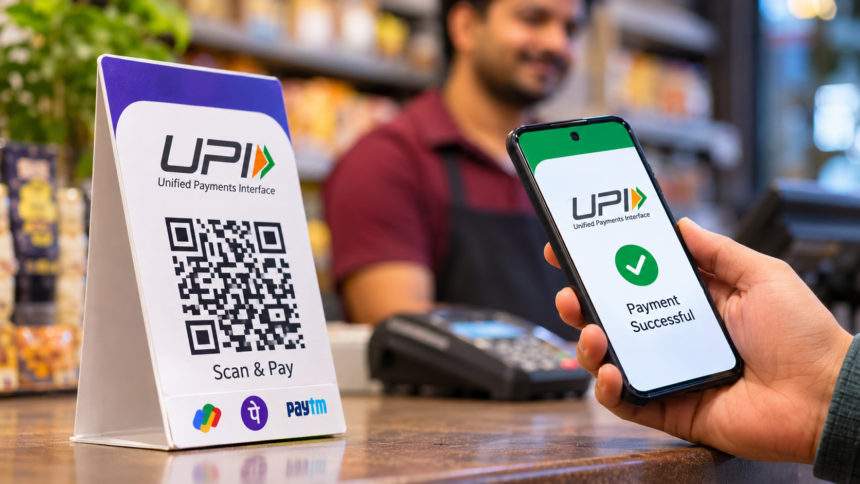
The proposed Merchant Discount Rate (MDR) on selected UPI payments above ₹2,000 may take longer to come into effect. According to a Financial Express report citing industry sources, the government could postpone the implementation because of the assembly elections scheduled in five states in 2027.
The elections are due to take place in Uttar Pradesh, Punjab, Uttarakhand, Goa and Manipur. The government is reportedly concerned that introducing additional charges on certain merchant transactions could trigger opposition from traders and trade unions.
Although most regulatory and operational preparations are reportedly complete, the government, the Reserve Bank of India (RBI) and the National Payments Corporation of India (NPCI) have not yet agreed on a final implementation date.
UPI MDR Implementation: Why Is the Decision Delayed?
The proposed MDR framework has already faced postponements. The government had initially planned to introduce a 0.4% MDR on eligible merchant UPI transactions above ₹2,000 from October 15, 2026.
However, the UPI and Services Steering Committee decided to defer the launch until after Diwali. The festive period and operational challenges were cited as reasons for delaying the implementation. NPCI said a revised date would be announced separately.
According to the latest report, the absence of an agreed launch date could push the rollout further, potentially until after the Uttar Pradesh elections. However, no final decision on the timing has been confirmed.
Which UPI Payments Will Attract MDR Charges?
Under the proposal announced in September, MDR would apply to eligible merchant transactions exceeding ₹2,000. Payments below this amount would continue to remain free.
Person-to-person UPI transfers would also remain exempt, irrespective of the transaction value. Transactions covered under the zero-MDR arrangement for small merchants would not attract the proposed charges either.
For merchant payments of ₹75,000 or more, the MDR would be restricted to a maximum of ₹300 per transaction.
The proposal also provides different rates for specific sectors:
- Essential and low-margin sectors: Payments above ₹2,000 involving railways, telecom, insurance, fuel and agricultural inputs would attract a fixed MDR of ₹5 per transaction.
- Mutual funds and securities: Payments involving mutual funds, securities, stockbrokers and dealers would carry an MDR of 0.02%, subject to a maximum charge of ₹300.
These charges are part of the proposed framework and will depend on the final implementation decision.
Traders Oppose the Proposed UPI Charges
The proposed MDR structure has faced objections from trade unions and merchant associations. Several merchant groups had earlier announced plans to observe a “No UPI Day” protest on October 2.
However, they later withdrew the proposed protest following discussions with Finance Minister Nirmala Sitharaman.
The opposition reflects concerns among traders about the possibility of additional costs on digital payments, particularly for businesses that rely heavily on UPI transactions.
How Will MDR Revenue Be Distributed?
The proposed MDR system aims to create a revenue model for supporting the digital payments ecosystem. Merchant Discount Rate refers to the fee paid by merchants to payment service providers for processing digital transactions.
Under the proposed distribution arrangement, the collected MDR amount would be shared among different participants in the UPI network.
| UPI Ecosystem Participant | Share of MDR |
|---|---|
| Customer’s bank | 40% |
| Payment gateway | 30% |
| UPI application | 20% |
| Sponsoring bank of the UPI app | 10% |
The proposed distribution is intended to compensate the banks and service providers involved in processing UPI payments.
Disclaimer: This article is intended for general informational purposes only. The MDR rates, exemptions, payment categories and revenue-sharing structure discussed above are based on the reported proposal and should not be treated as a final or implemented policy. The government, RBI and NPCI may announce changes before implementation. Merchants and users should refer to official notifications for confirmed details.